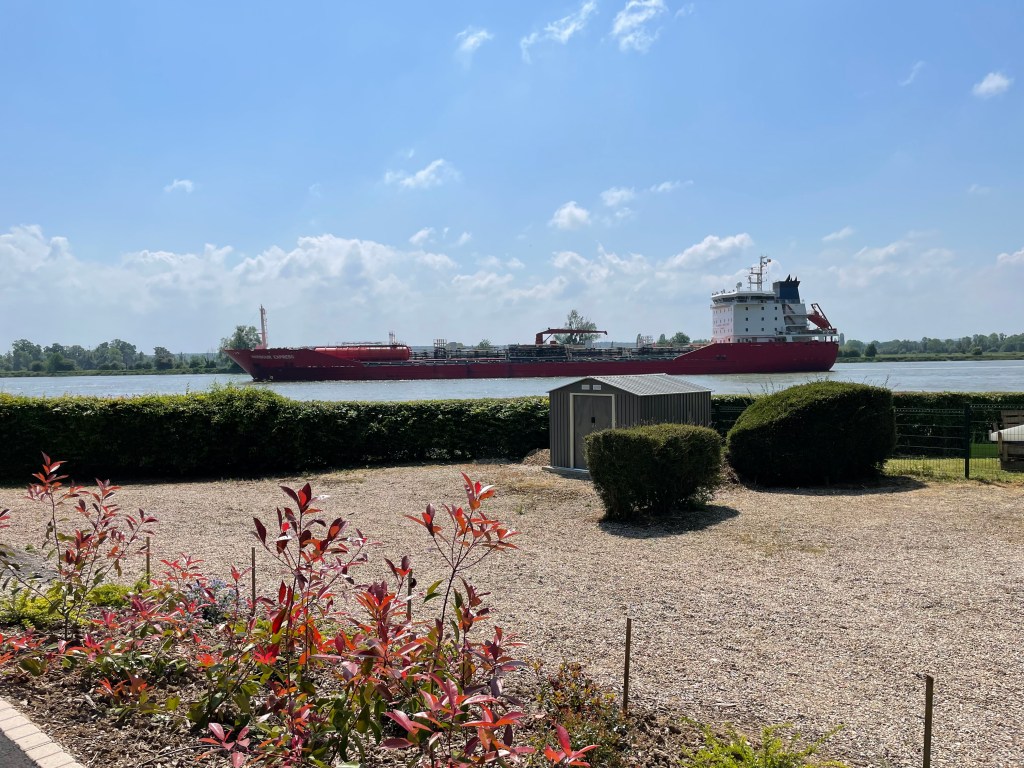
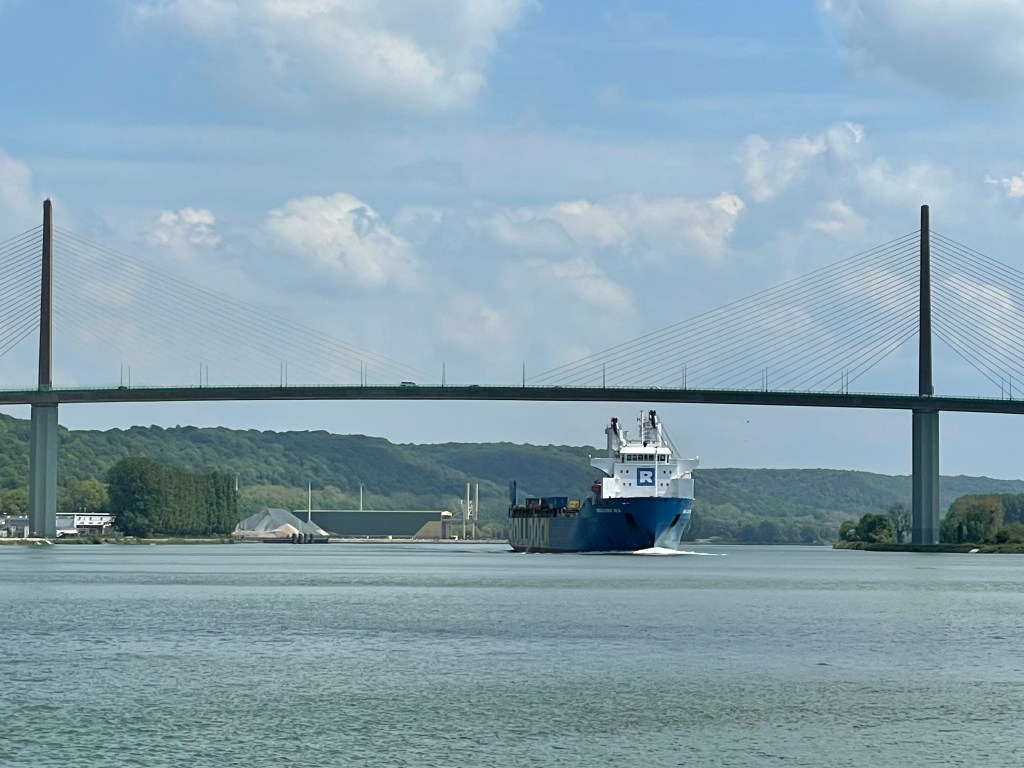
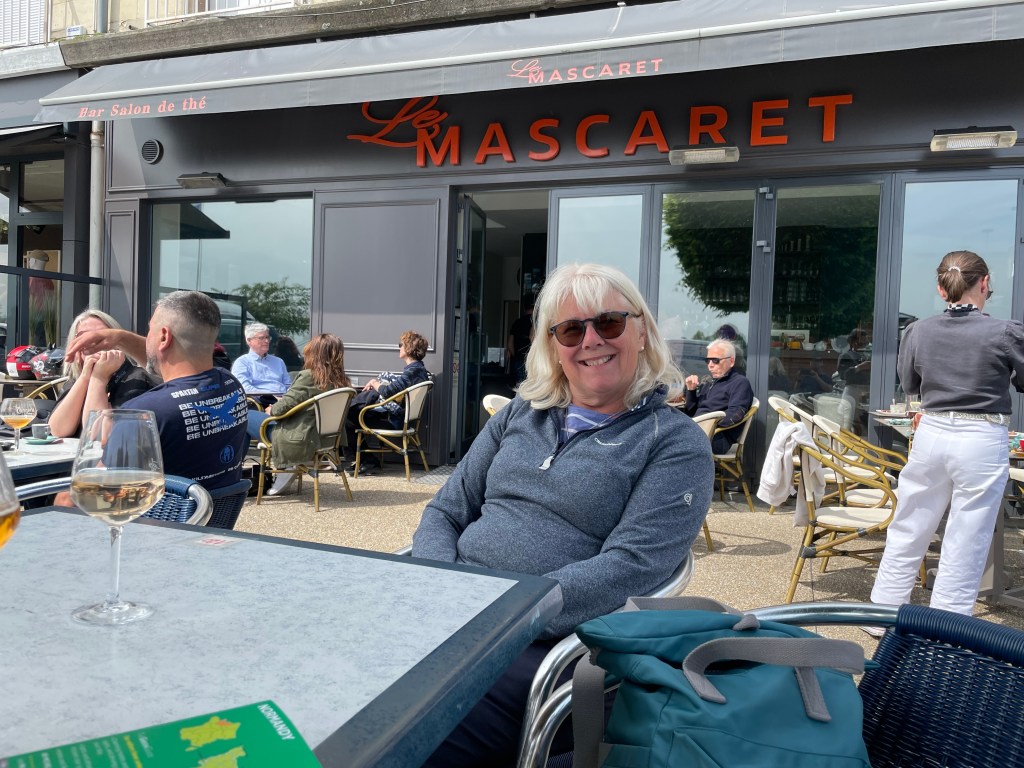
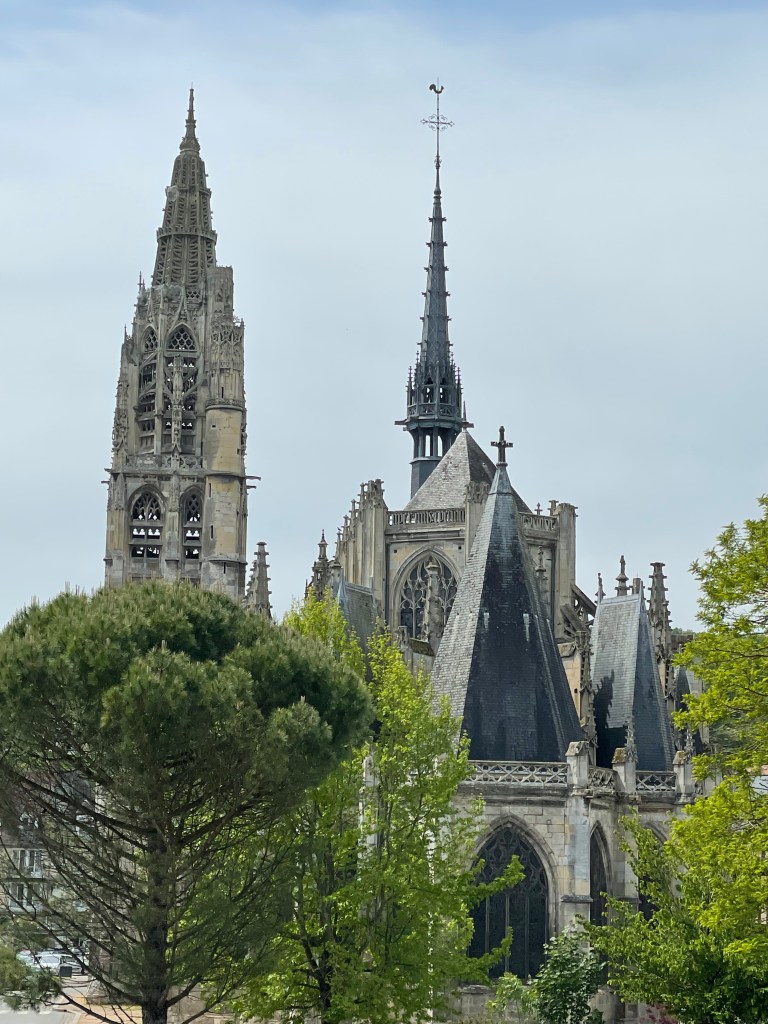
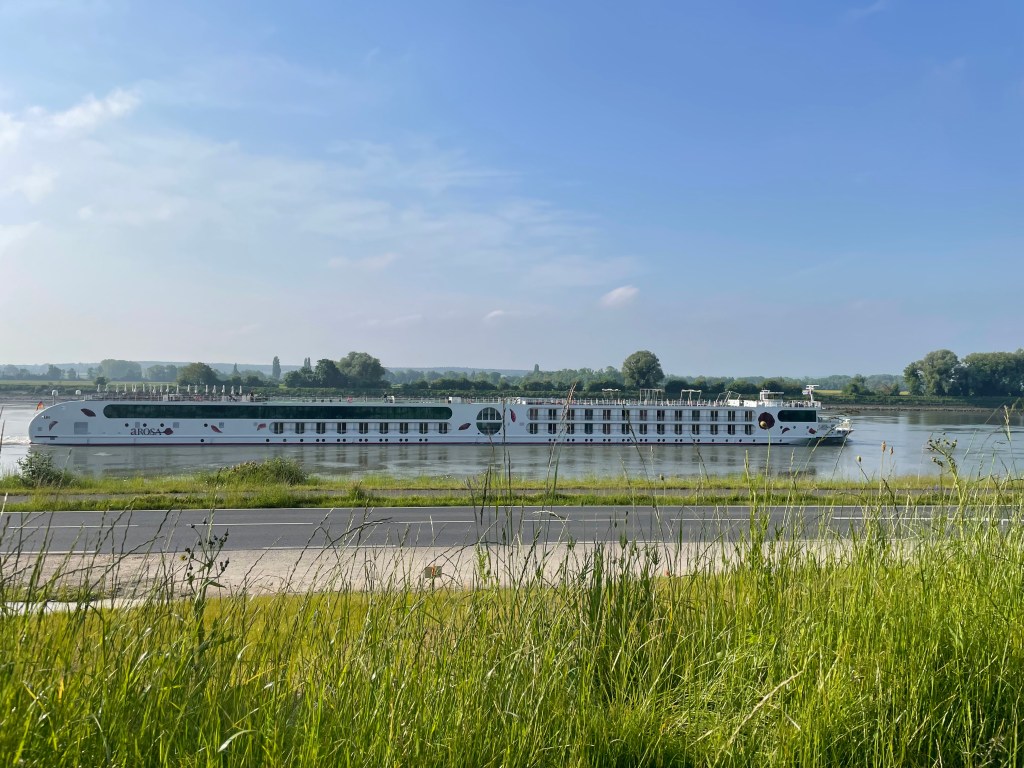
Rouen is almost 80km up the Seine from the river’s mouth at Le Havre but it is still France’s 5th largest port. Large container ships and cruise liners are constantly sailing back and forth at all stages of the tide. The tide now is a lot calmer than it used to be. The Seine once had the most famous and most violent tidal bore in the world. At certain high tides Le Mascaret, as it was known, would sweep up the river at a height of over 7m high. Between 1790 and 1850 over 200 ships were lost; swamped by the wave. Le Mascaret probably was also to blame for the drownings of Victor Hugo’s newly married daughter and her husband months after their wedding and which has now given rise to a Victor Hugo museum near the site of the tragedy. Luckily for shipping, but disappointingly for us, who were camped at Caudebec, half-way between Rouen and the Channel, traditionally the highest point of the wave, dredging in the estuary around Honfleur 50 years ago seems to have put a stop to the phenomenon.
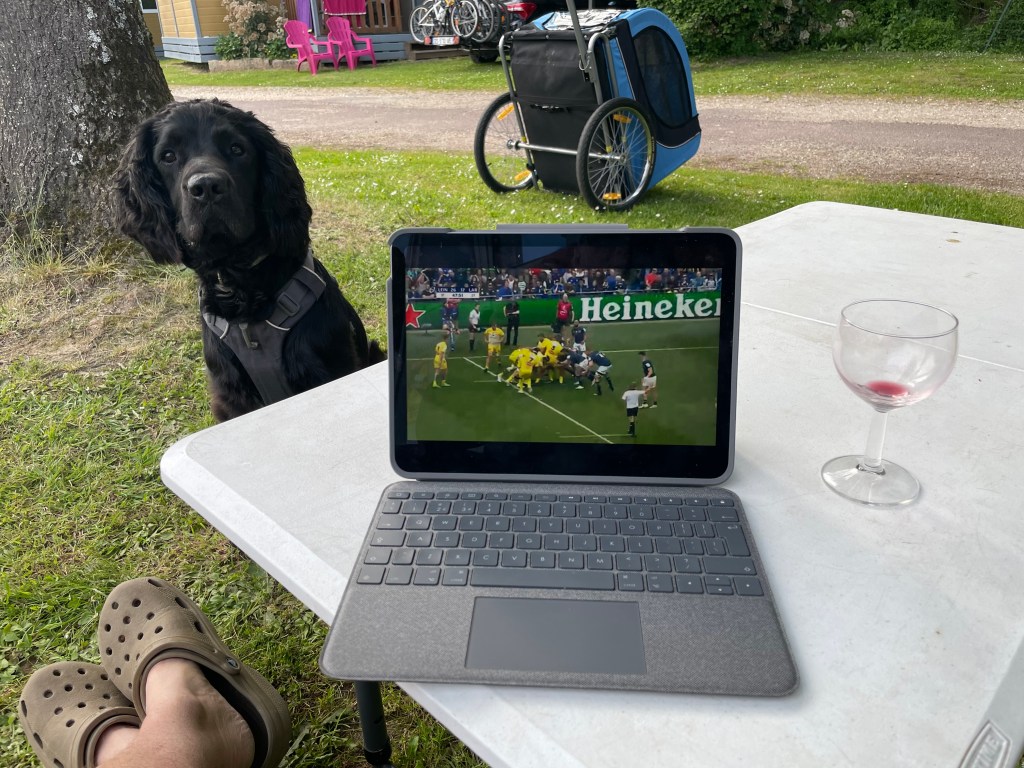
Camping Barre Y Va in Caudebec en Caux was a small little campsite, squeezed between the right bank of the river and steep limestone cliffs carved out by the river centuries ago; but it manages to squeeze in a bar and a small covered swimming pool. It was full of families enjoying the long weekend, which made it an even more fun place to be. When you add that it is right on the lovely flat and smoothly paved cycle route along the Seine and there are great walks in the woods above the cliffs, it’s no surprise that Wendy has put it in the top 3 of our campsites so far (the others are Etretat and Veules les Roses).
Caudebec’s best days are behind it. It used to be the capital of the Caux region and it had a thriving hat and glove making industry. When the Huguenots were kicked out of France in 1685 the industry collapsed. Luckily for us it did have a bike shop that was open so I could by a pump. I had discovered that our bike pump is sitting, tidily, in a corner of our garage at home. The town only seemed to have one bar that was open so both days were there we made sure that our rides finished outside it.
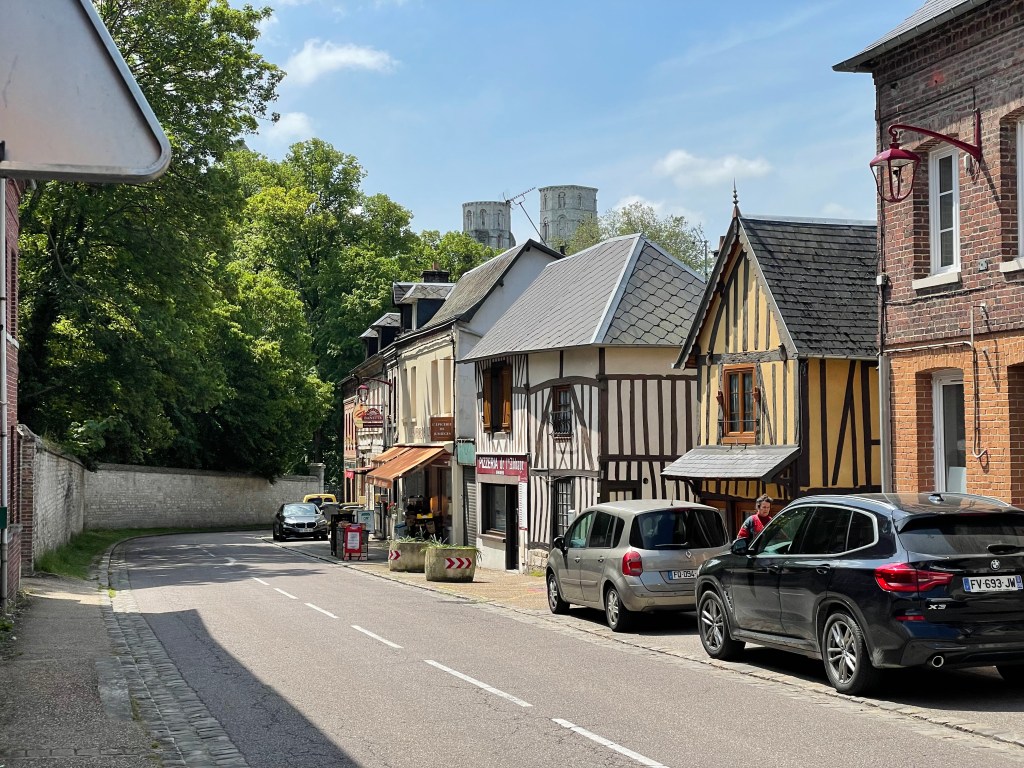
Having exhausted the choices of crépes in Caudebec we moved on to Jumièges, only 10 miles away, but it felt like going back 100 years. The tiny village is nestled under the imposing, bright white, ruins of Jumièges Abbey. It was like a scene from a Red Wall novel (Tom Foz would understand). The Michelin Guide assures us that the abbey ruins are considered to be the most beautiful and evocative ruins in France. They certainly seem to glow in the sunshine. The first Republic kicked out the monks and sold off the abbey. In 1793 it was bought by a timber merchant who blew it up to use it as a quarry. In 1852 a new owner set about preserving the place and now it belongs to the State.
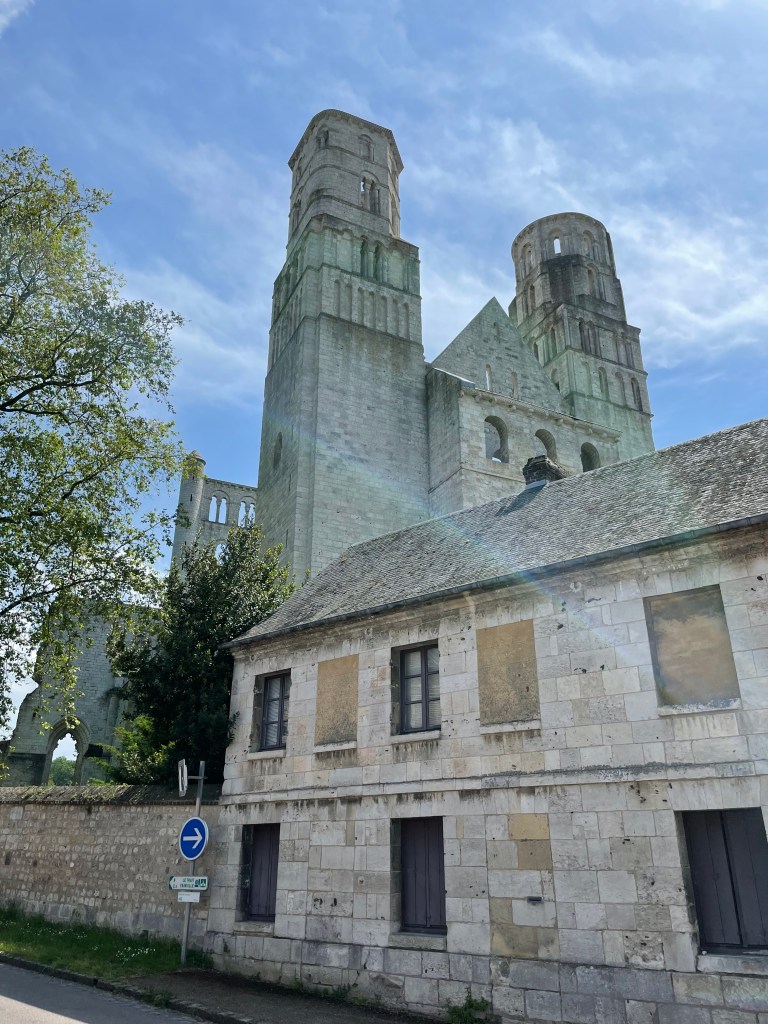
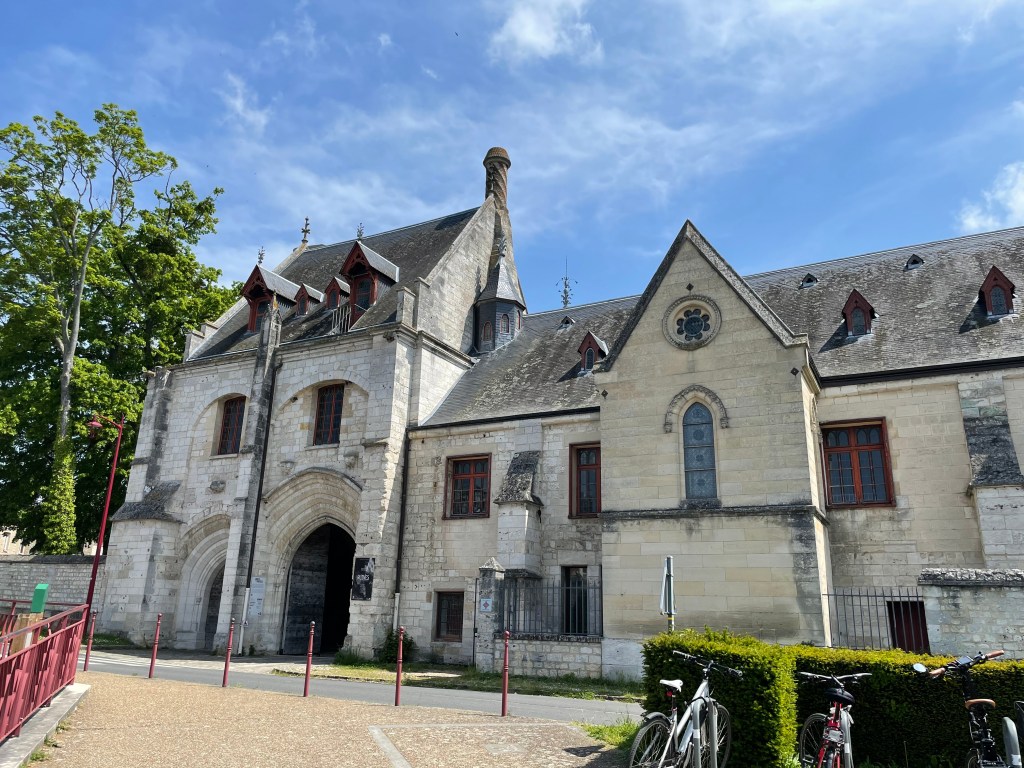
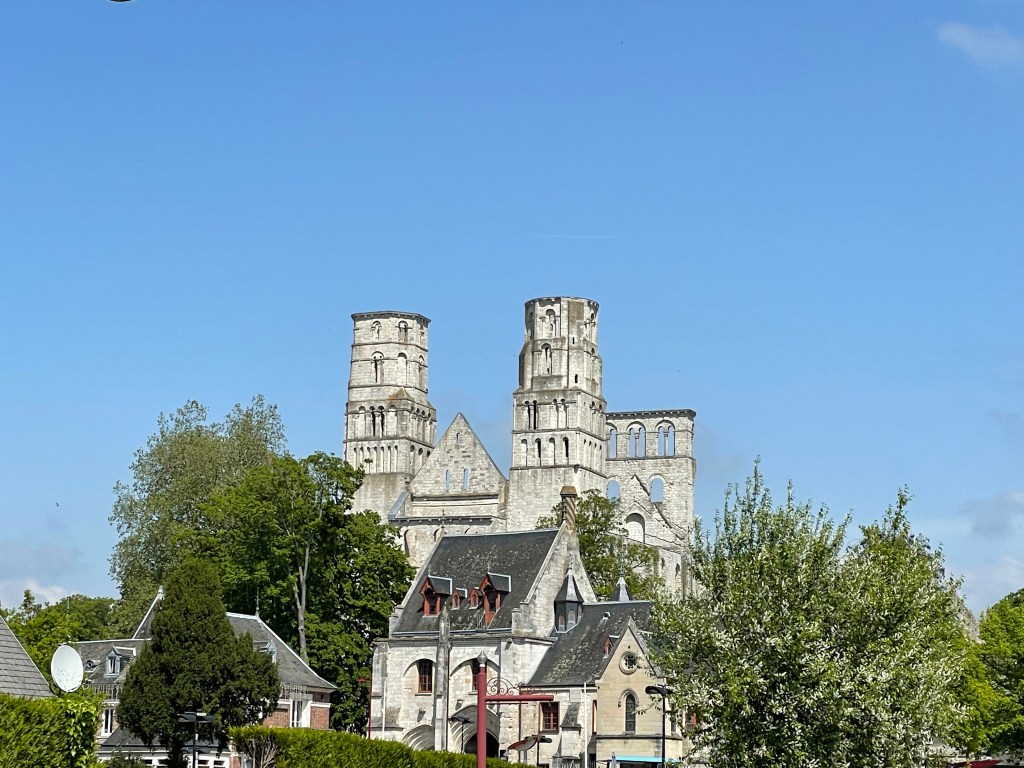

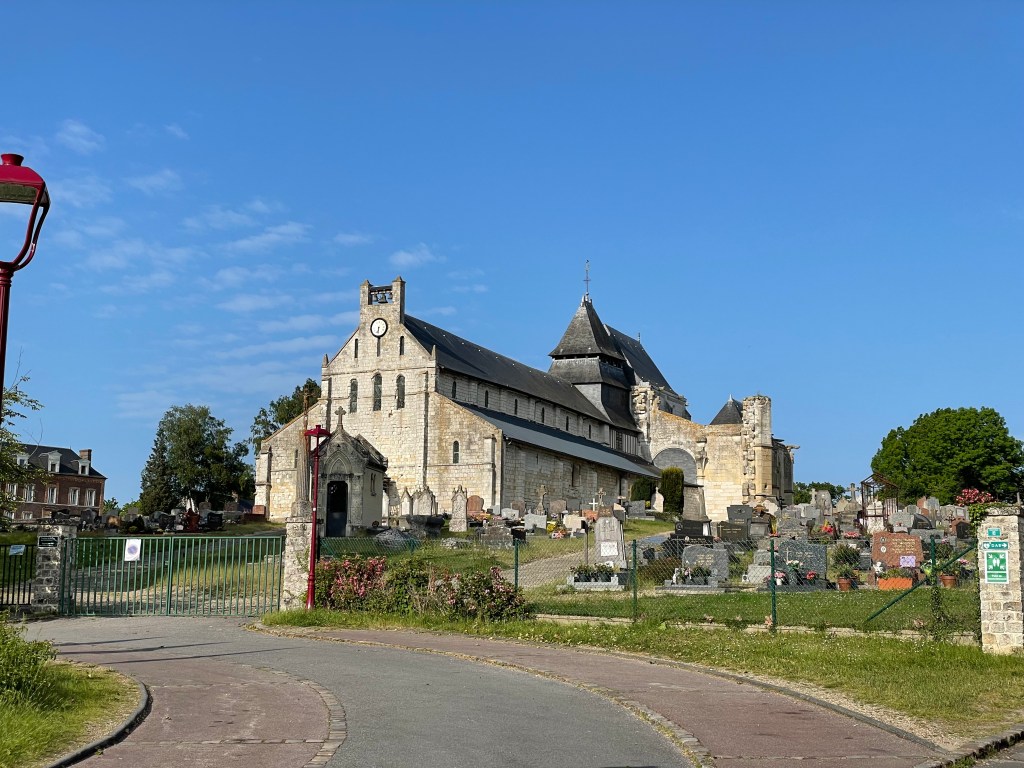
The Abbey was built in the 10th C by William Longsword (so named because he was rather short) on the site of the 7th C original which was destroyed by the vikings. This is where it becomes complicated, because the vikings stayed and became the Normans who rebuilt it. It gets worse. In 1042, Robert Champart the lord abbot of Jumièges began the reconstruction of the abbey church. He was also the Bishop of London and the Archbishop of Canterbury, thanks to his close ties to Edward the Confessor, King of England, who had grown up and been educated in Jumièges. It was Edward who was supposed to have promised William the Conqueror his crown, which led to William taking umbrage when Harold stepped in and nabbed it on Edward’s death. It’s complicated isn’t it? Clearly notions of nation were a little more fluid a thousand years ago? Anyway the church was finally consecrated in 1067 in the presence of William who was now King of England and back in Normandy to celebrate.
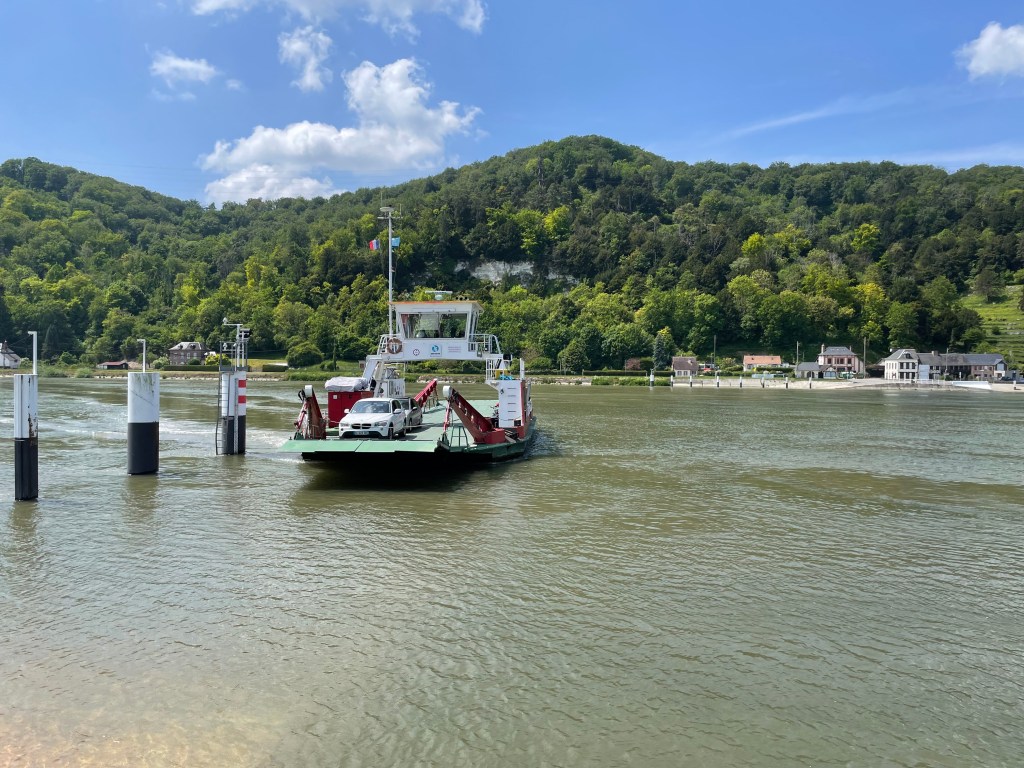
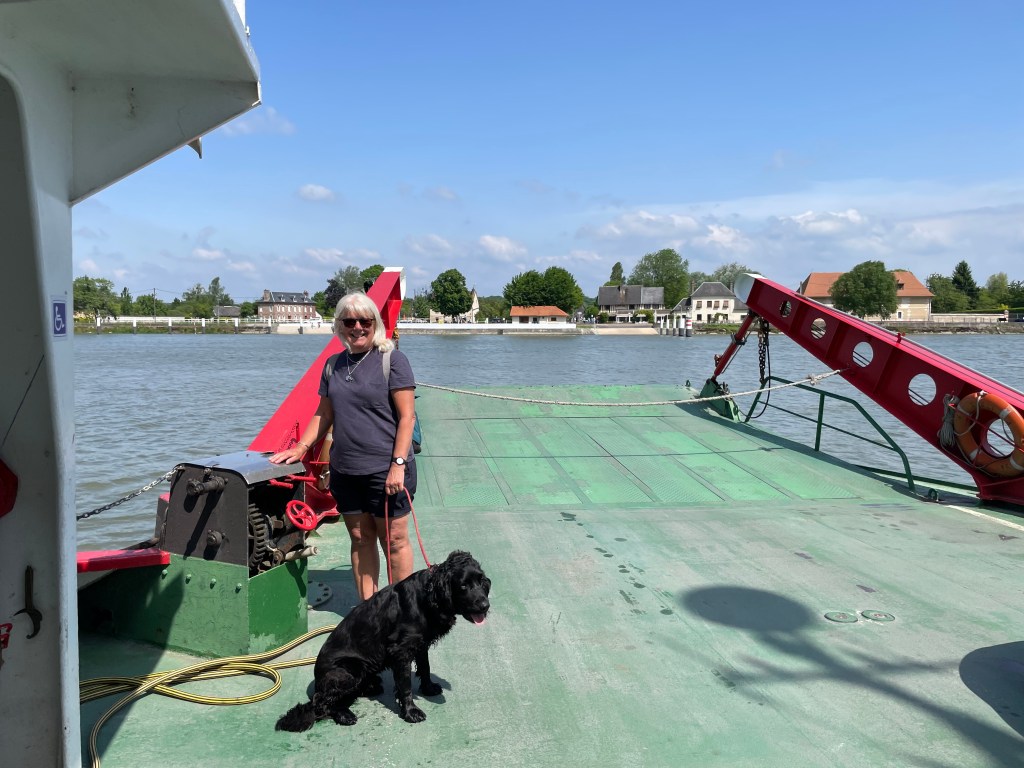
A kilometre away from the village is a small ferry across the Seine that takes cars, cyclists and pedestrians. When I asked the skipper how much was the ferry, he replied in English; “If you ask me, it costs €100,000. If you don’t ask me, it’s free!” So we didn’t speak to him again and made the five minute journey across the river with a strong current running that showed us the true meaning of a ‘ferry glide’. The Boucles de la Seine are renowned for their fruit orchards, not just apples and pears , but cherries and soft fruit too; apparently it has its own unique microclimate that is ideal for fruit growing. So we wandered passed orchard after orchard with the odd stork’s nest in between, and then took the ferry back to Jumièges Port and strolled purposefully (if that is possible) to our appointment with the bar in the shadow of the abbey’s two towers.
Being pretty flat (if you ignore the towering cliffs) the Boucles de la Seine are great cycling country and there are plenty of well marked routes with lots of information from the local Tourist Offices. That’s how we came across Agnes Sorel. On one of our rides we came across the unremarkable looking building whose photo I posted in the last blog with Wendy and Bryn and the dog chariot outside. On our map it was called ‘the House of Agnes Sorel’. Who is Agnes Sorel I hear you ask?
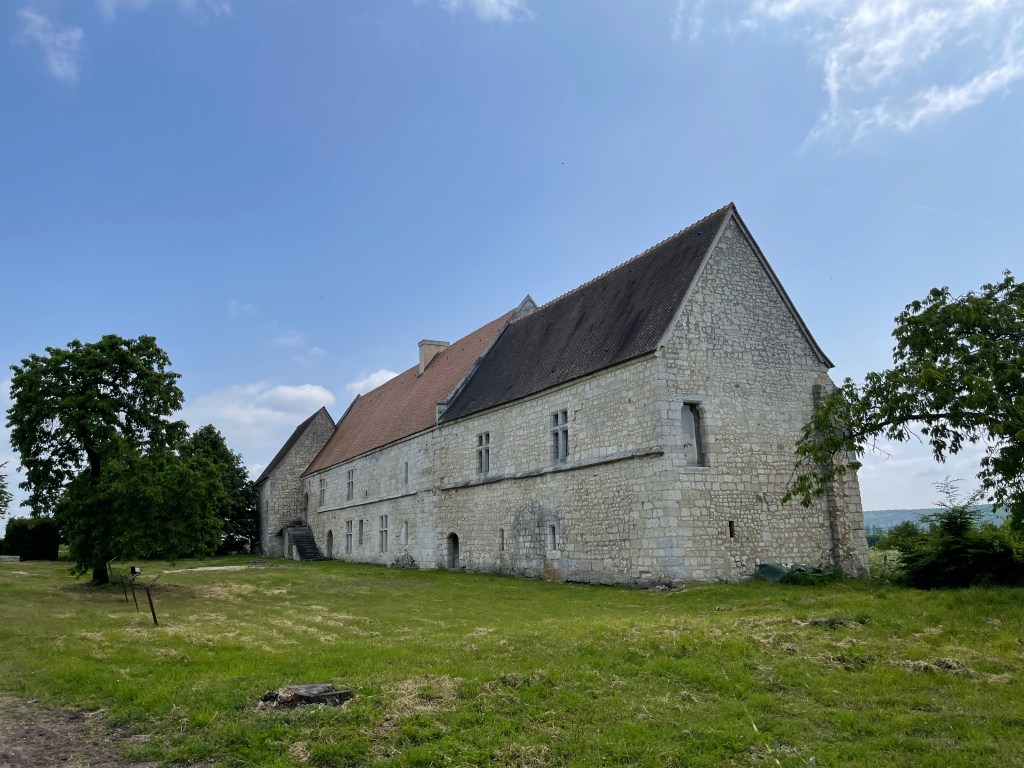
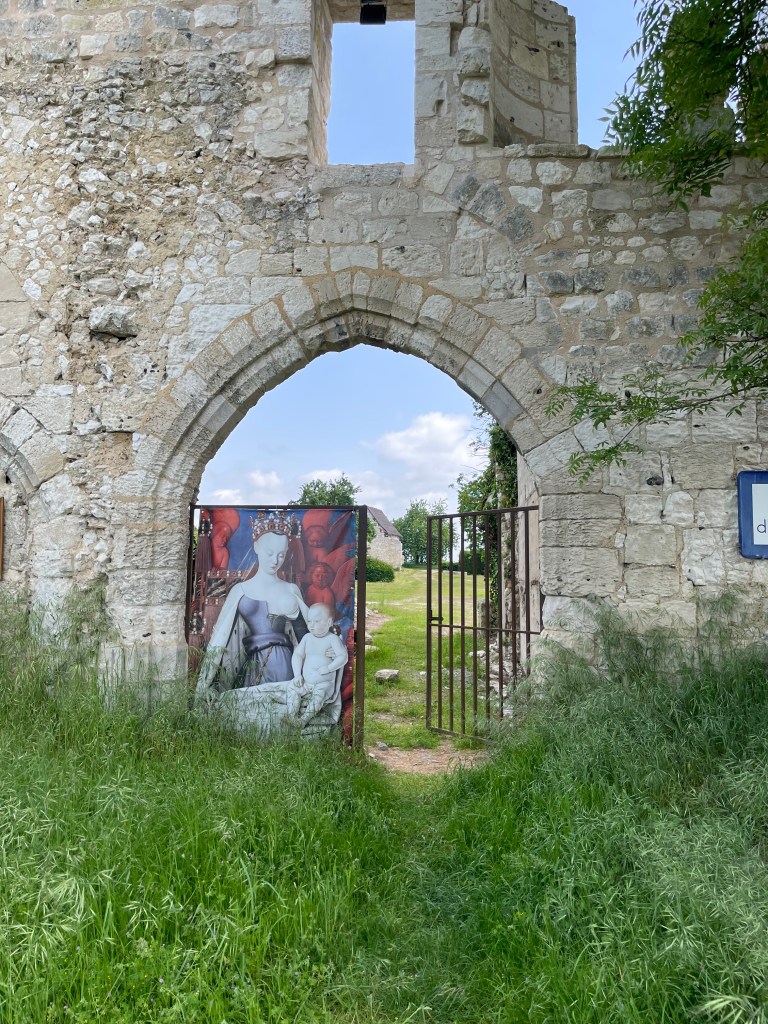
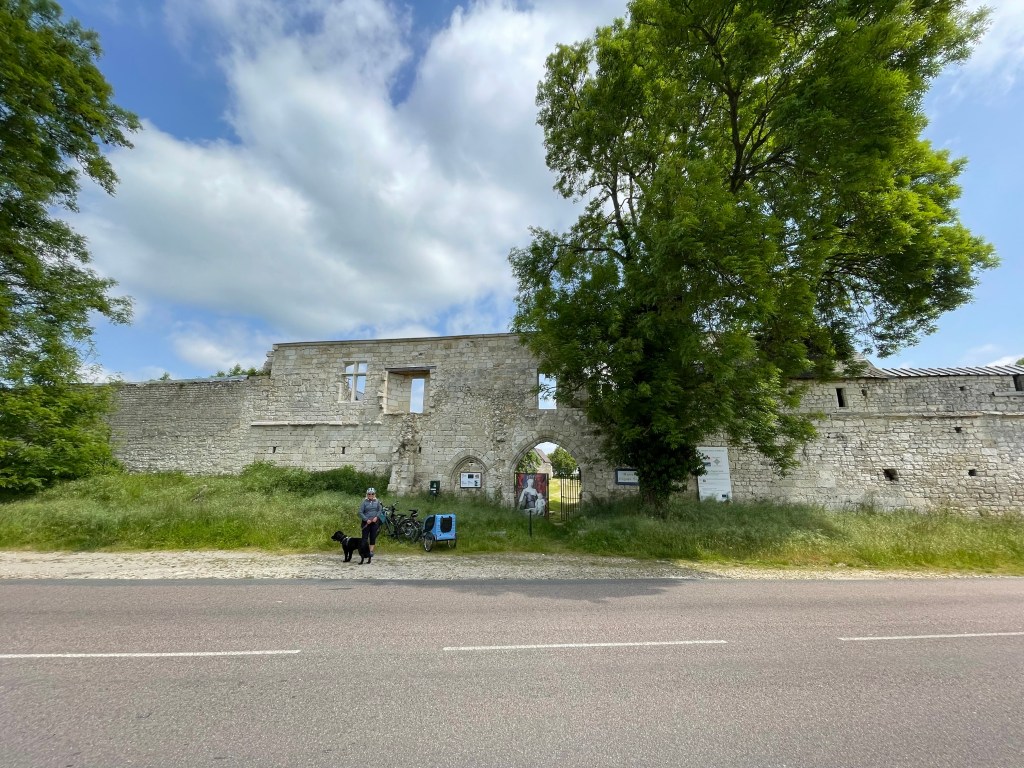
She is famous in France for being the first ever officially recognised royal mistress. She met Charles VII of France around 1442 (so long before Camilla met Charles) and never left his side after that in 8 years she managed to bear him four children who went on to marry some of the most important men in Europe at the time. The sad thing is that Agnes moved to the house in Jumièges in 1450 to be with the King, who was busy fighting the English nearby as part of the 100 years war. She was pregnant with her fourth child and died shortly after giving birth from mercury poisoning. She had made many enemies at court, partly from popularising the fashion for low cut dresses, which incurred the wrath of the Church, but it is just as likely that it was absorbed from her cosmetics or medicines.
If you are ever down Jumièges way be sure to stop at Camping du Foret, just up the hill from the Abbey. We loved the campsite and the team who were very friendly and helpful, so much so that it has now stormed into our top three of the trip so far.
 semper deinceps