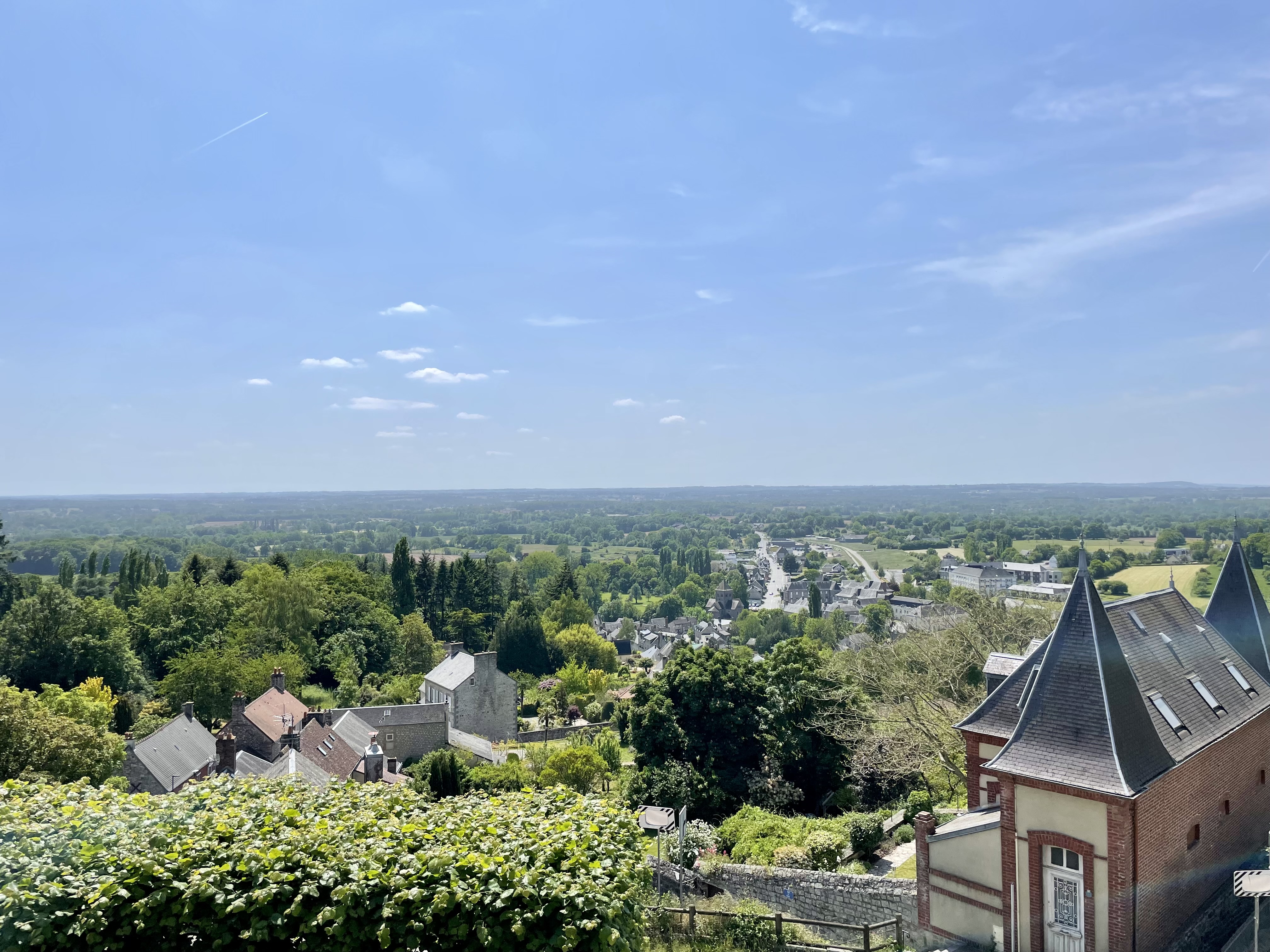
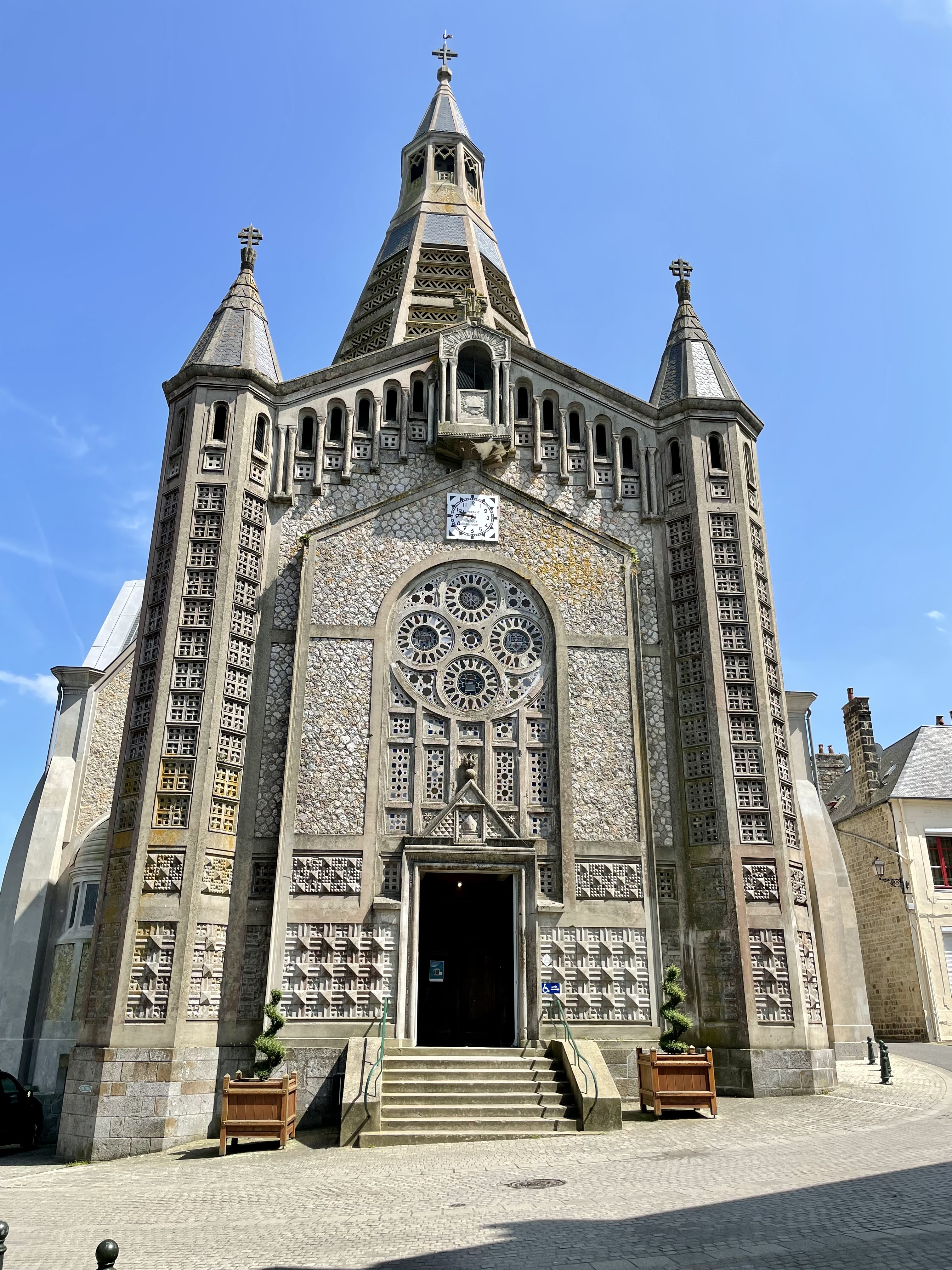
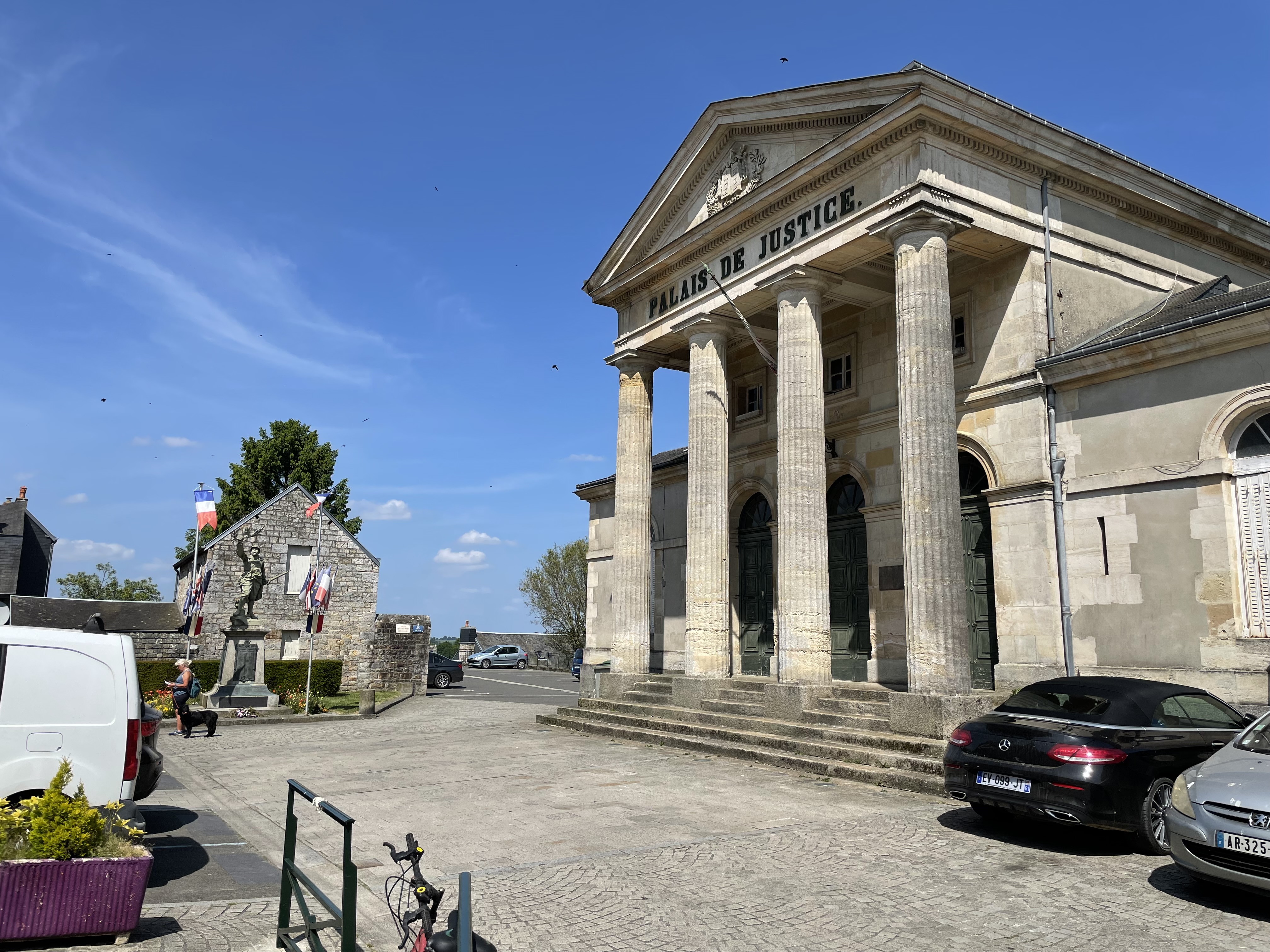
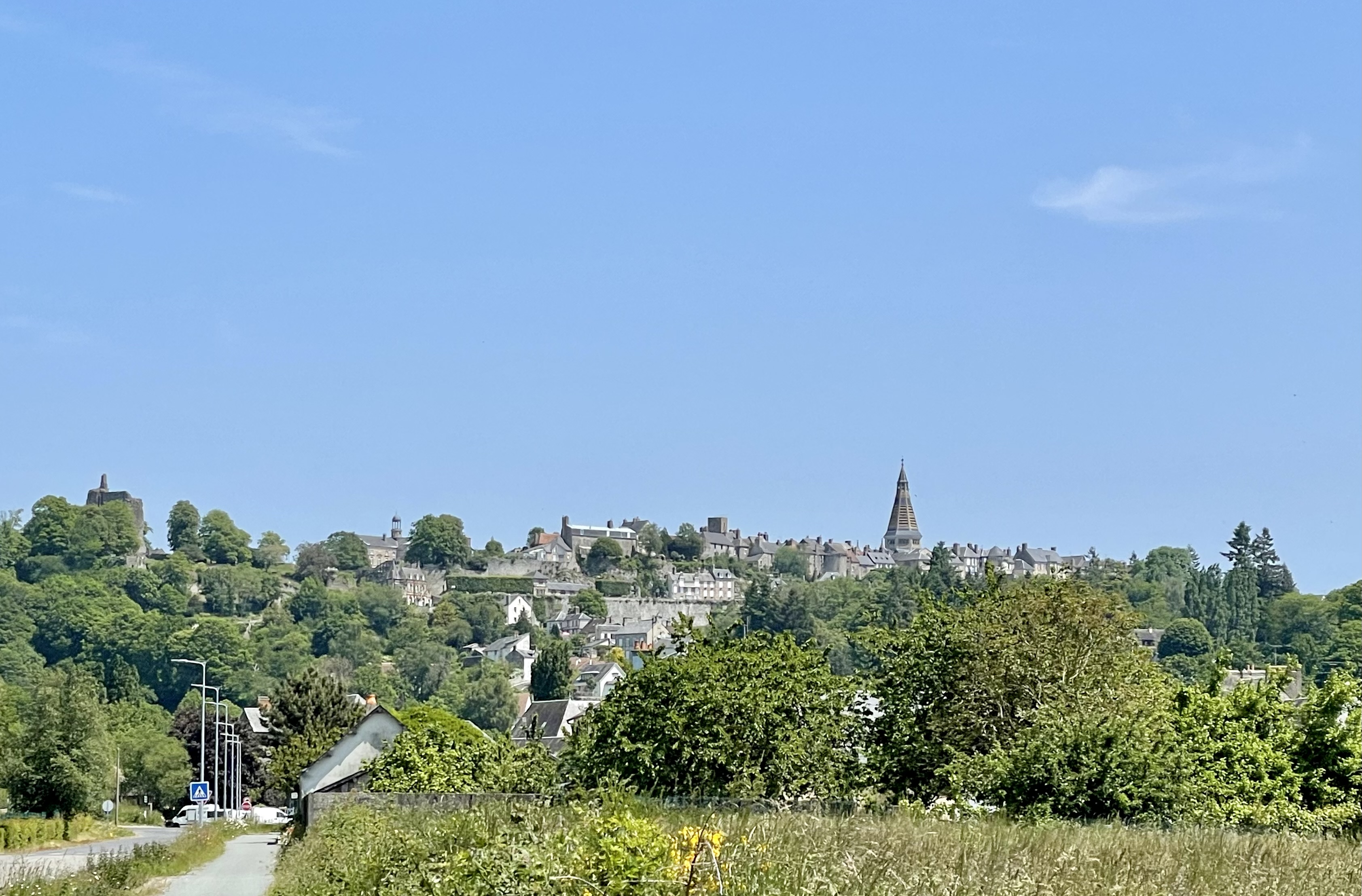
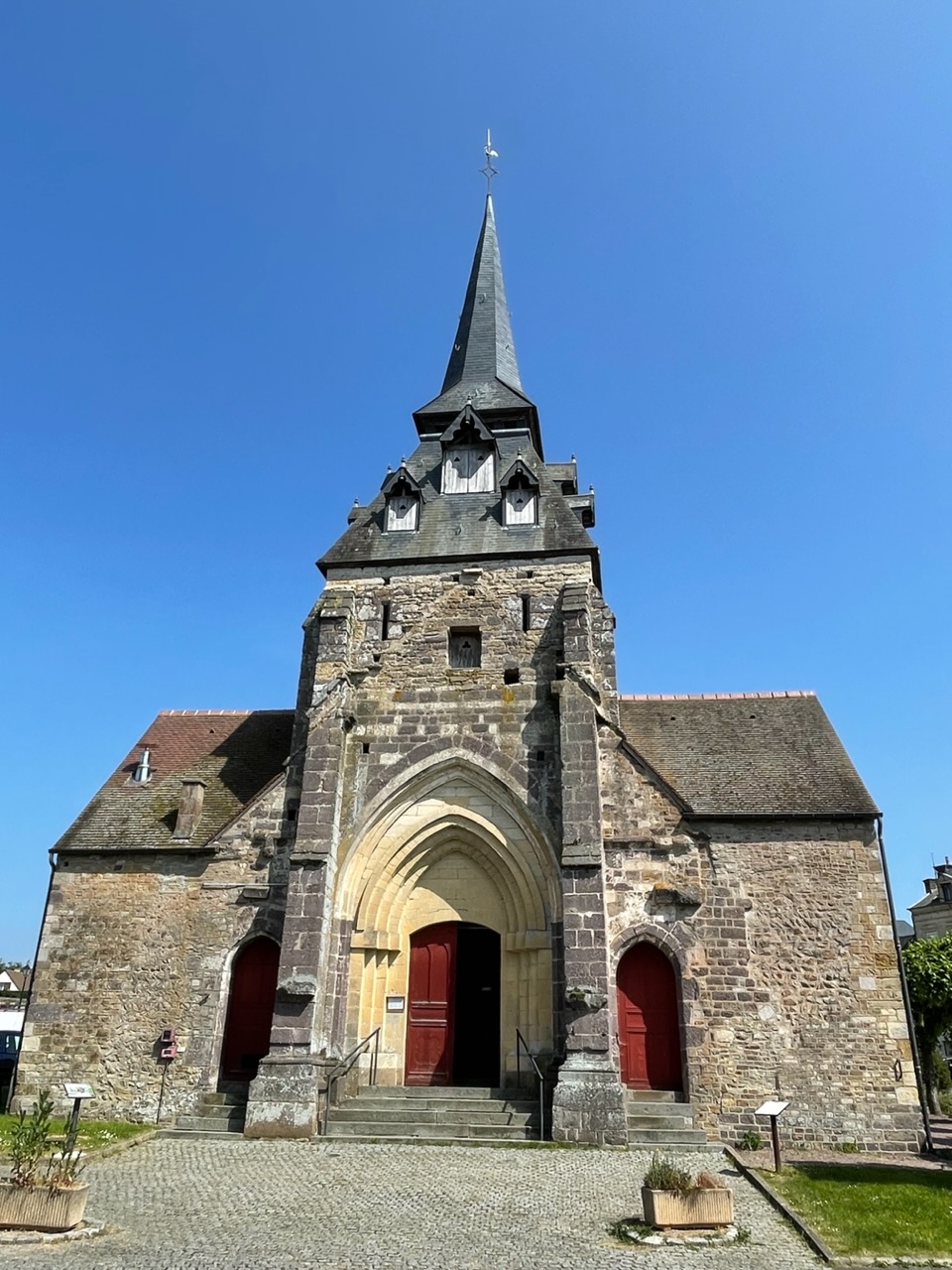
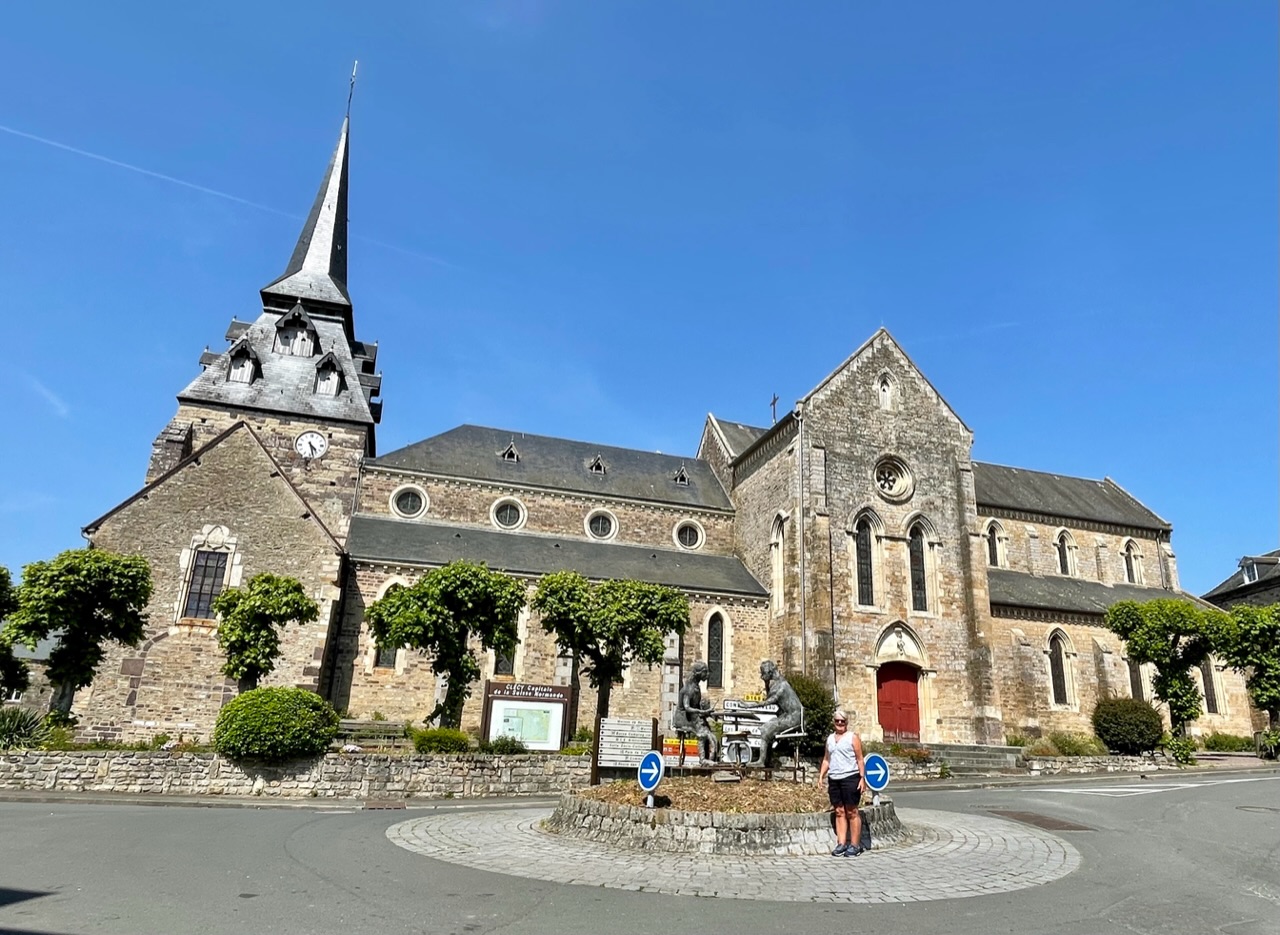
We arrived in the charming town of Domfront en Poiraie by accident! Our original destination, the campsite at Clécy was full. It is yet another bank holiday – the French seem to have almost as many May Bank Holidays as we do! We had remembered reading about a town with a real Norman castle, a donjon, not a chateau that wasn’t only 30 miles away. So here we are in Domfront, a medieval town with a Norman Castle, still with the remnants of town walls that sits astride a ridge, dominating the the surrounding countryside, le Bocage. History is all around us from the early 11thCentury (pre William) right up to the damage caused by the Battle of Normandy.
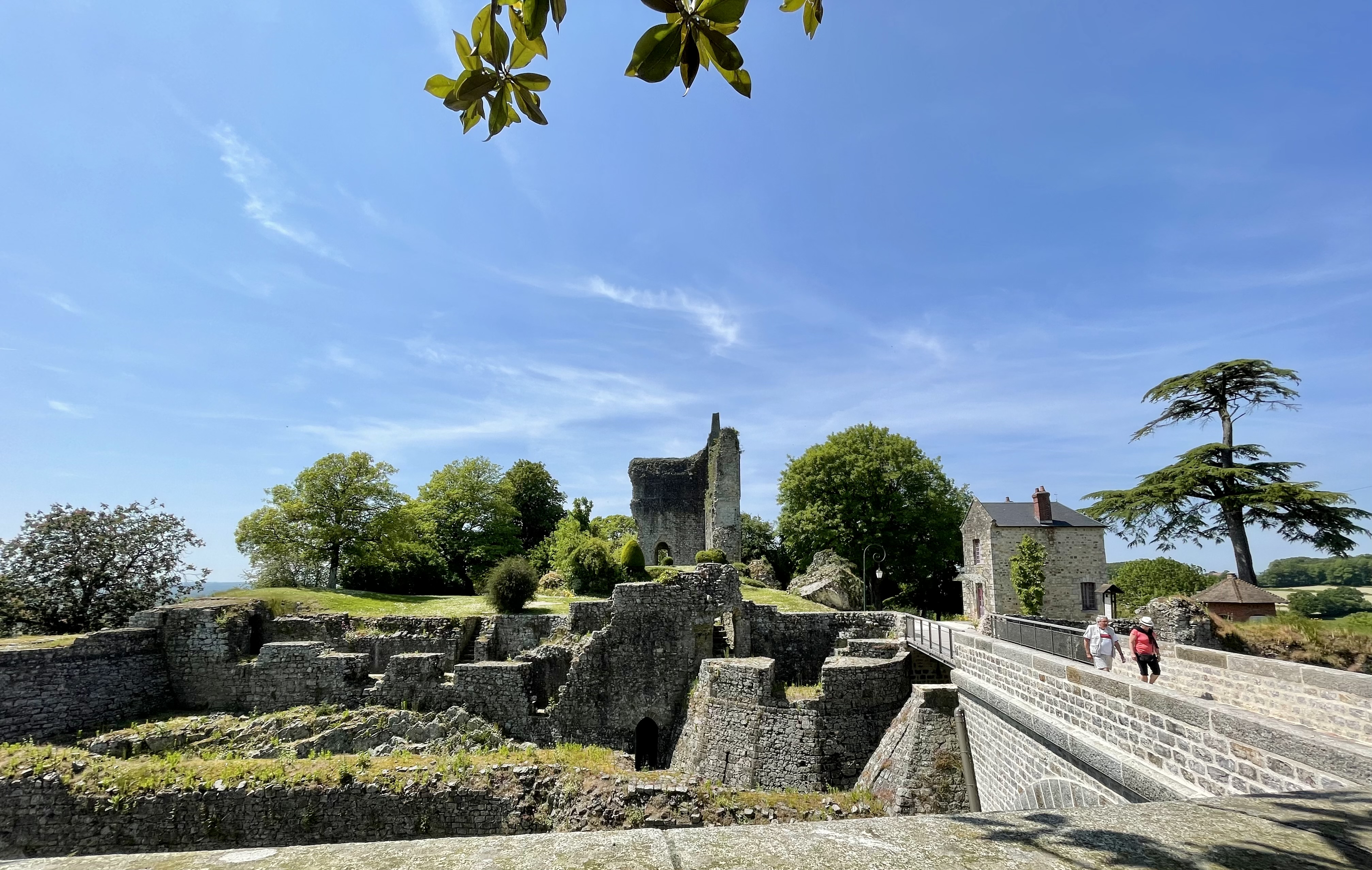
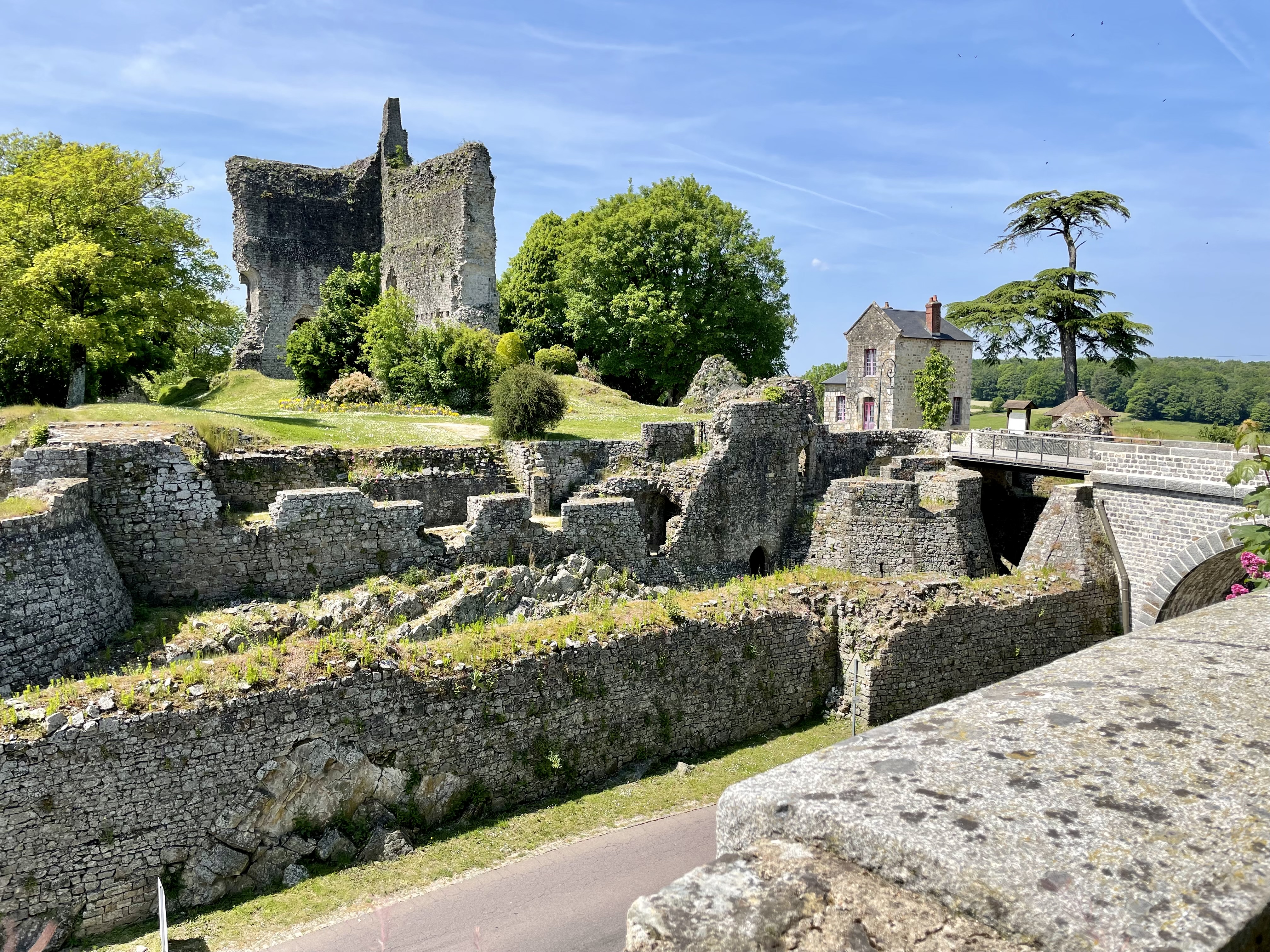
Donjon, by the way refers to the castle’s tower, its keep. In English it had an interesting metamorphosis into dungeon, meaning an underground prisoners’ cell.
A wooden castle was built in Domfront by Guillaume de Bellême in 1010. Henry I of England then rebuilt it in stone in the 12th C during one of the internecine squabbles that followed the death of William. The castle changed hands a few times before the English captured it and reinforced it to cope with the new fangled cannon warfare during the Hundred Years War. The castle was destroyed in in 1608 on the orders of the king of France’s right hand man Maximilien Sully. It still looks pretty impressive.
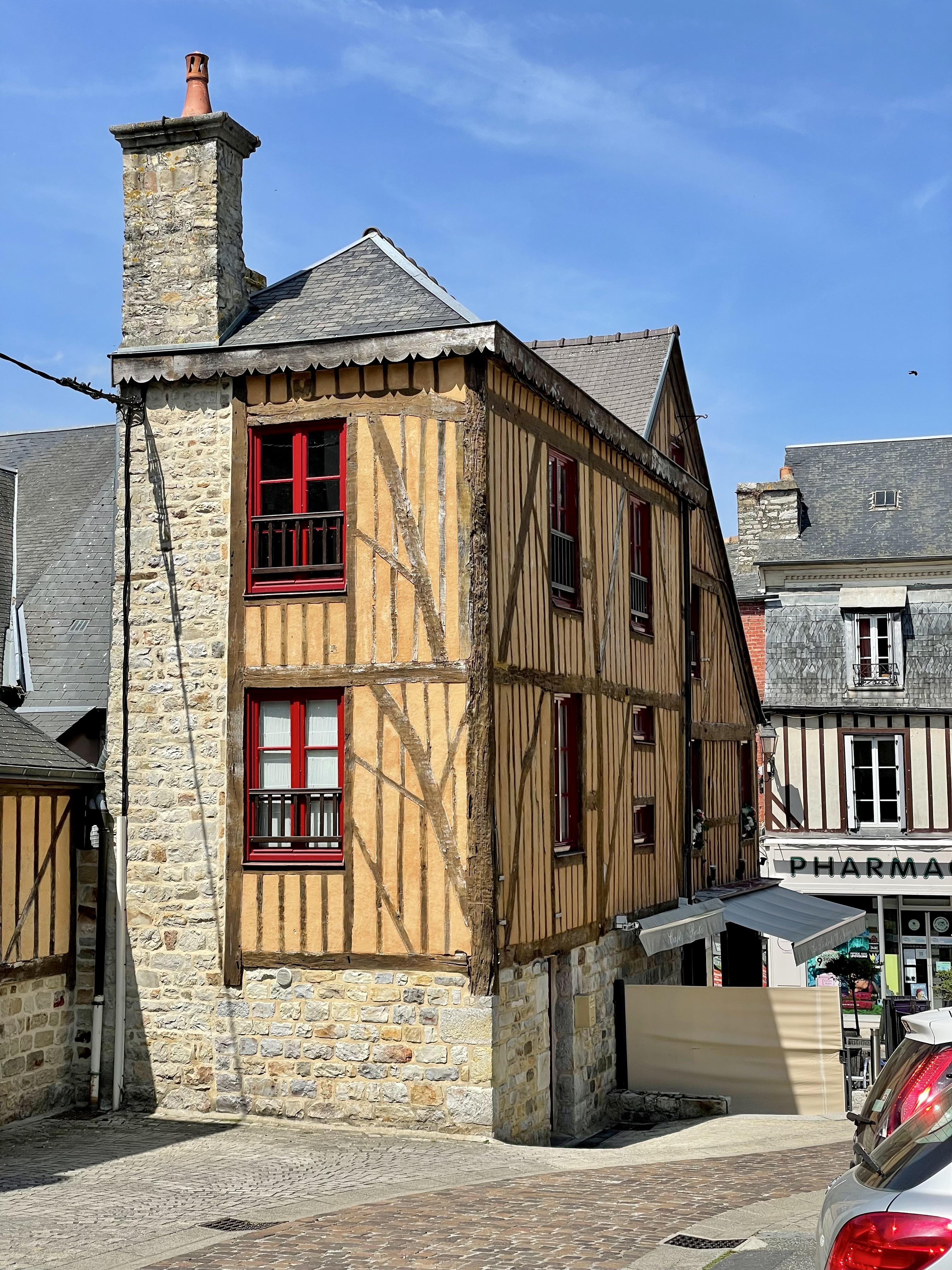
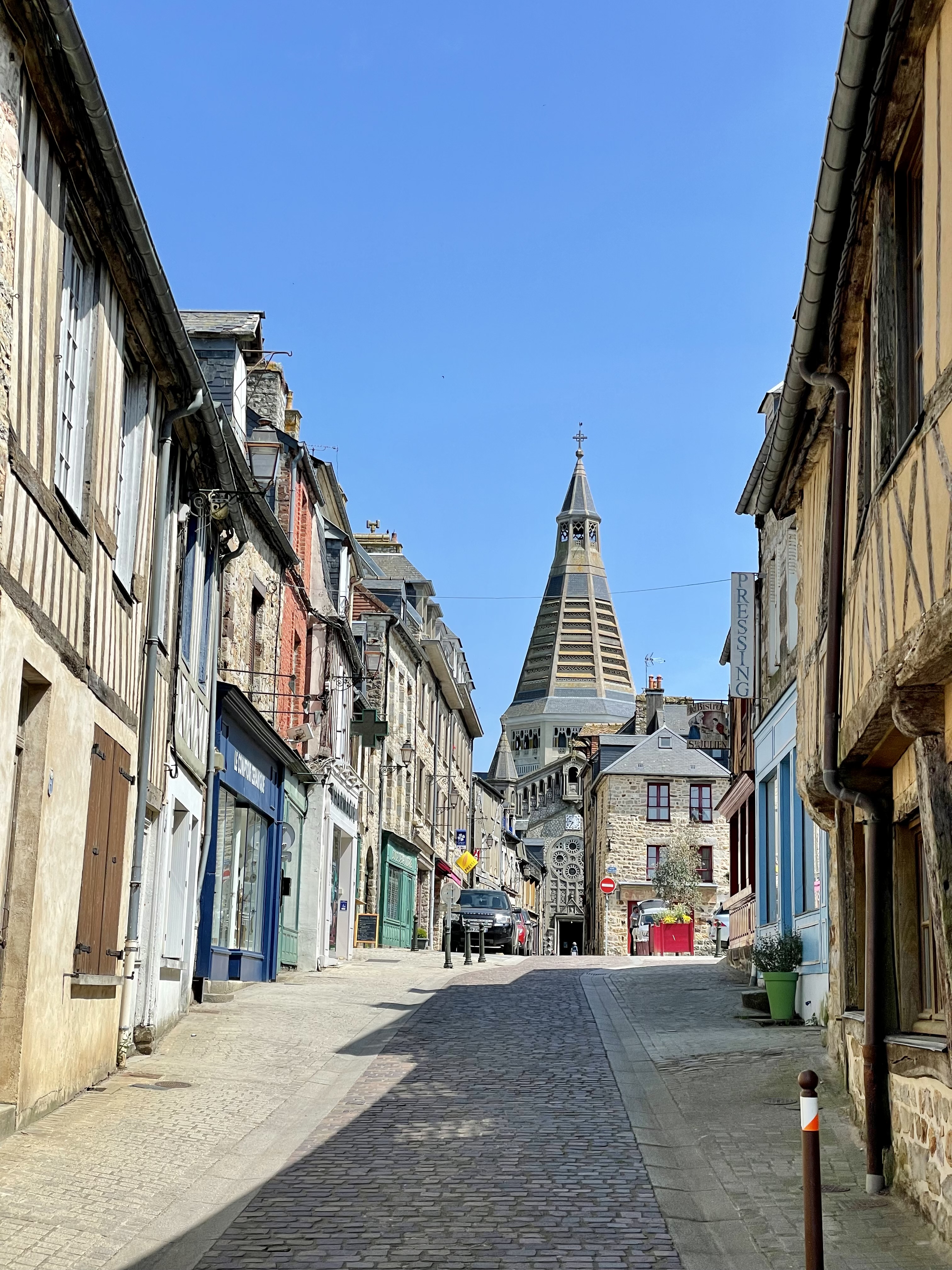
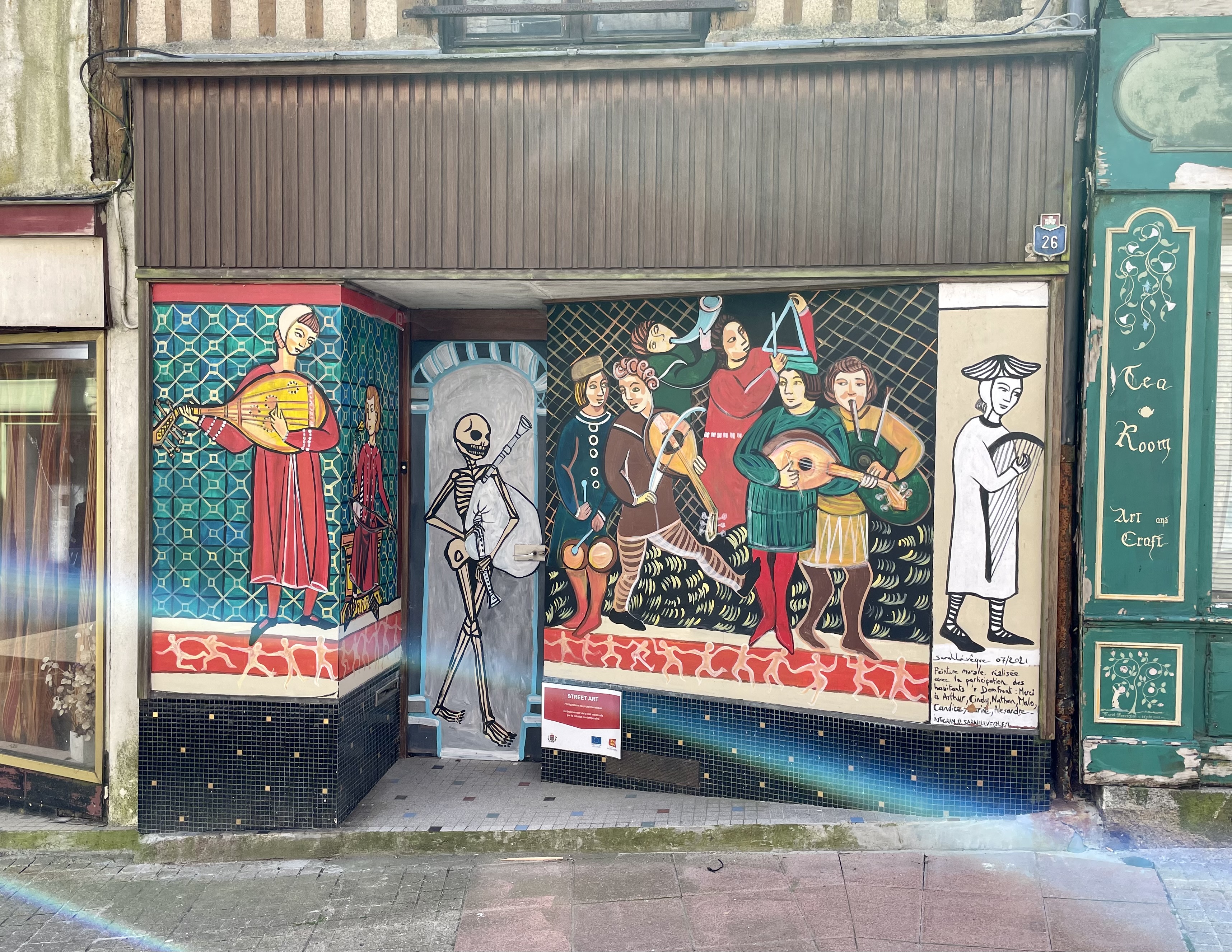
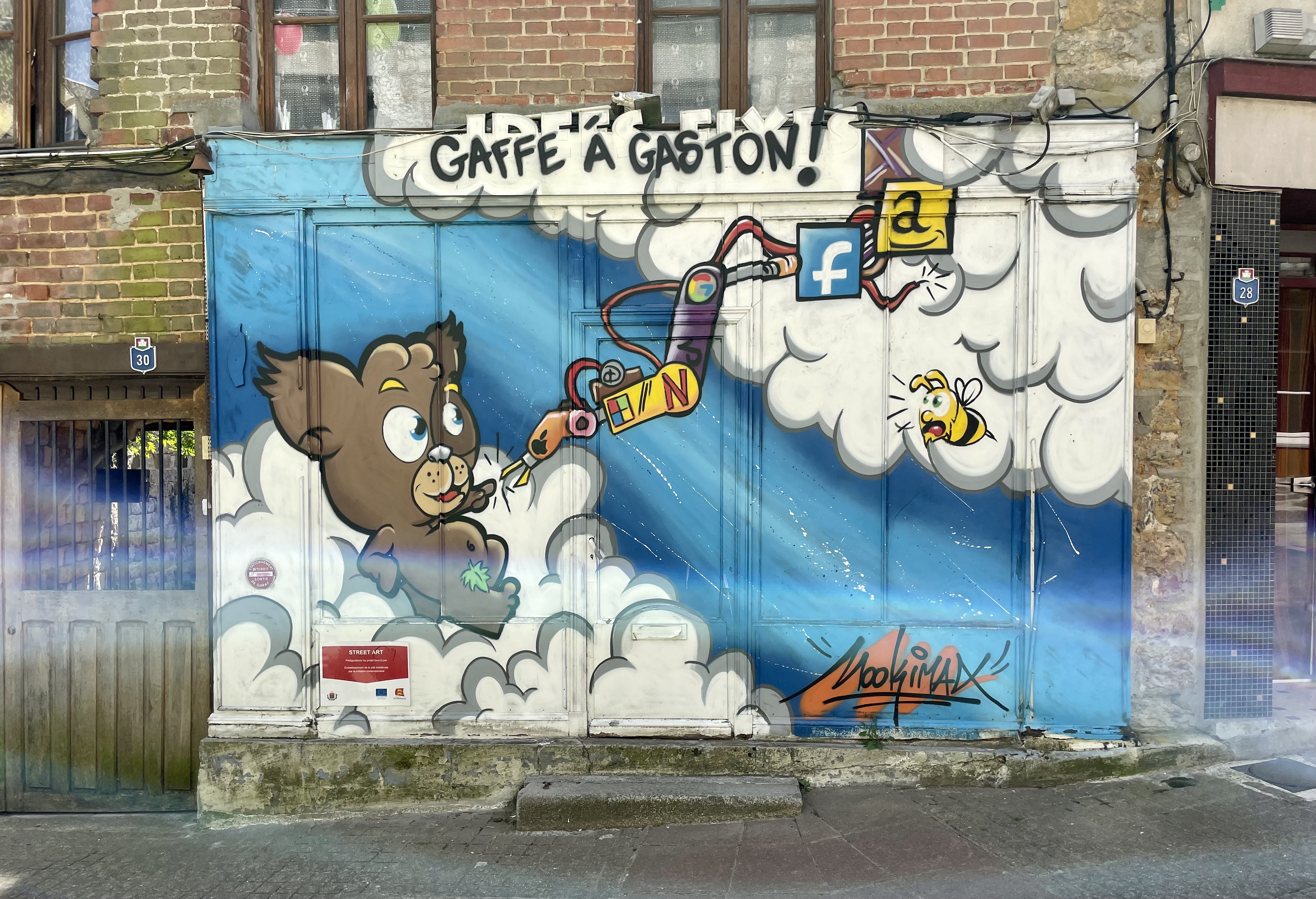
We followed an interesting tourists’ trail around the town that made sure we didn’t miss a single medieval cobble or culvert. Overall the old town seemed a little sad. Many shops were empty and it was clearly difficult to attract new owners as the town had employed artists to paint over the shop fronts in an effort to make the place look a little more lively. Nowadays, most of the towns action takes place in the new town, lower down the hill.

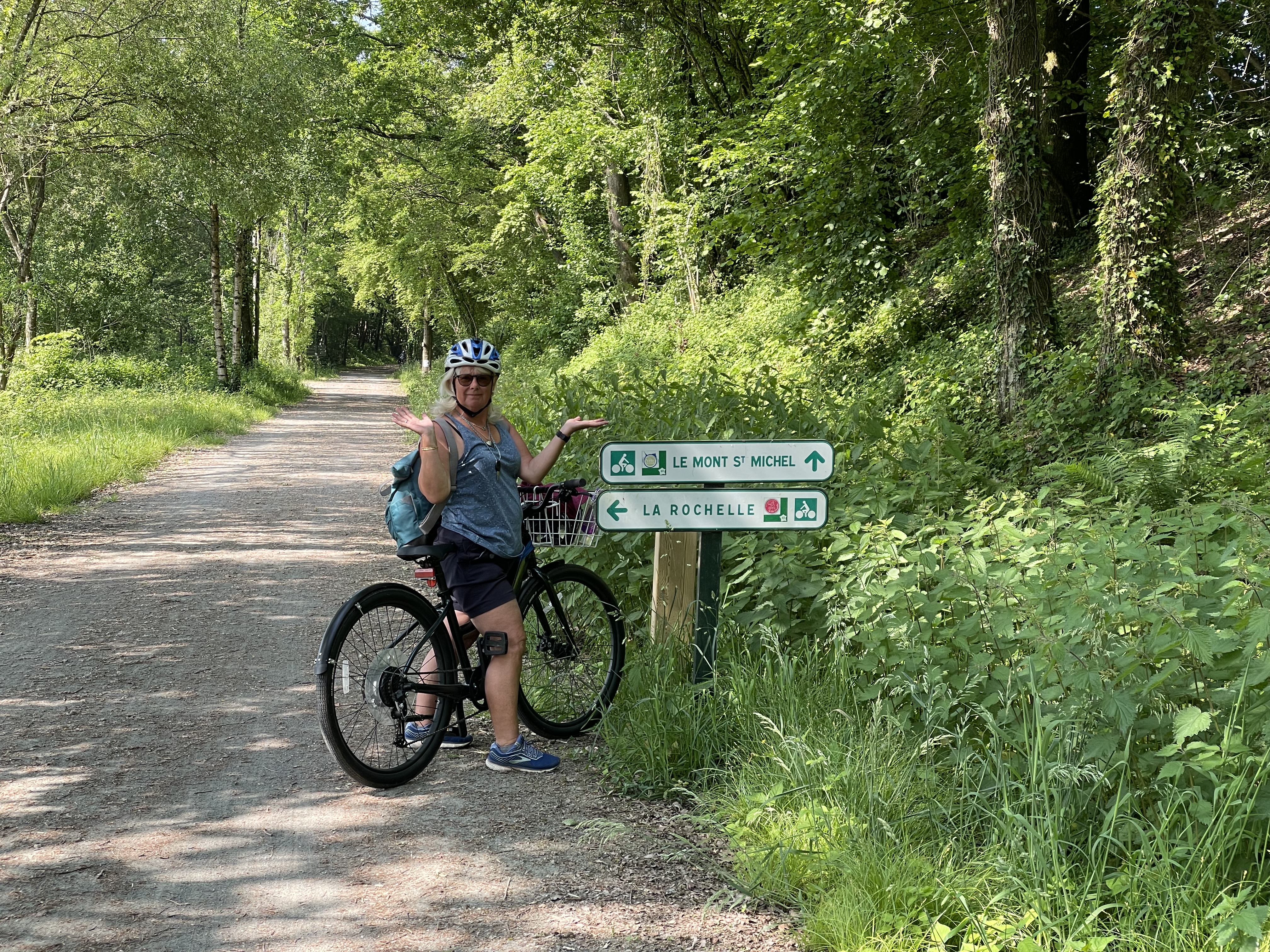
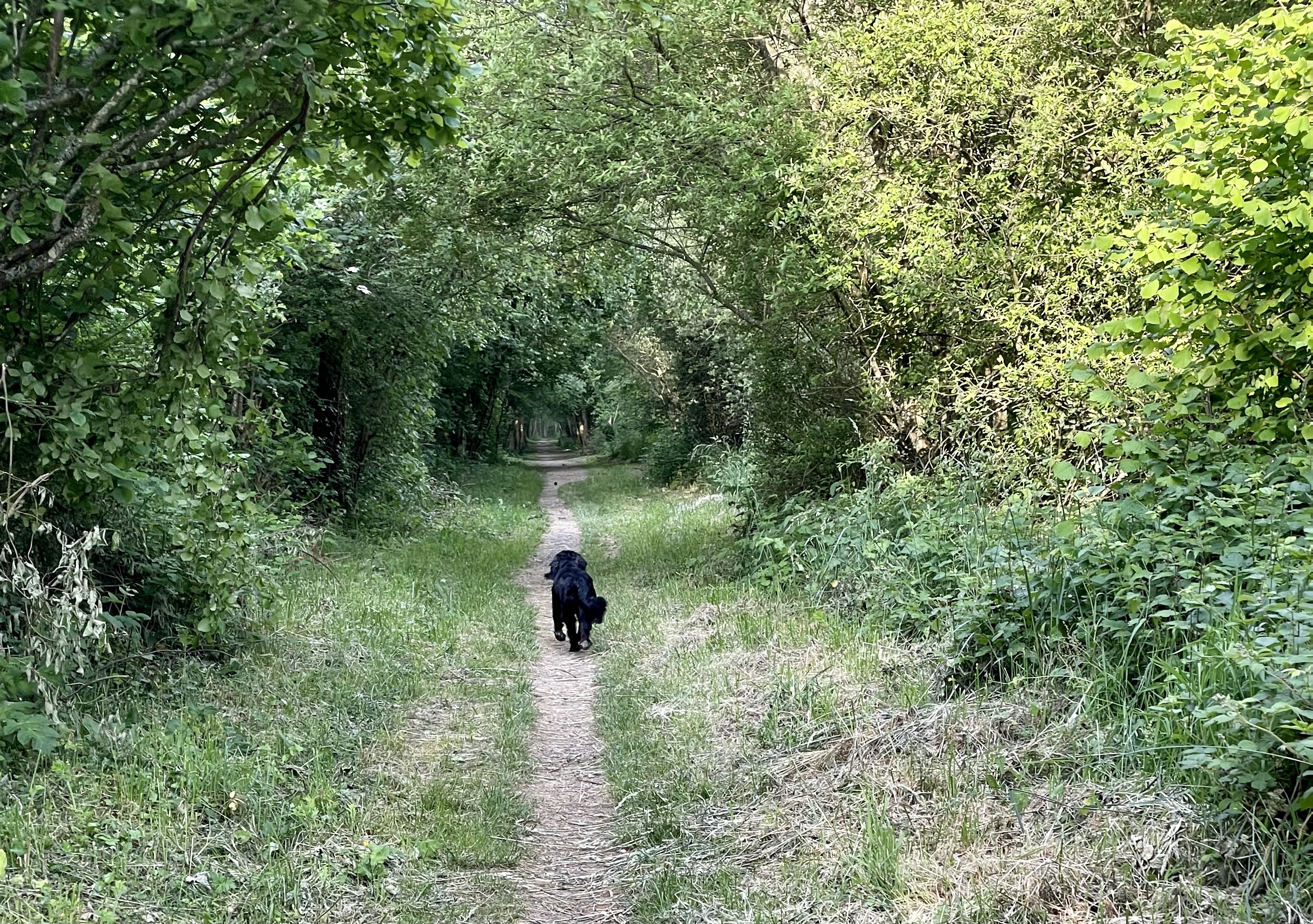
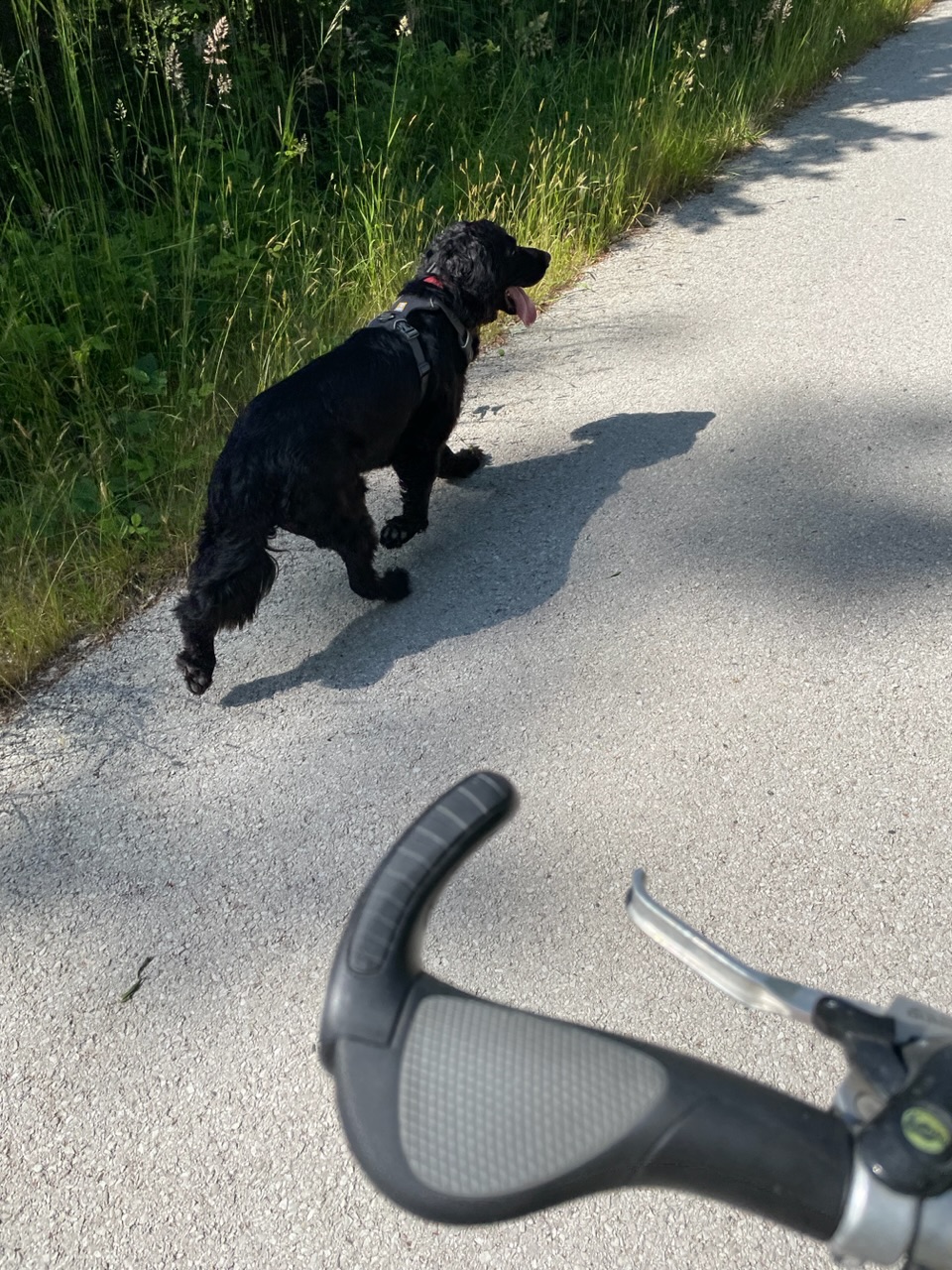
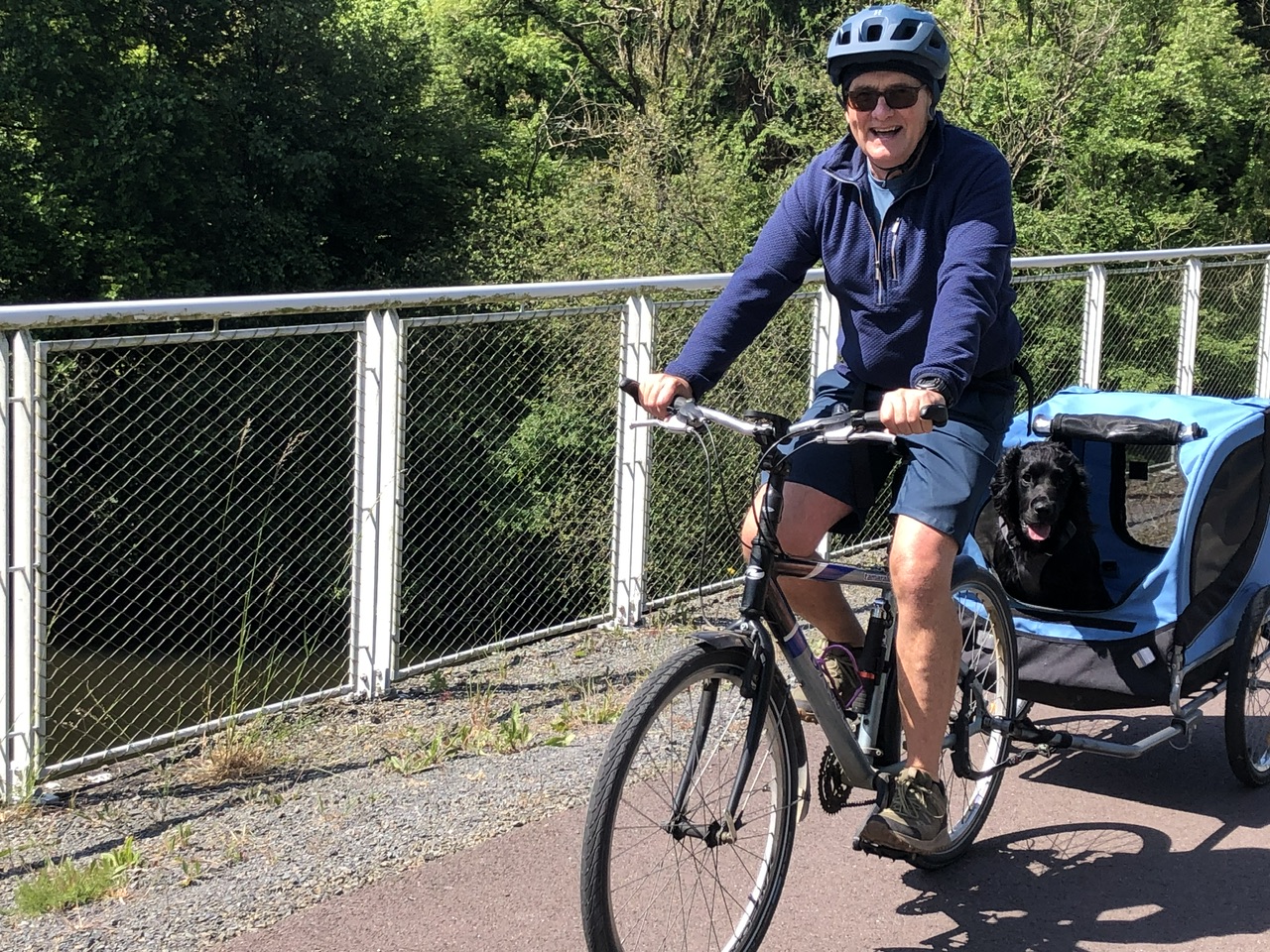
The municipal campsite in Domfront is just off two long distance cycle routes, the Véloscénie from Ouistreham to Mont St-Michel and the Vélo Francette from Ouistreham to La Rochelle. Both routes follow old railway tracks. We didn’t quite get to Mont St-Michel, but took advantage of Bryn’s new found cycling skills to ride 16km or so to the village of Barendot. Possibly the La Rochelle route might have been more interesting, it couldn’t have been less. We came across no villages or anything of real note the whole way, and the only cyclists we came across were on heavily laden touring bikes, so I became adept at giving a slight nod of the head with my restrained ‘bonjour’. As it was so quiet and Bryn’s behaviour was much improved we gave him a couple of chances to run along side us. He was off the lead and just jogged along, keeping pace with us. He quickly got into the routine of stopping and sitting to the side of the path if a cyclist came the other way or overtook us.
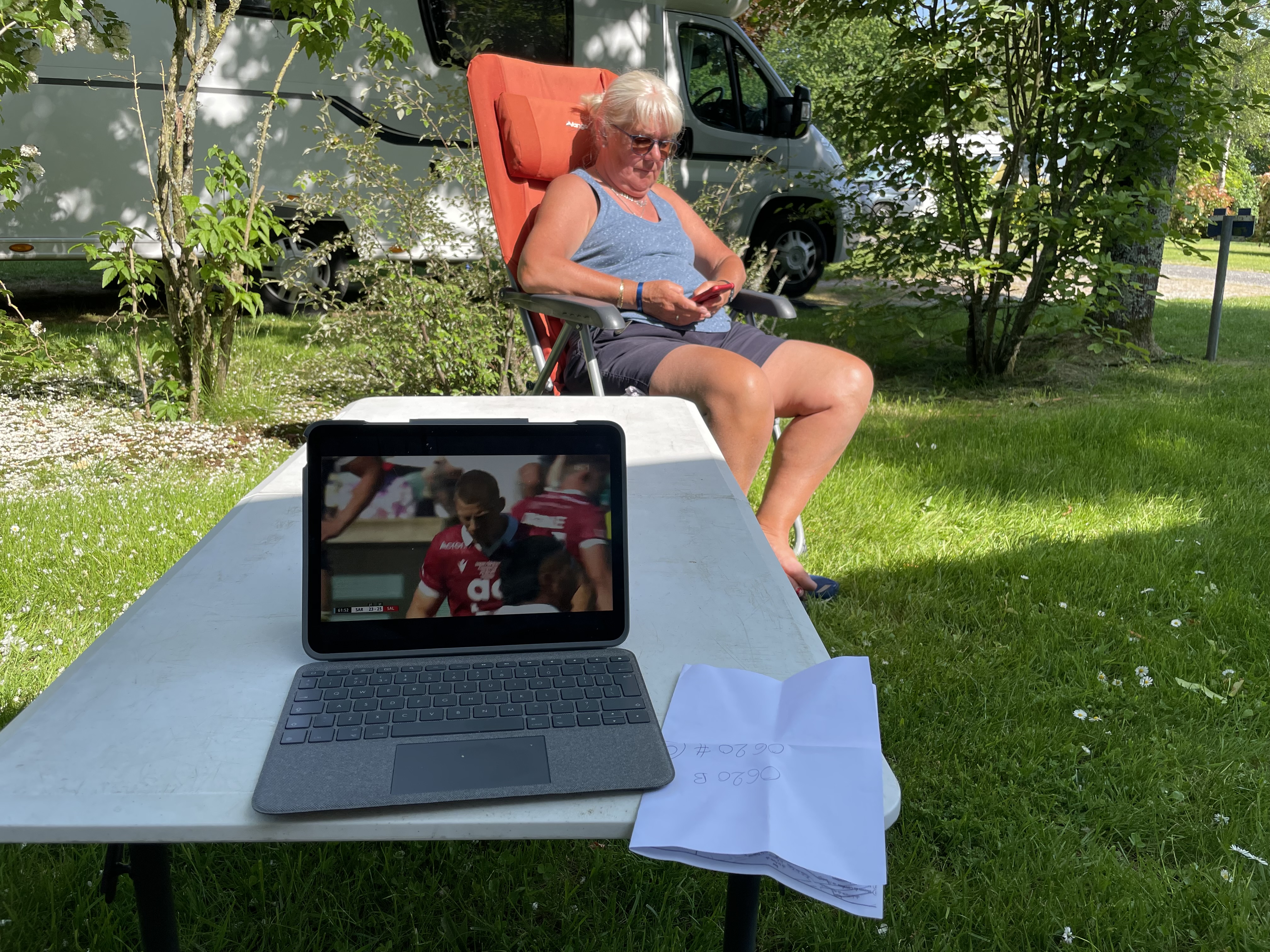
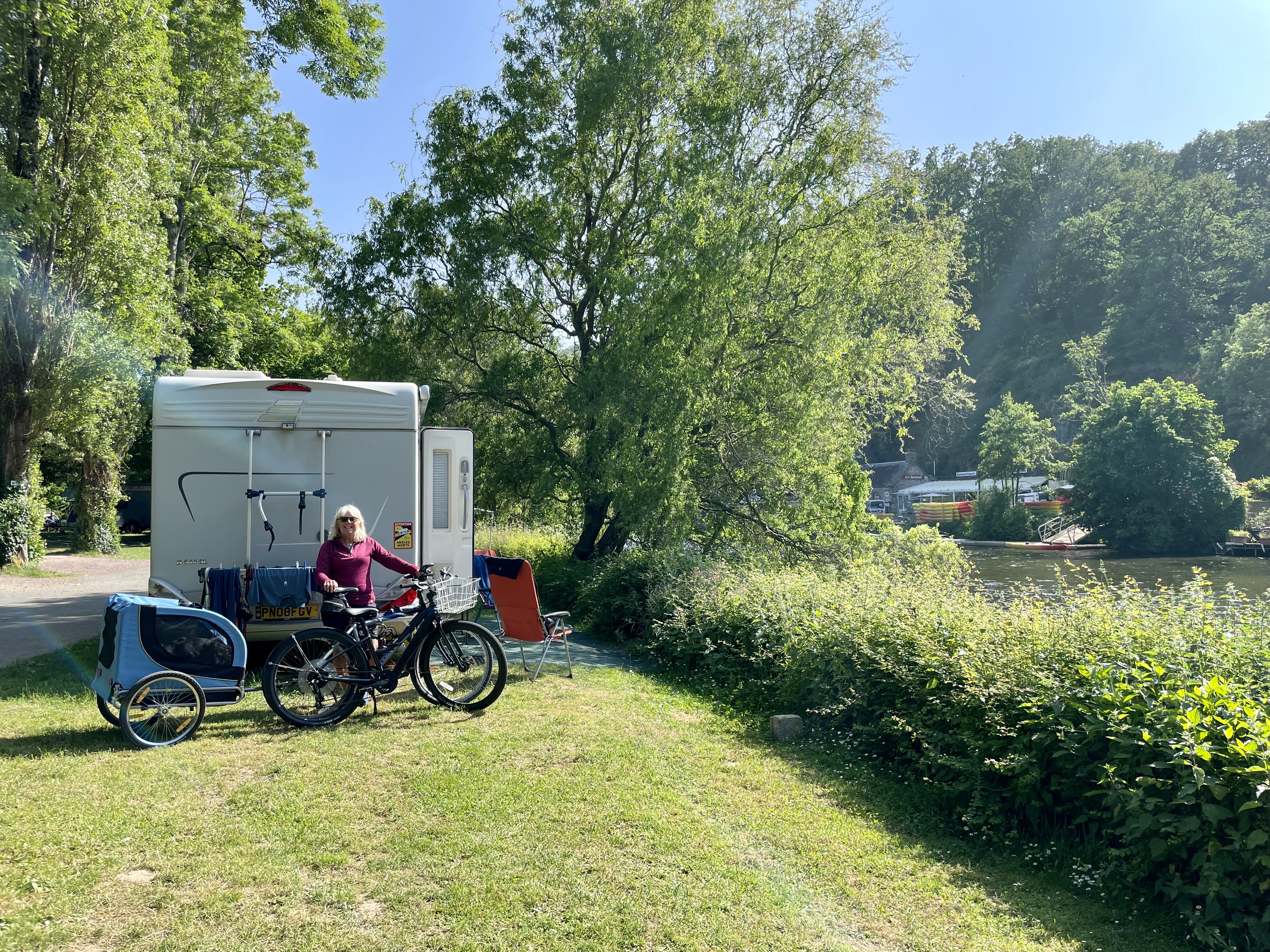
After a surprisingly good two days at Domfront we went back to Camping des Rochers des Parcs in Clécy as we had booked in for two nights. Madame and Monsieur le Camping seemed genuinely pleased to see us after having to disappoint us on Saturday and he showed us to our pitch and asked to sign in later in the day when they were less busy!
It is a stunning site, right on the bank of the river Orme that flows towards Caen and Ouistreham. We are actually right on the bank, there is nothing between Bryn and the ducks apart from a low hedge of buddleja and stinging nettles.
When did Buddleia become Buddleja for goodness sake? Well apparently it always has and its all to do with Linnaeus, the father of botanic nomenclature. The Butterfly Bush was named after the botanist Adam Buddle. He didn’t discover it. as that happened in 1730 and he died in 1715, he was a moss specialist anyway. Linnaeus named the shrub after Buddle in his Species Plantarum in 1753 and used the spelling with a j. By modern practice the spelling of a generic name would be Buddleia, but stricter rules introduced in 2006 means that the original spelling should be followed; so Buddleia is now Buddleja and my spell checker dislikes them both and wants to replace them with Boodle!
(Now you can see why I have not enough time to blog!)
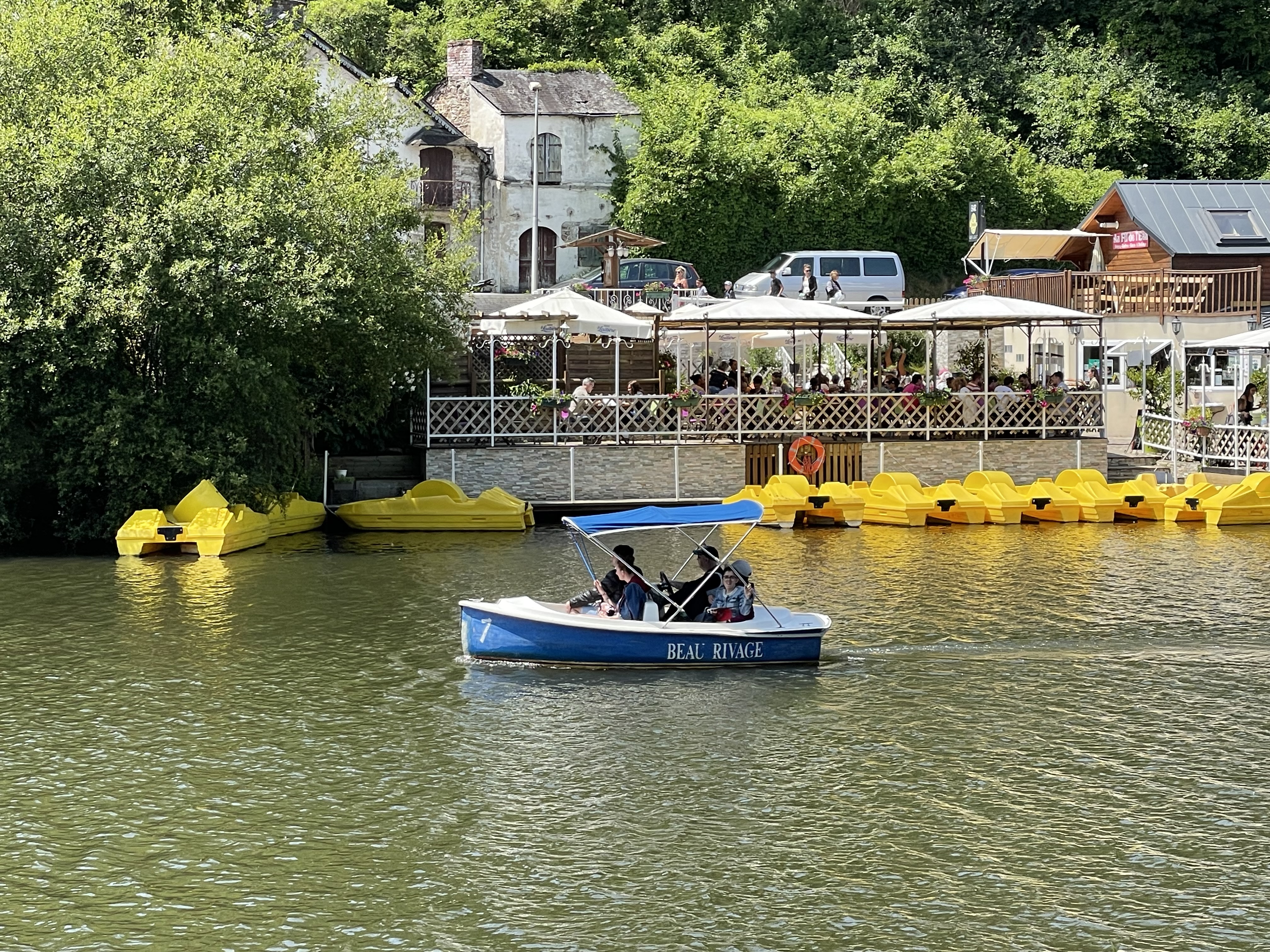
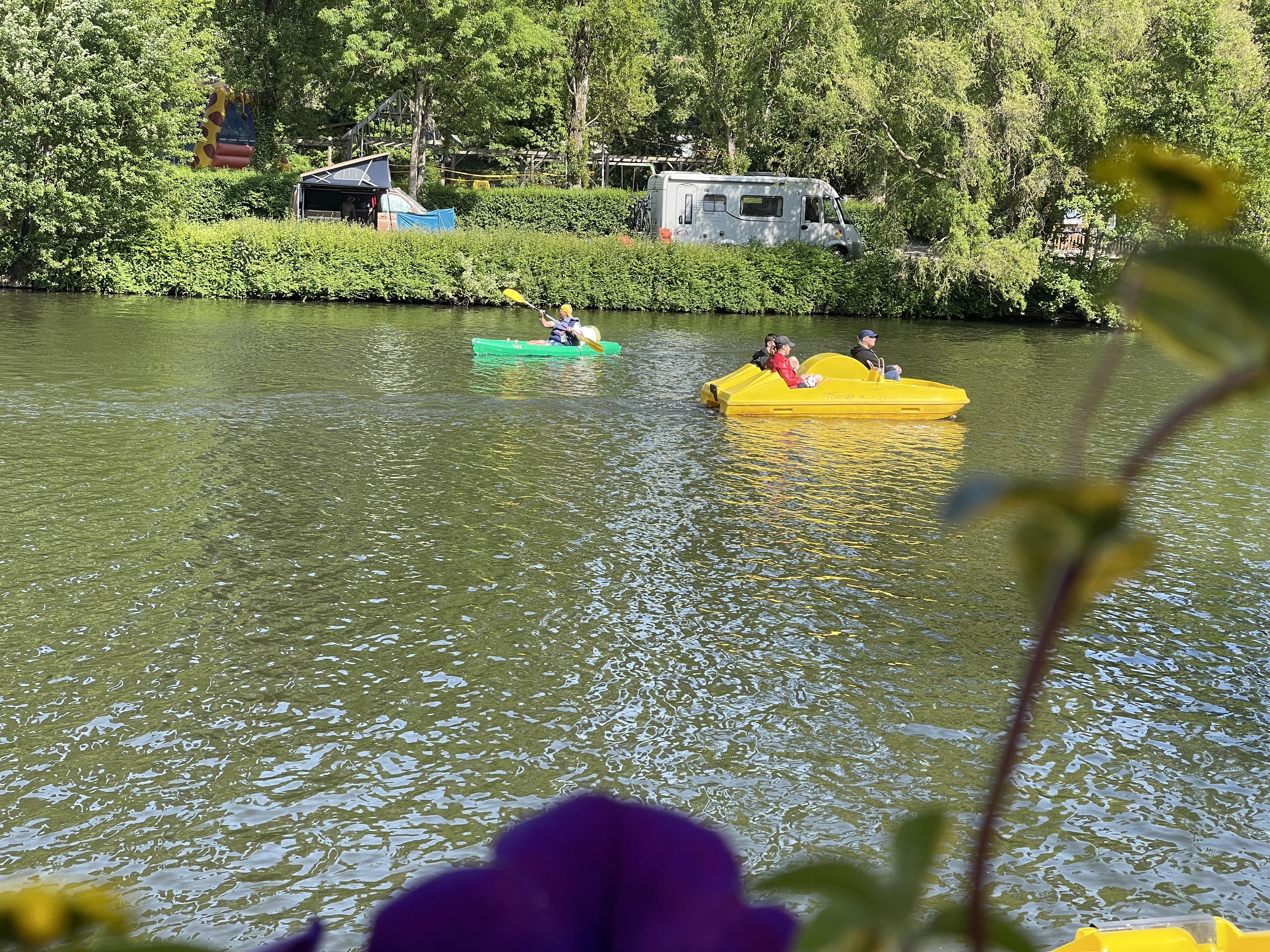
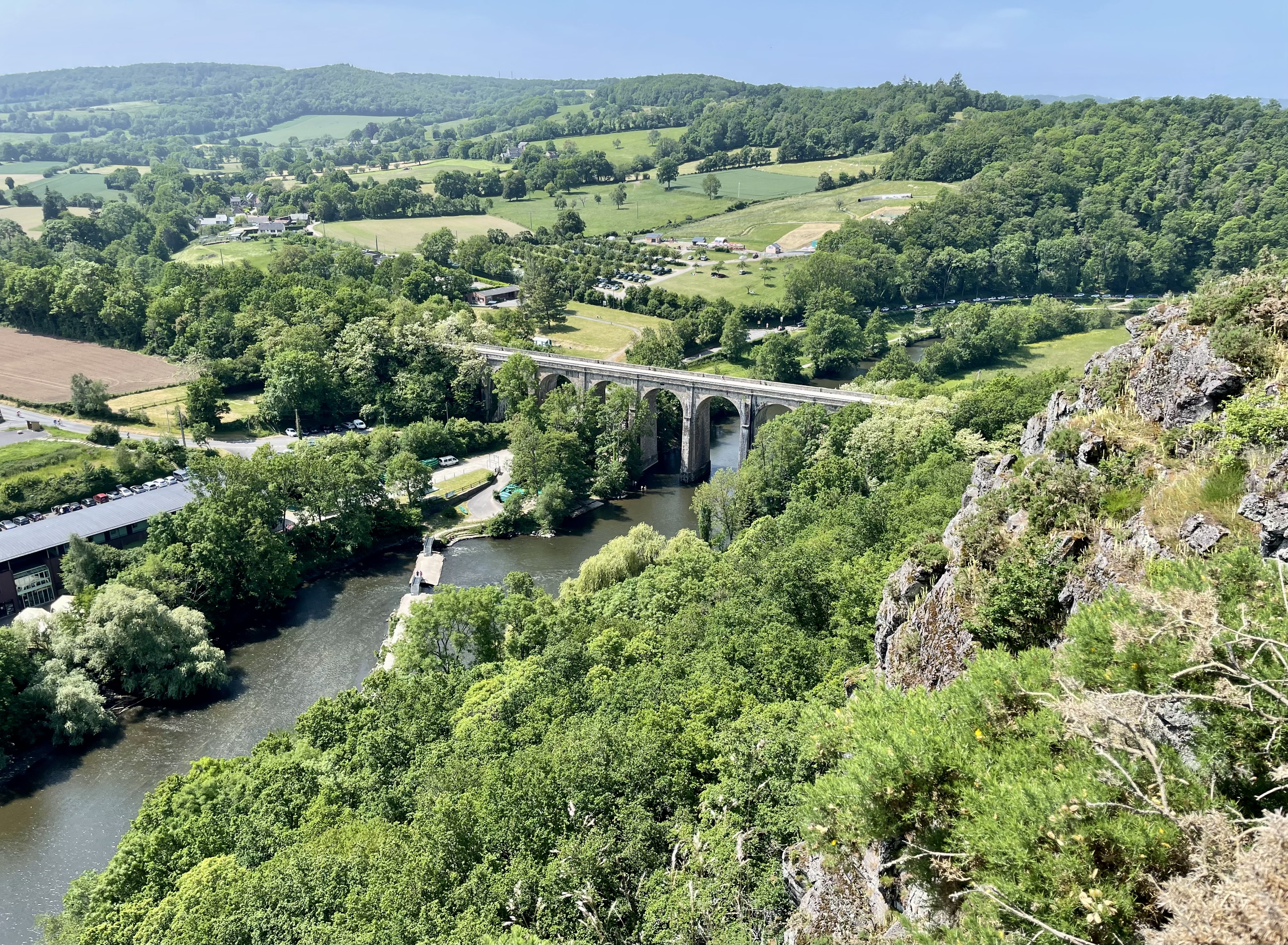
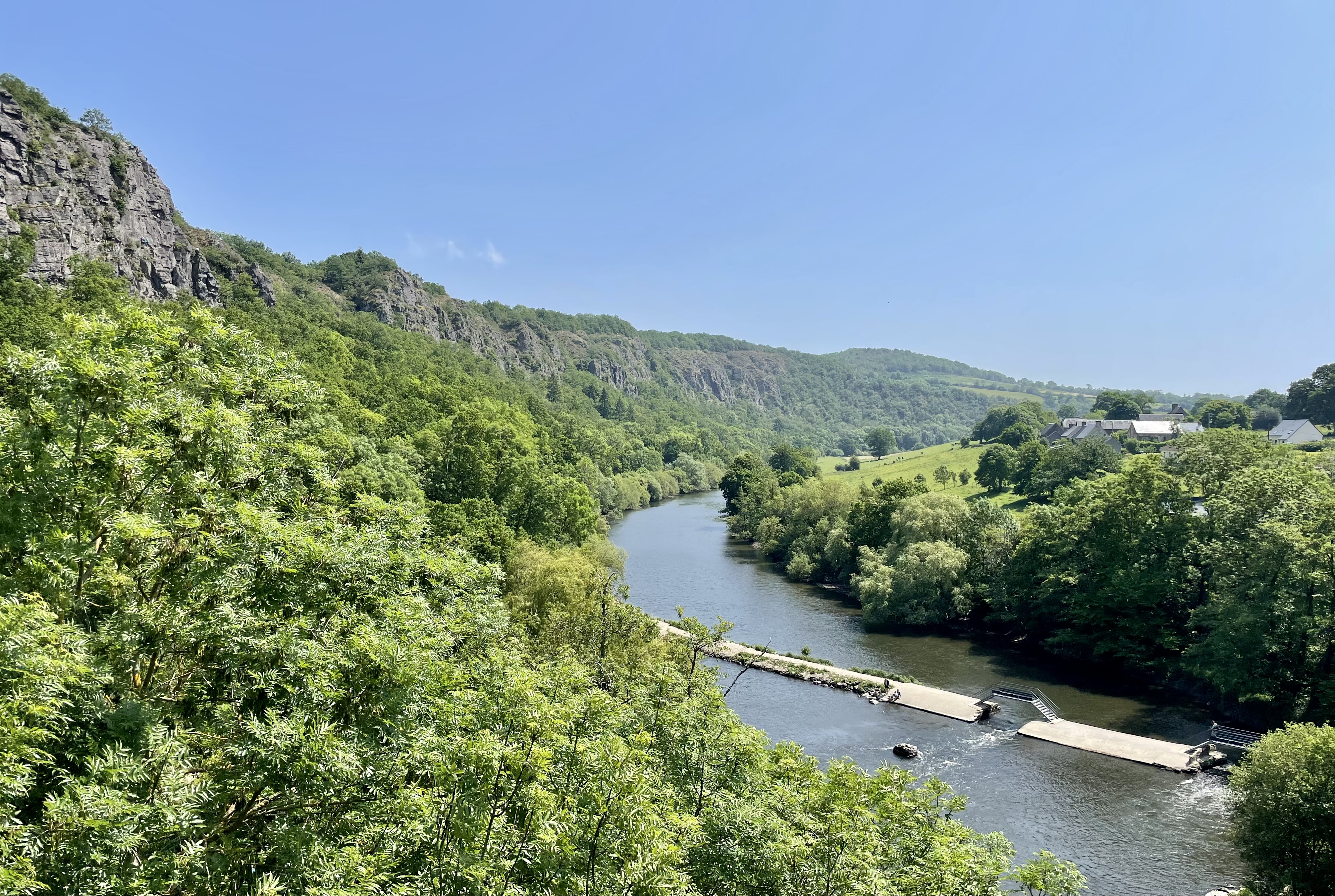
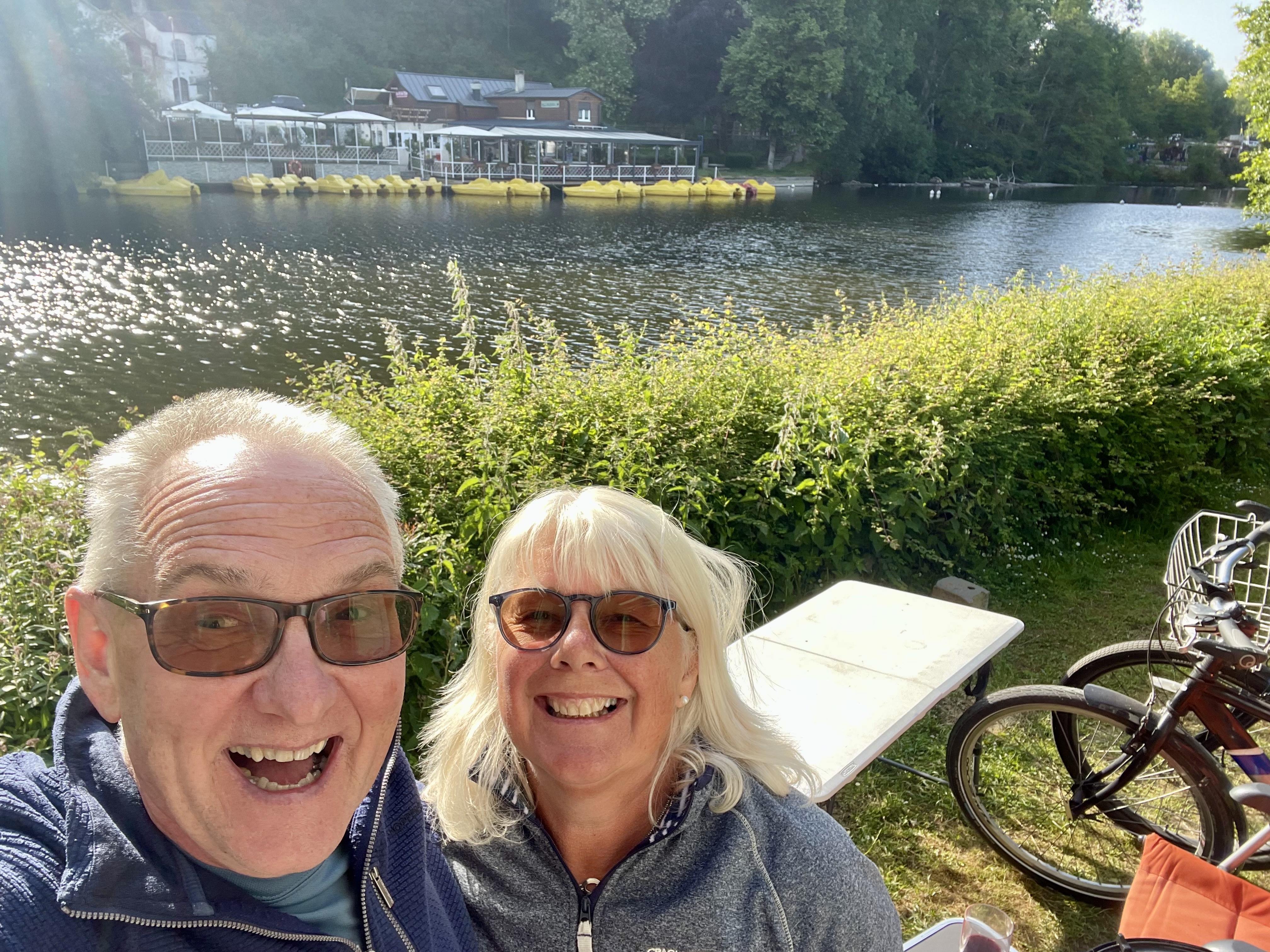
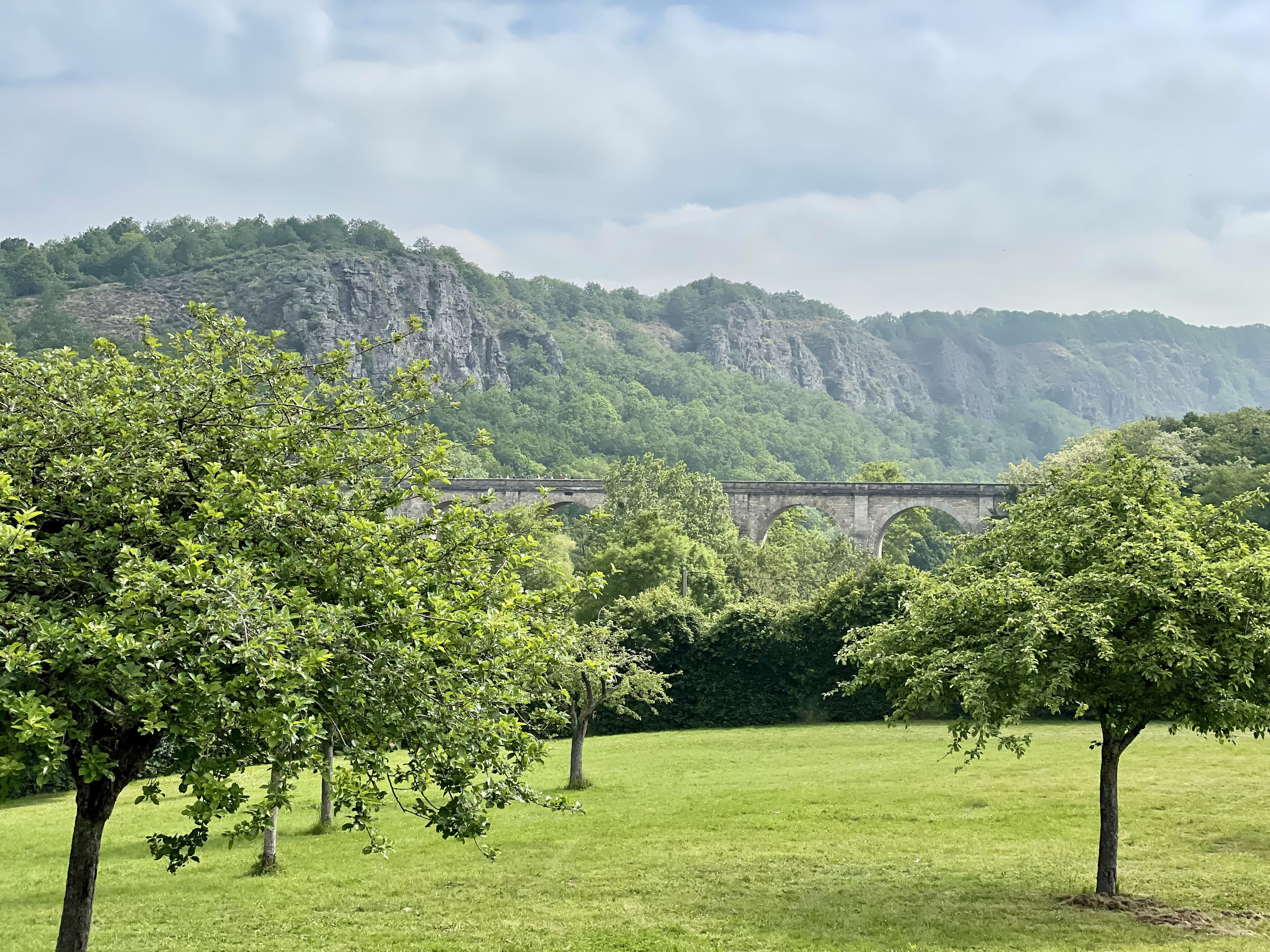
We’re in the Suisse Normand, a part of Normandy that is supposed to look like Switzerland. It looks more like a posh Matlock Bath, with the gently undulating limestone hills giving way to dramatic cliffs and the river has to do 90° turns through the gorge to accommodate them. The opposite bank is lined with restaurants, bars and places to hire canoes, electric boats, paddle boards and pedalos.
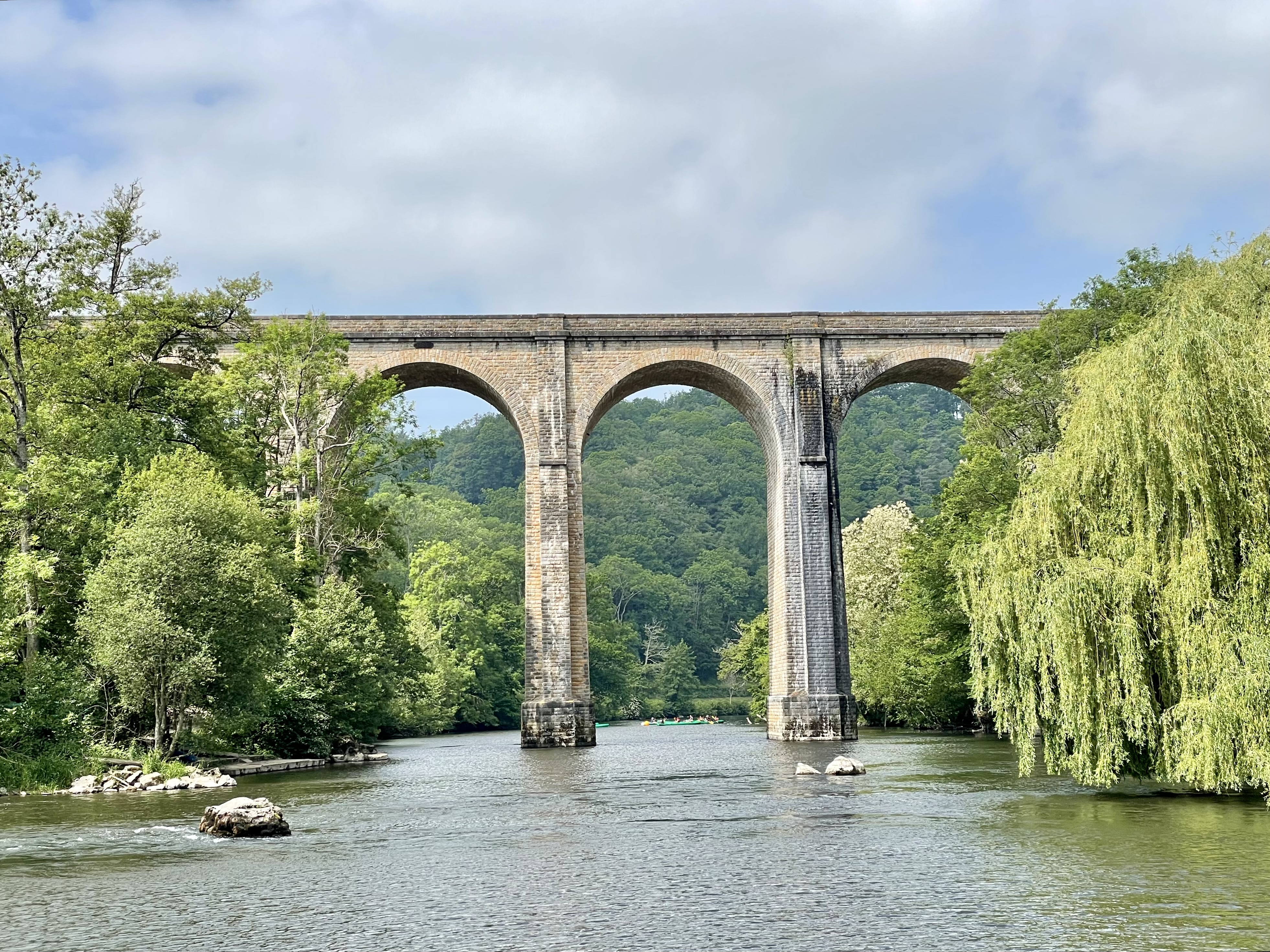
Before lunch we walked to the top of the cliff called Rocher des Parcs then down to the viaduct. A bit further than Wendy was expecting and she hadn’t got her poles; but she didn’t moan (much).
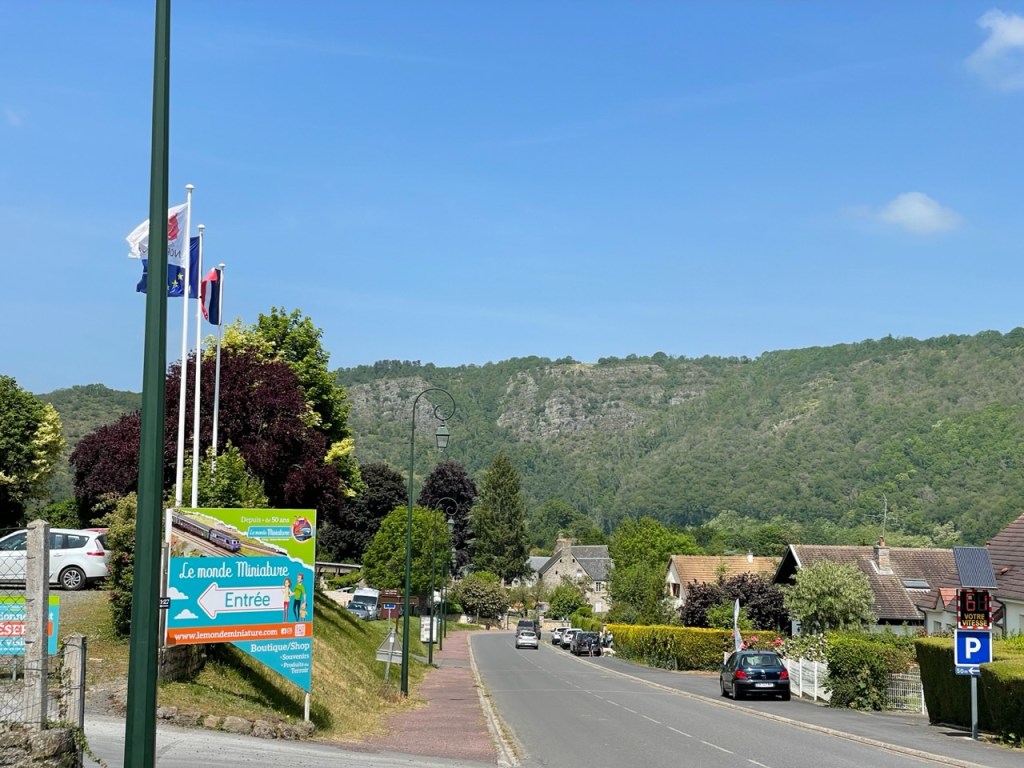
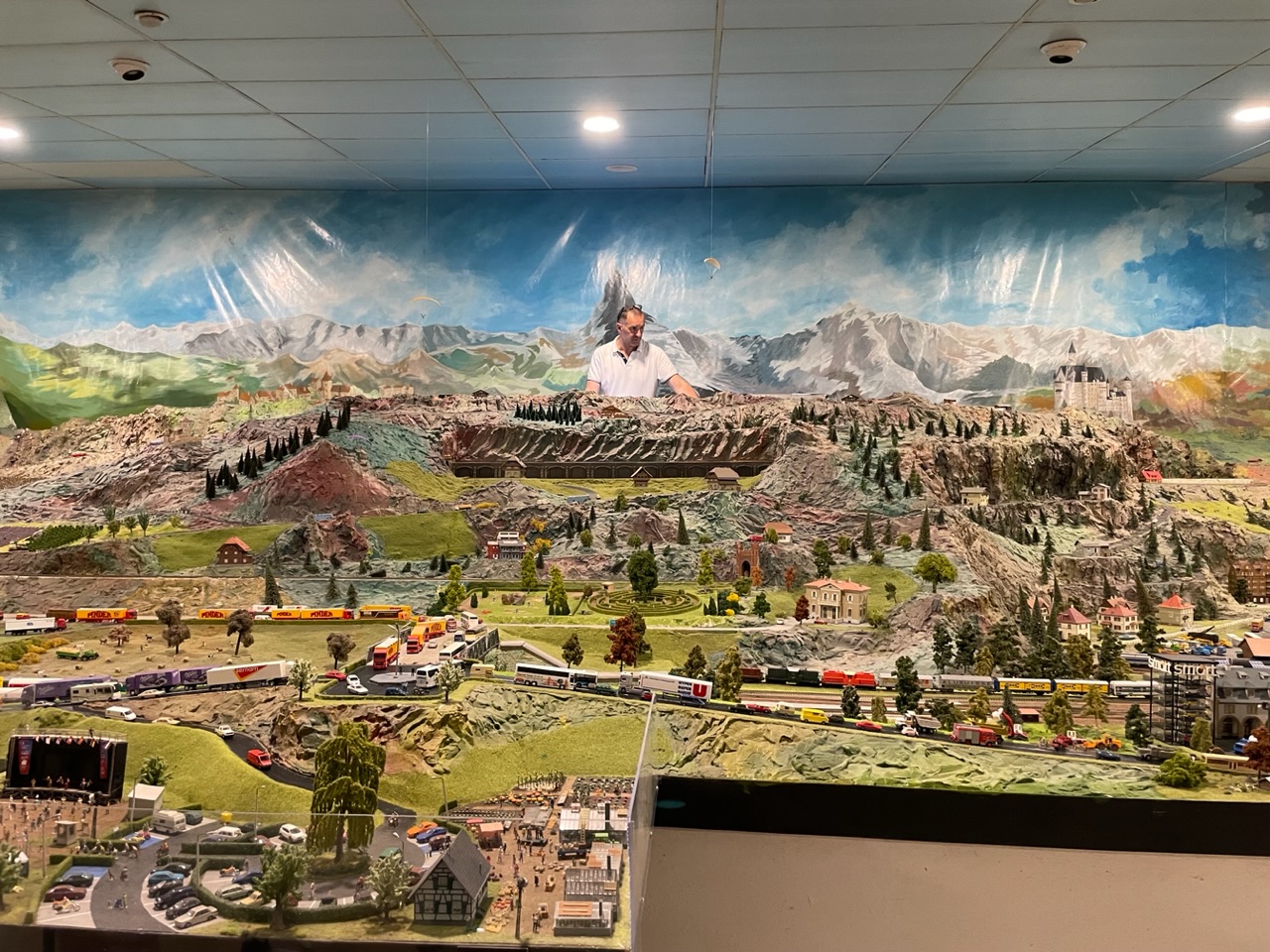
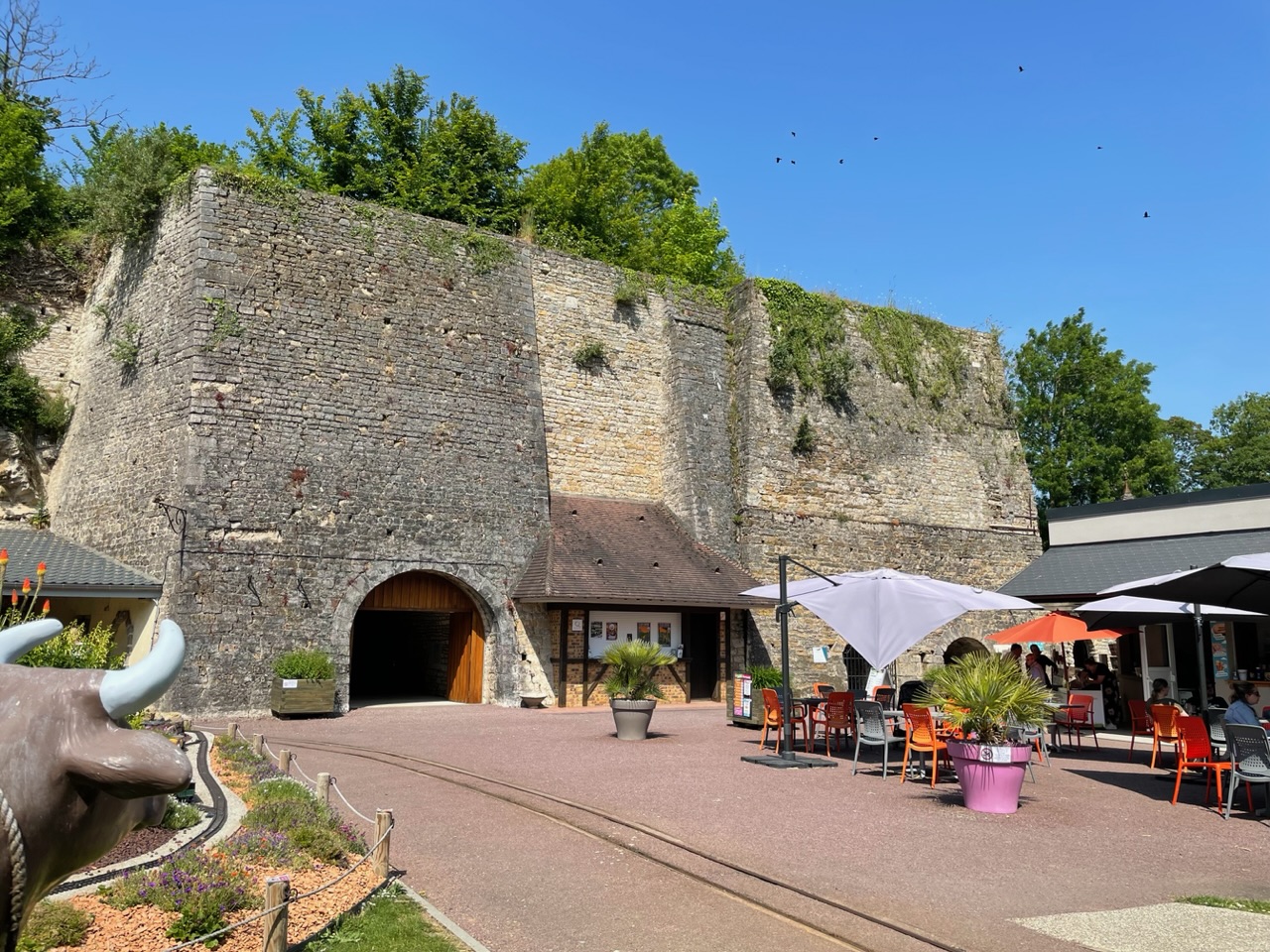
After lunch, there was still a big queue in reception so we went off to explore the village. Halfway up the hill from the river there was a big colourful sign telling us we were standing outside ‘Le Mond Miniature’, the biggest miniature world in Europe! (Their exclamation mark). And they let dogs in free, how could we pass this opportunity up? You’ll be pleased to know that we didn’t. We paid our euros and were told to explore the lime kiln for 20 minutes until the next tour begins.
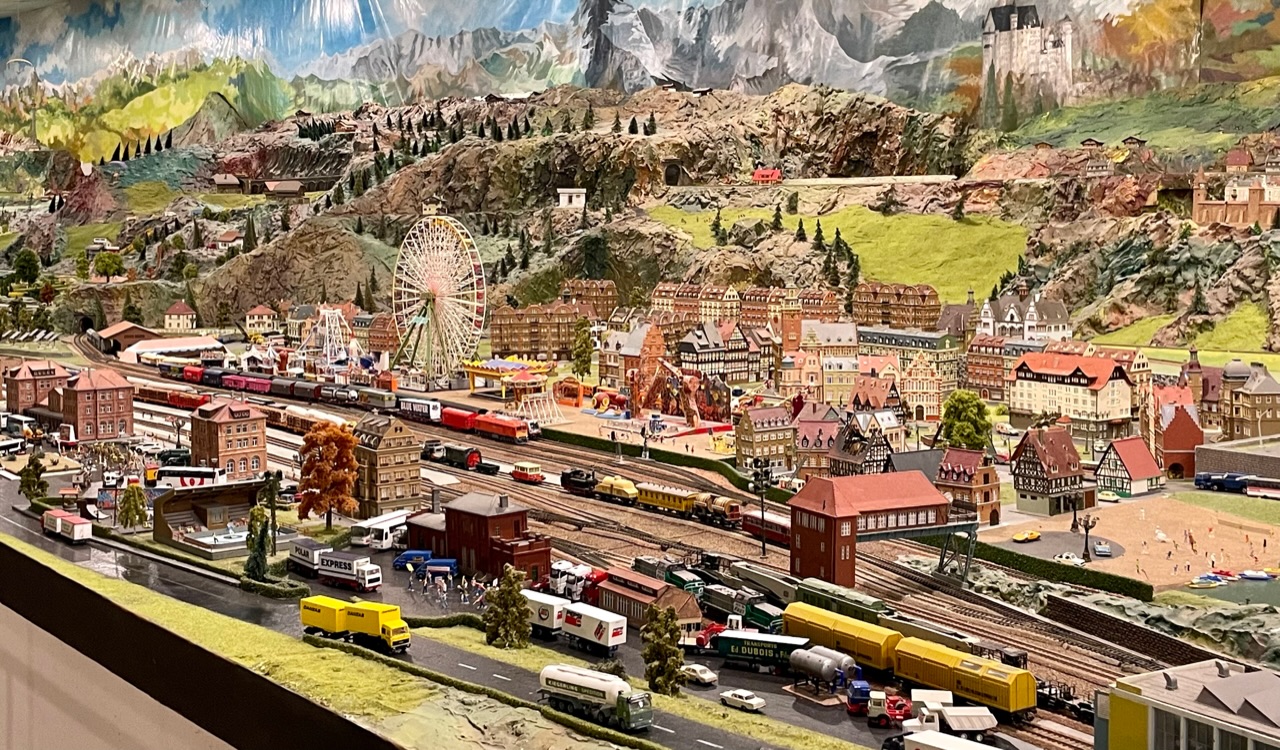
Now I like a lime kiln and I’ve seen a few lime kilns in my time, but I would be pushed to spend more than three minutes in one. We were both surprised to find that we ended up having to leave the kiln early. It turns out that Clécy was renowned for the high quality of its quick lime and we were in the old quarry that fed the lime kiln. The lime kiln fell into disuse in the 1930s with the increased use of artificial fertilisers. In the 60s it was bought by Monsieur Yves Crué for a local cider cooperative to store their cider in as the temp is always 14°C. M Crué was also a train buff, so he used part of the kiln to show off his model railway which covered about two dining tables in area. He then installed a miniature railway around the old quarry and began to landscape it. Over the next 50 years the model railway was extended to cover 310m2 and is now housed in its own purpose built building. M Crué’s son Emmanuel is now the owner and it was he who gave us the tour. His English is on a par with our French, so we were given a crib sheet. I know that model railways are a bit marmite, but this was a fascinating experience where you had to marvel at the ingenuity and skill that had gone into creating a landscape that covers a range of French countryside, from high alpine pasture to villages, towns and ports.
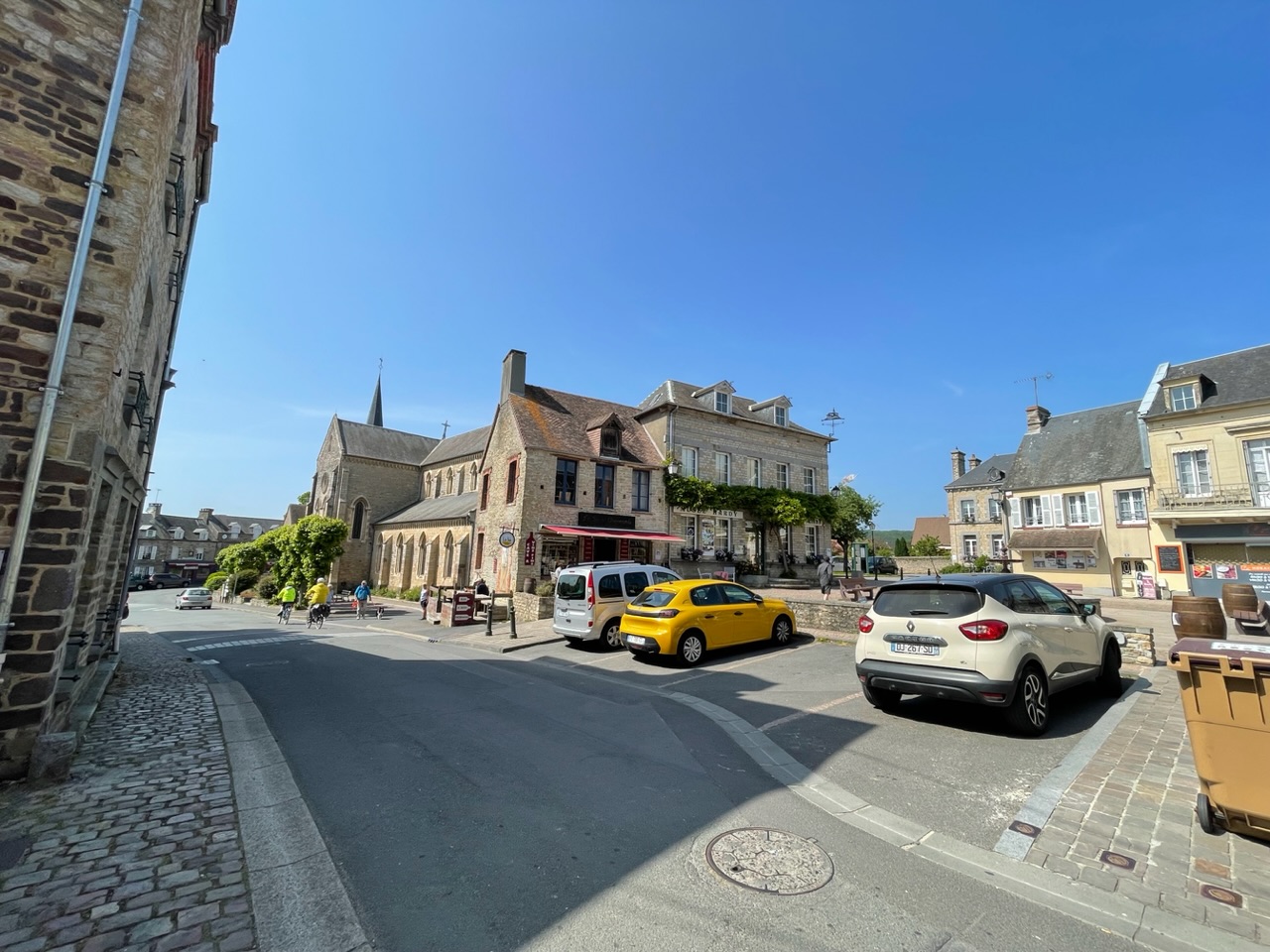
The village of Clécy is very quaint but pretty empty – a combination of the move to the cities and bank holiday? We found that all the action was taking place back down on the riverside opposite our campsite.
When we got back to the campsite there was still a queue at reception so we had a drink at the bar while we waited. A couple of rosés and we came to a momentous decision (in the context of our tip that is!), we liked it so much in Clécy that we were going to stay for four nights and abandon our plans to visit the Cotentin peninsular.
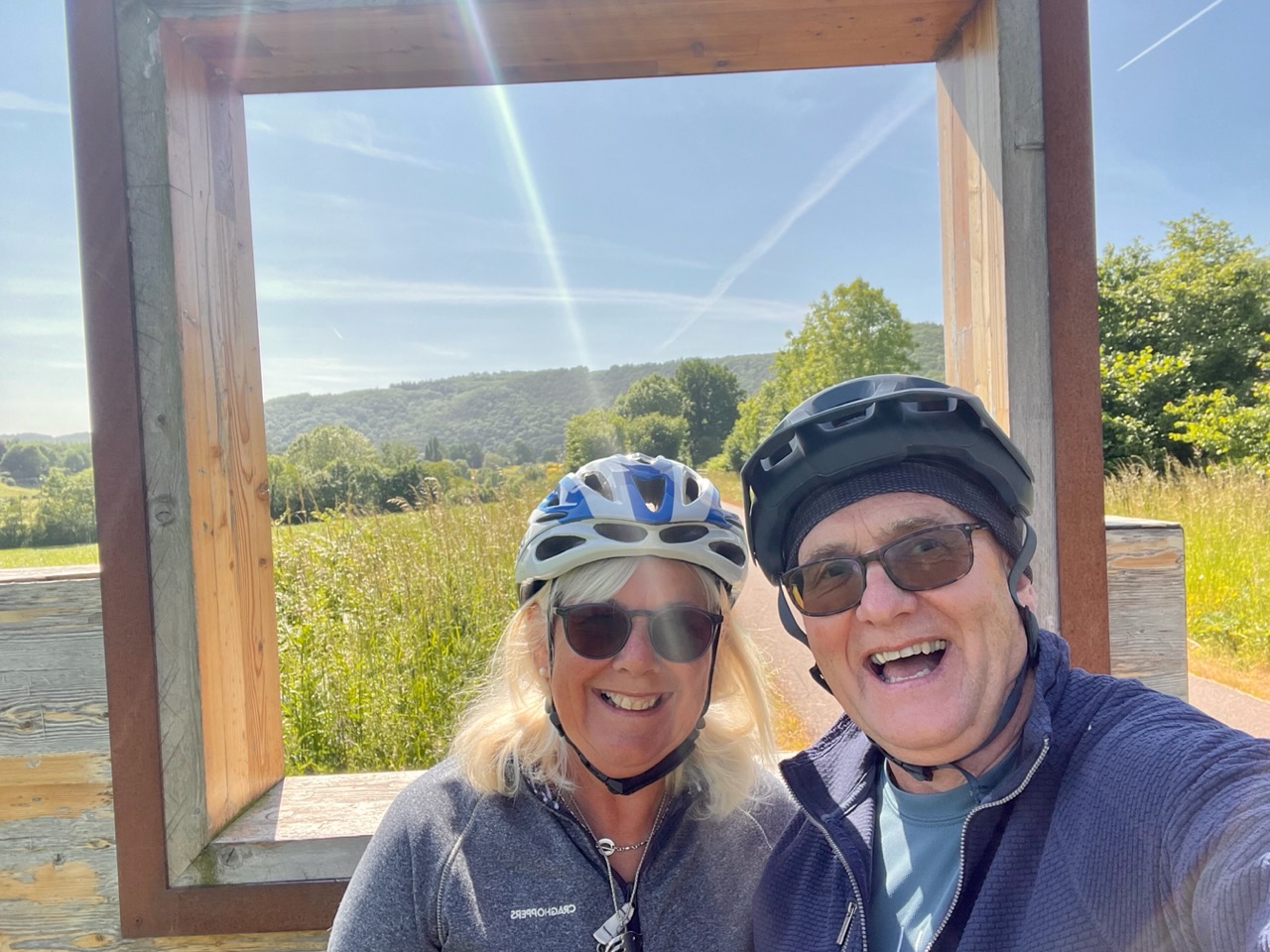
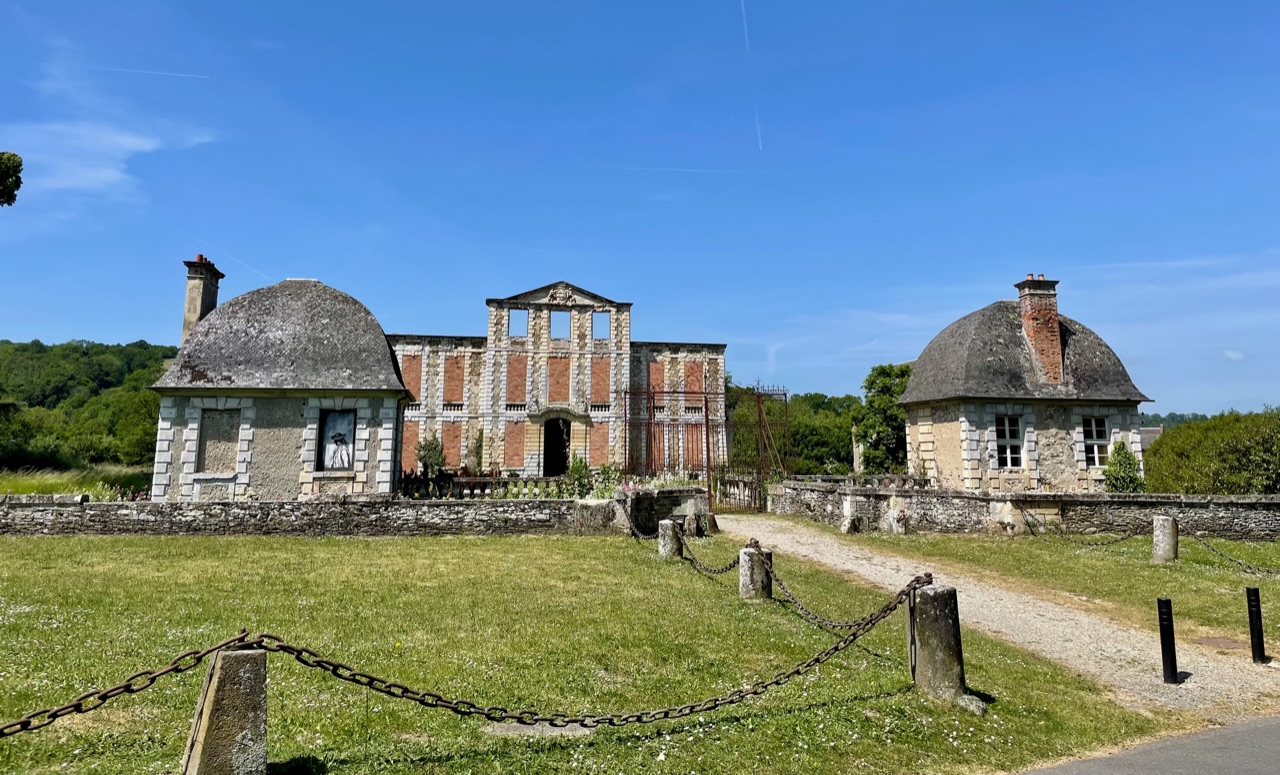
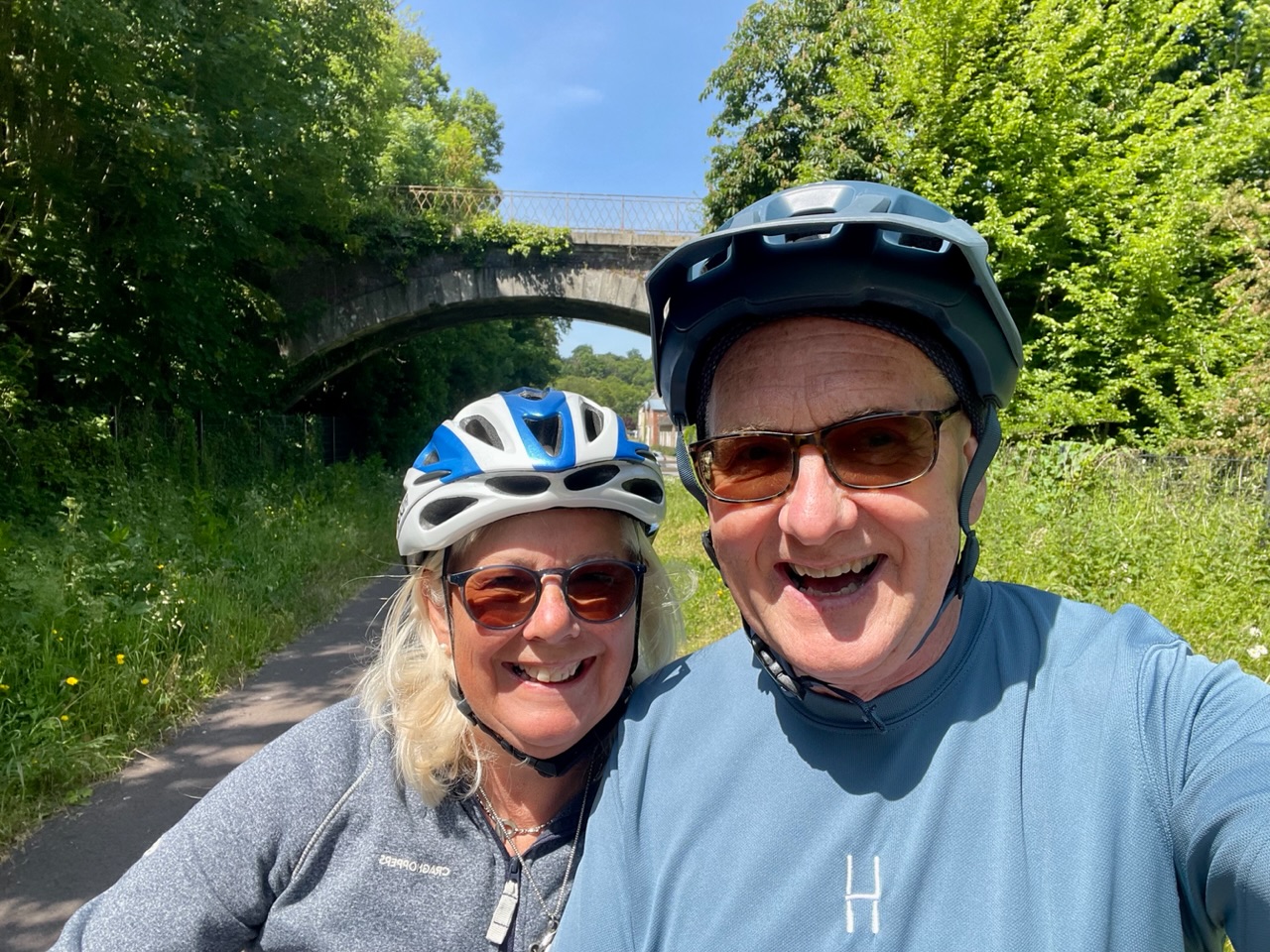
Another bike ride! This time from Clécy to Thury Harcourt. The Velo Francette cycle route we discovered in Domfront, runs right past this campsite too. This section is a fairly new route – some of our maps still show it as a SCNF railway. It has a broad, smooth tarmacked surface, and only shallow inclines befitting of an ex-railway. Again Bryn had a mixed diet of riding in style behind me, or his preferred option of trotting alongside, like a Dalmatian following a Regency carriage. We got to Thury Harcourt, just as the market was closing up, which was about the most exciting thing in town. We bought a melon and some apricots (first of the year) just so the greengrocer wouldn’t mind us locking our bikes and trailer right outside his shop. The other side of the square was a board that explained that 80% of the town was razed to the ground by allied bombers in 1944 as the ground troops approached. The remaining houses were flattened by the ground troops as they approached. The whole town had to be reconstructed between 1947 and 1962, but the Chateau has been left a shell as a memorial.
After our cycling exploits we treated ourselves to a leisurely day.
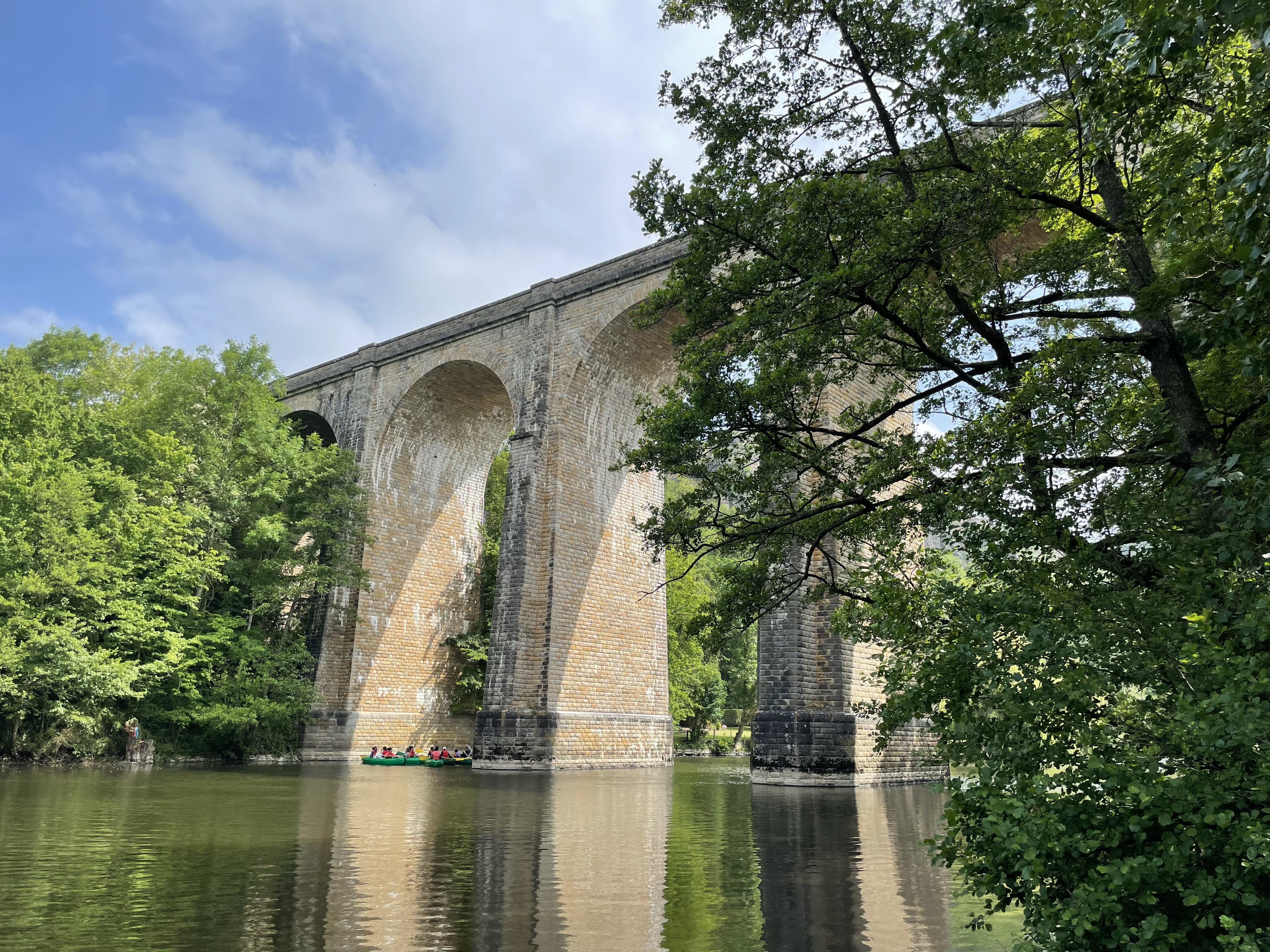
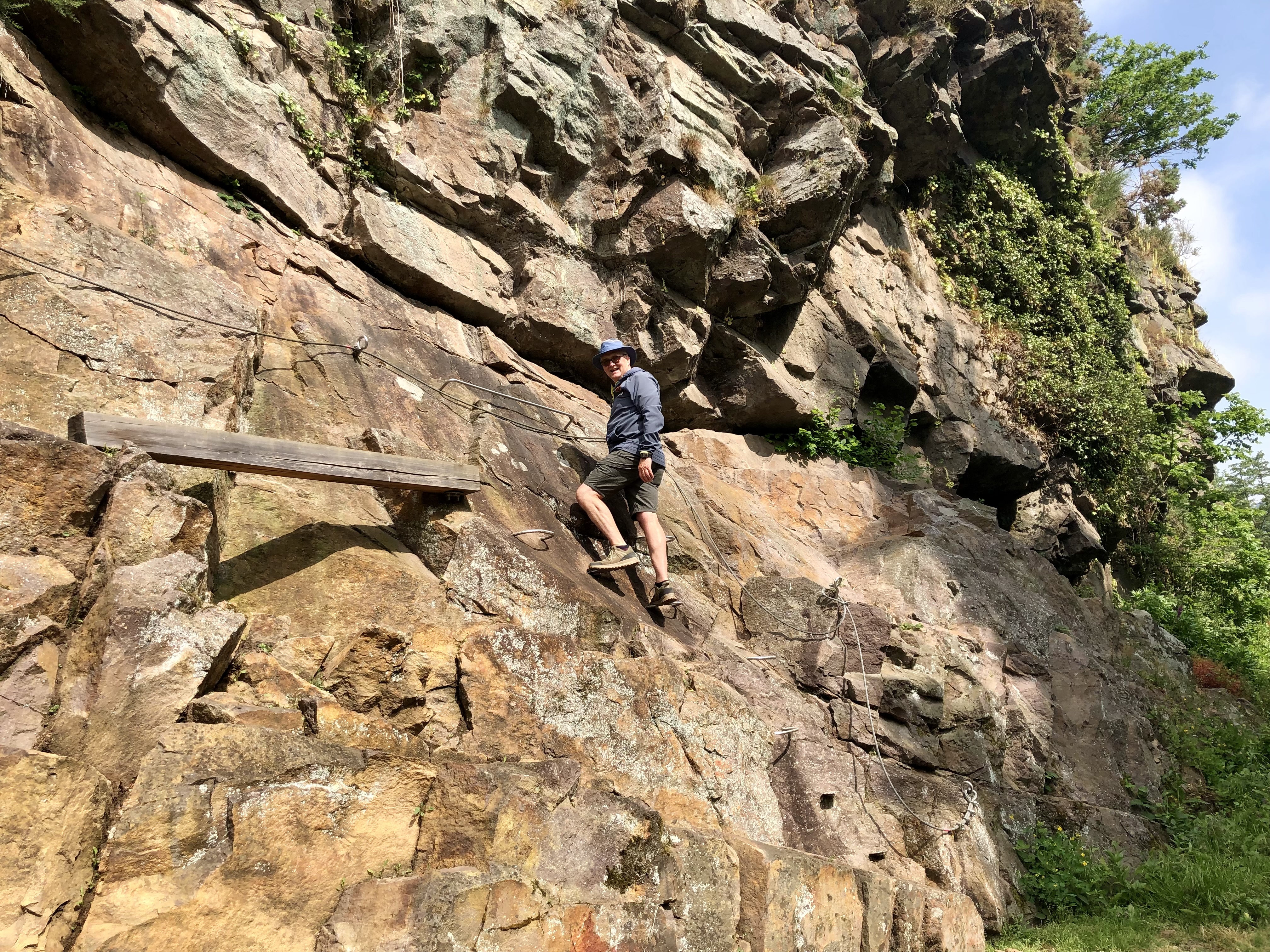
We walked over the bridge to see what we could see. We walked passed the restaurants and found a via ferrata I had spotted from the viaduct a couple of days ago. Unfortunately at this time of year it is only open at weekends, but I had a quick warm up on their practice course to show what I could have done!. We strolled on to the viaduct to find the view point that shows the cliffs, the river and the viaduct to their best advantage. It turns out it that this is by a luge and slide centre, built on to the side of the hill. This is a very active part of the world! On our way back we wandered by the restaurant that looked like a riverside pub. Wendy fancied the Normand Formule, so we popped in!
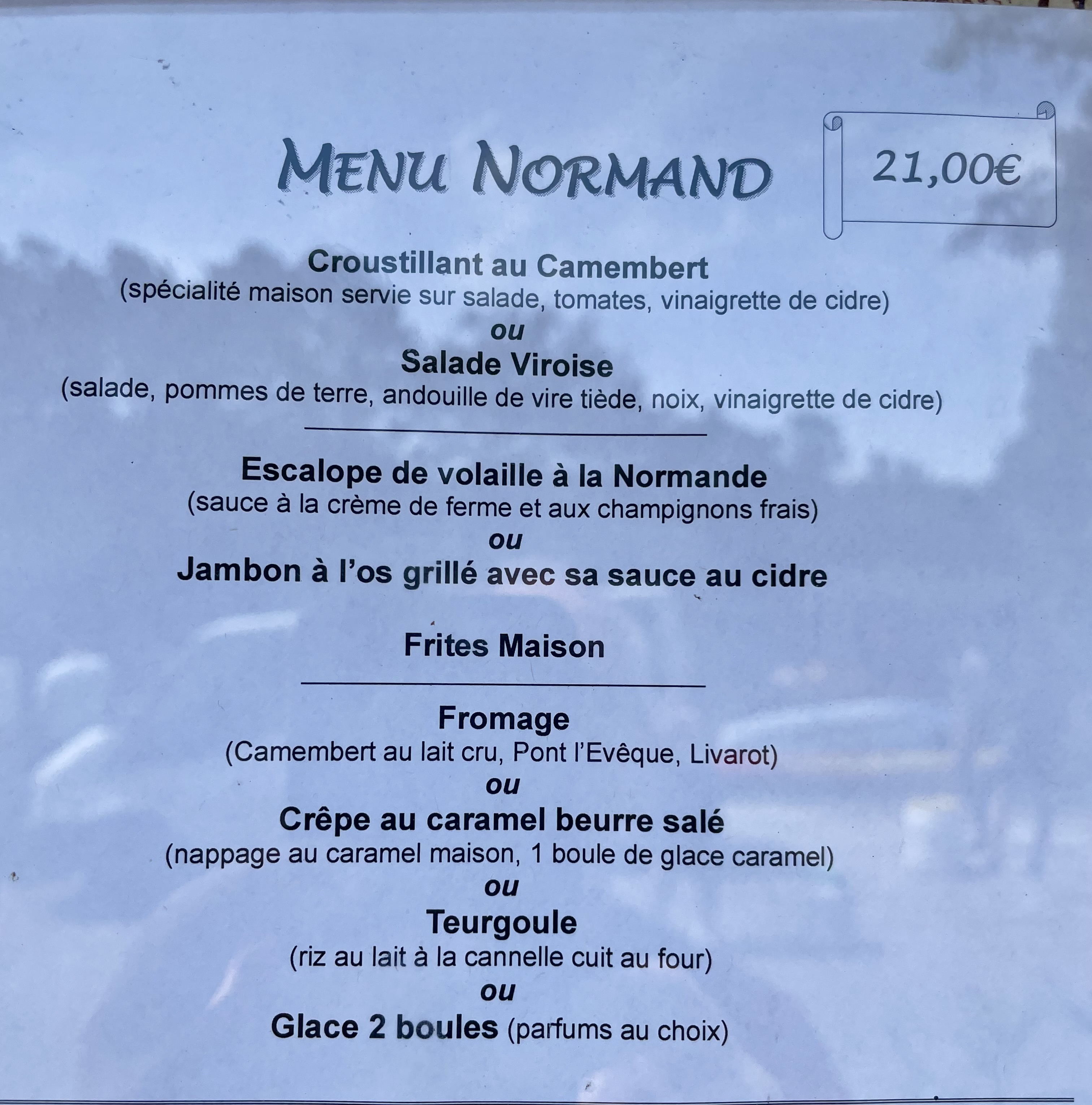
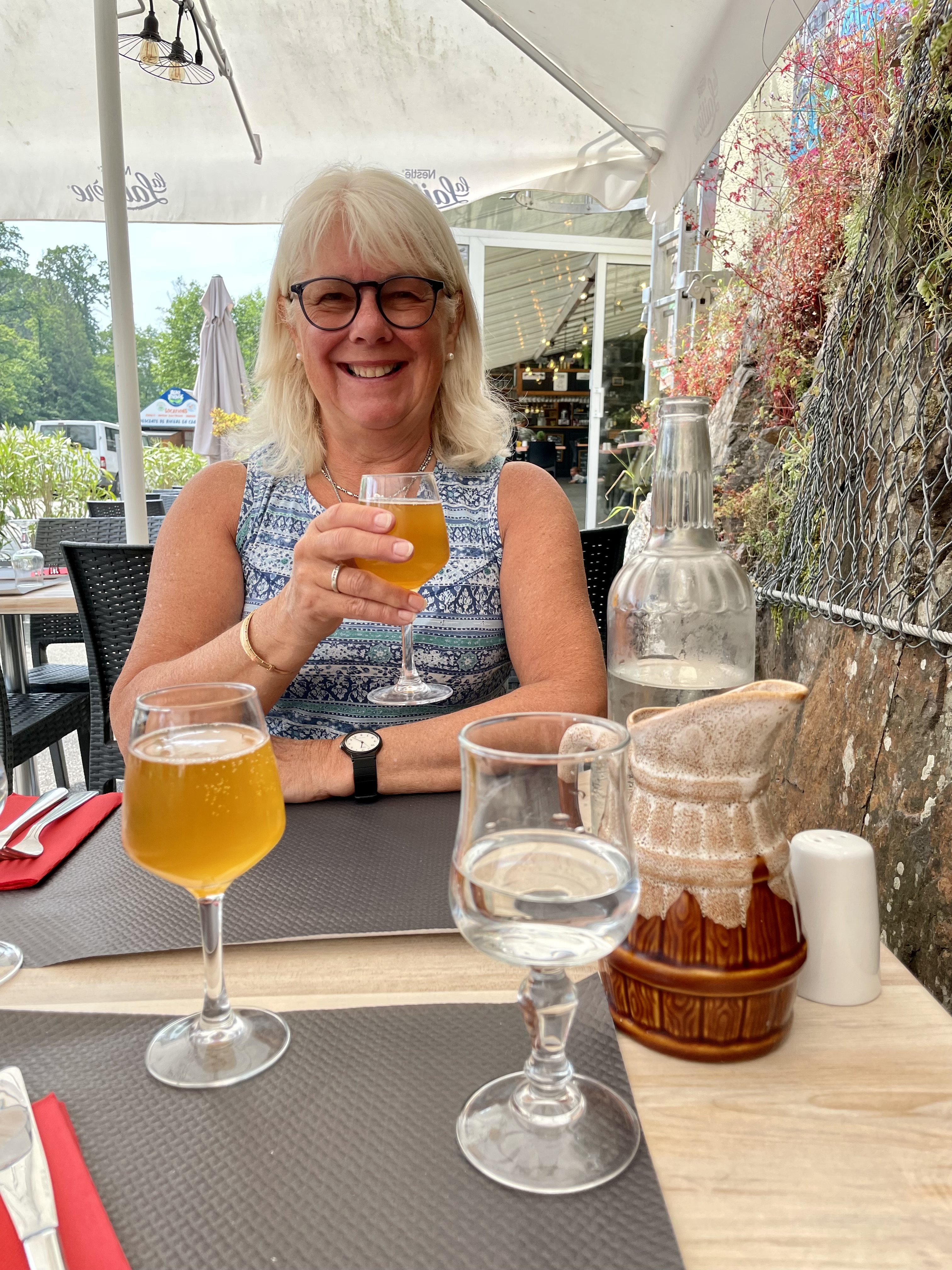
After a cracking lunch we felt in need of some exercise so we booked a canoe trip for tomorrow morning – a 7km trip down the river and Bryn can come too!
What better way to celebrate the first day of June than with a gentle paddle down the river. Clearly not a view universally shared as we were the only folk on the 10:00 trip. To get to the start, we had a pretty white knuckle ride, in a clapped out minibus, at break neck speed along mainly single track roads, with the driver texting all the while! After this the canoeing was going to be a doddle.
Time for a bit of context. The last time we canoed was two years ago on the Wye. Bryn was at the height of his prey-driven bonkersness and we spent the whole trip with Wendy having to hold him with two hands on his collar as he lurched from side to side trying to get to every duck, swan, sheep or cow that came into view. He has come on in leaps and bounds since then, but how was he going to react to this relatively novel experience?
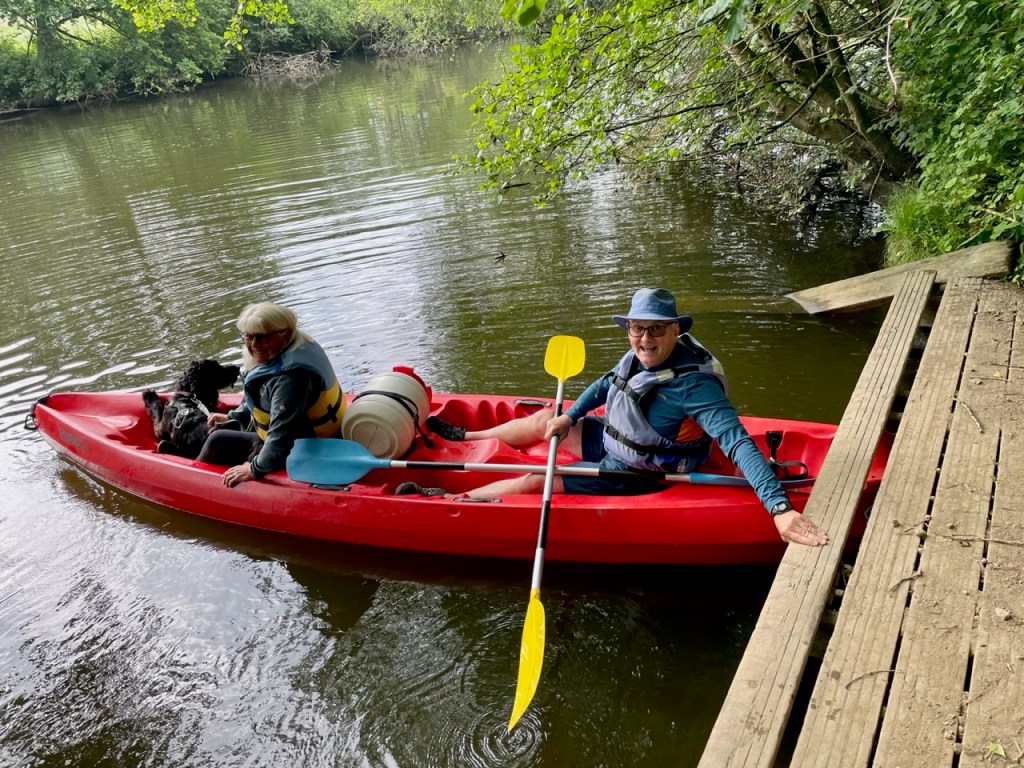
Well, dear reader, the dog done good! He sat fairly comfortably in front of Wendy and wasn’t even phased when we had to shoot the first weir. It was fast, it was rough and it buried the nose of our canoe, water surged back flooding us and washed Bryn out of the boat. He calmly swam back to join us and resumed his place in the bows. From then on things were fine and Wendy was able to paddle too. In fact the only times that Bryn apparently showed interest in wildlife and needed Wendy to hold is collar seemed to coincide with Wendy having paddled for over five minutes?
It was a very pleasant way to spend the morning. We had the river to ourselves as it gently wove through lush green fields and woods until the mighty cliffs of des Parcs des Rochers loomed up ahead and the river turned sharp left to go round it. Before we knew it, we gracefully took the last weir, shot through the centre arch of the viaduct, and were back at the canoe hire cabin in a new French, all-comers record time.
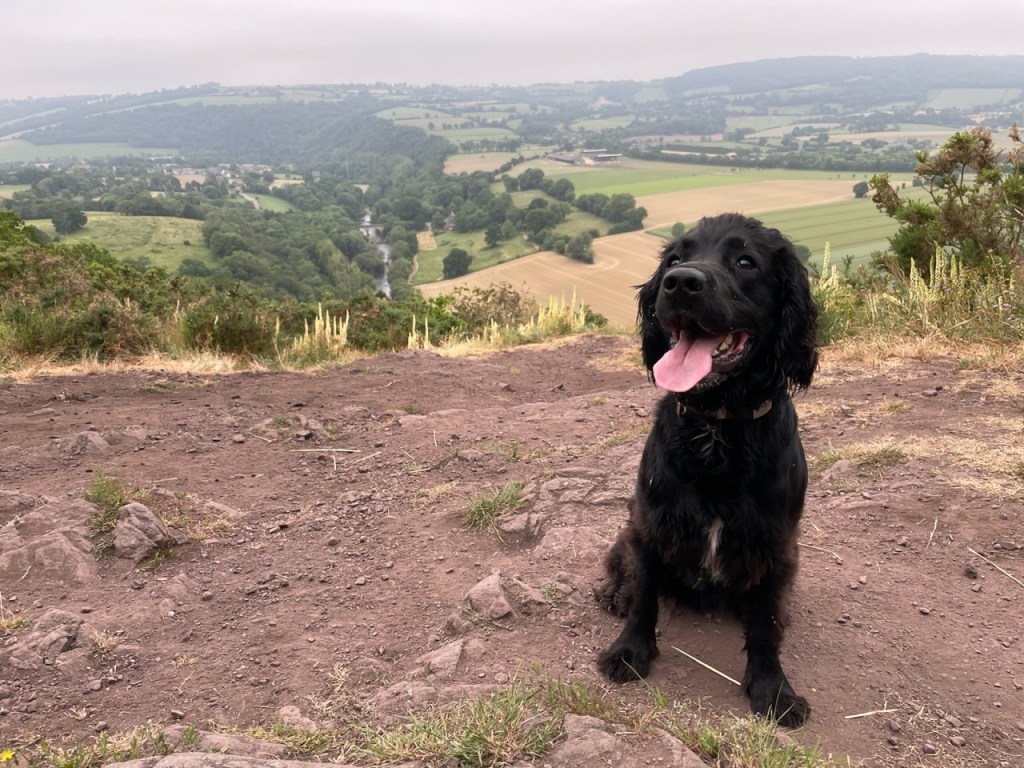
The Suisse Normand and Clécy in particular tick all the boxes for us and the campsite has easily stormed to the top of the leader board of campsites on this trip.
 semper deinceps