Wednesday and Thursday 4th and 5th September
The medieval walled town of Carcassonne sits on a small hill overlooking the Aude like something out of a Shrek film.

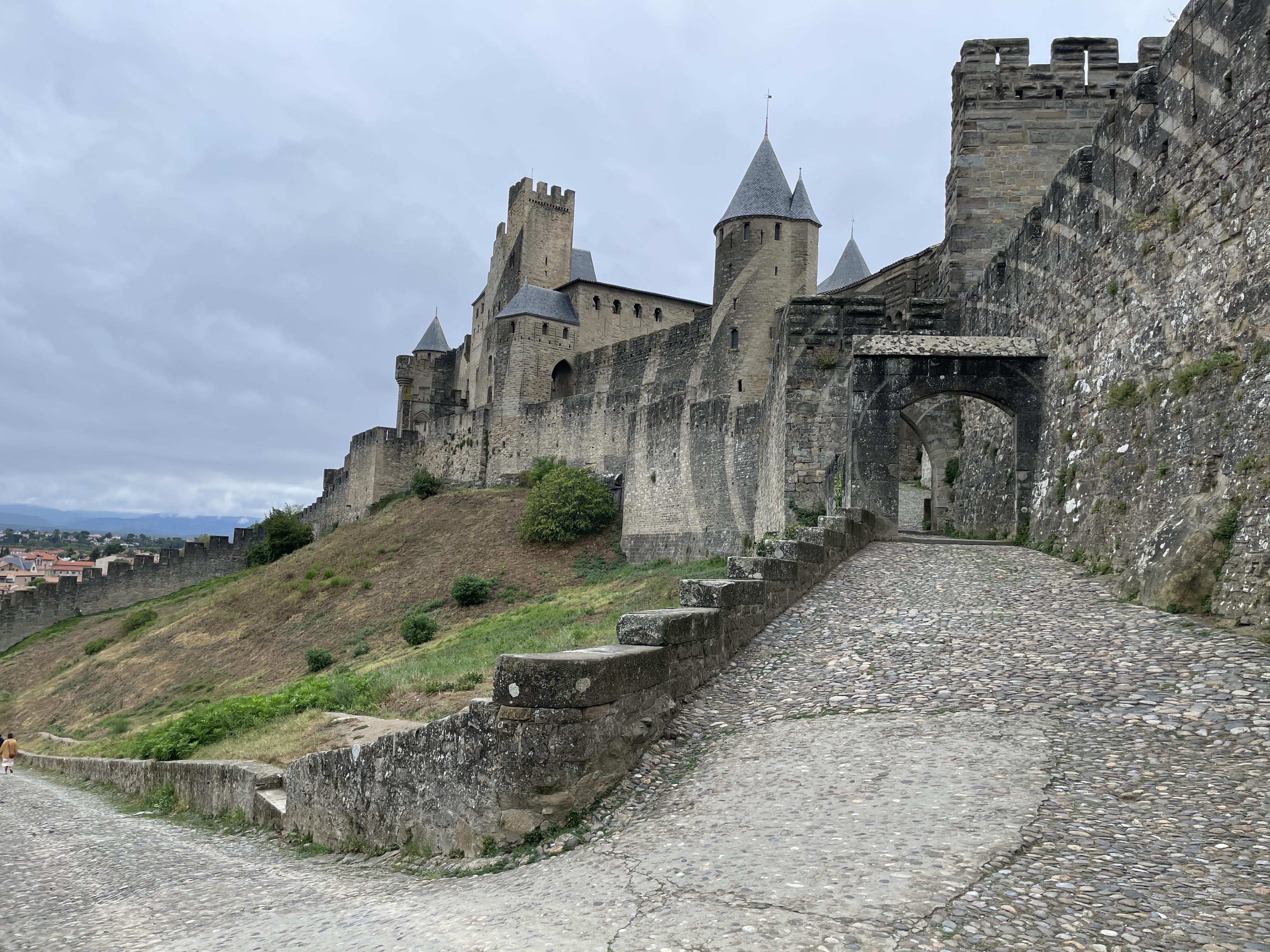
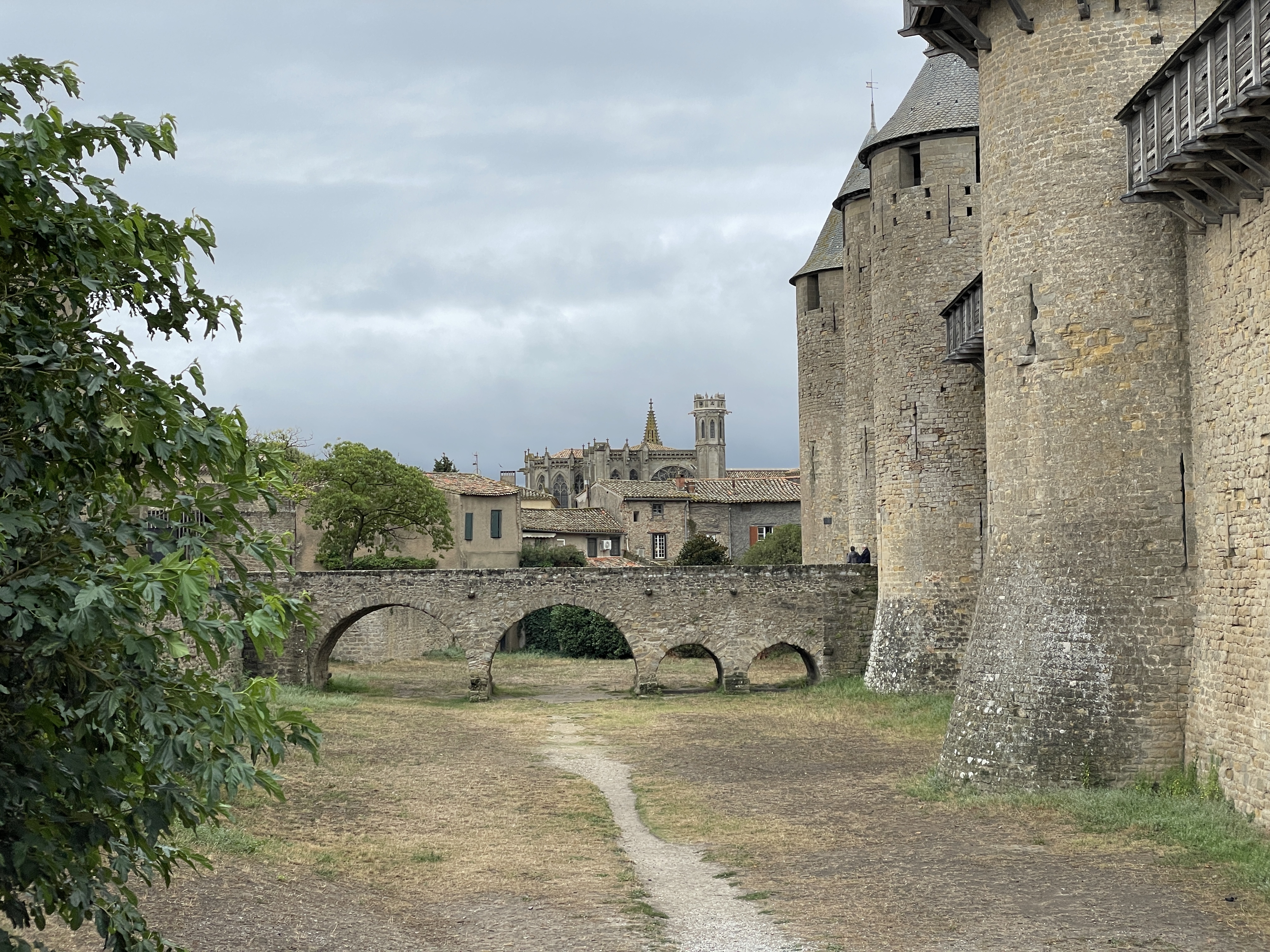
Its roots that go back to before the romans, and it has been steeped in history ever since.
In the 8th Century the city was in the hands of the Saracens, ruled by Lord Balaak, when Charlemagne laid siege to the town. The town stood firm fighting off attack after attack until Balaak was killed in battle. His wife, Lady Carcas, took over and she continued the defence, even after waves of plague wiped out most of her army. She used a range of tricks to convince the enemy that the town was always well guarded. After 5 years of siege the townsfolk were on their knees and Carcas called for the last piglet and sack of grain in the city. She stuffed the animal full of corn and through it over the battlements where it burst at Charlemagne’s feet. This convinced him that the town was still well resourced to the point of wasting pigs and corn; so he gave up and led his troops away. When the enemy had gone Lady Carcas called for all the bells in the city to be rung and the townsfolk said, “Carcas ‘rings’ (or ‘sonne’ in french) and hence the town became known as Carcassonne! Maybe that is just a 16th century legend, but at least you can use it to remember that’s why Carcassonne is spelt with two s’s?
The city was laid siege to again in 1209 for six days by the Albigensian Crusade. Over the previous 200 years a Christian sect called the Cathars had grown in northern Italy and southern France. Their main difference from mainstream Christianity being that they believed in a god of evil (Satan) as well as the god of the New Testament (God). This and the modern of one of his legates, led to Pope Innocent III calling for a crusade against the Cathars that became known as the Albigensian Crusade because the city of Albi was a centre of Cathars belief.

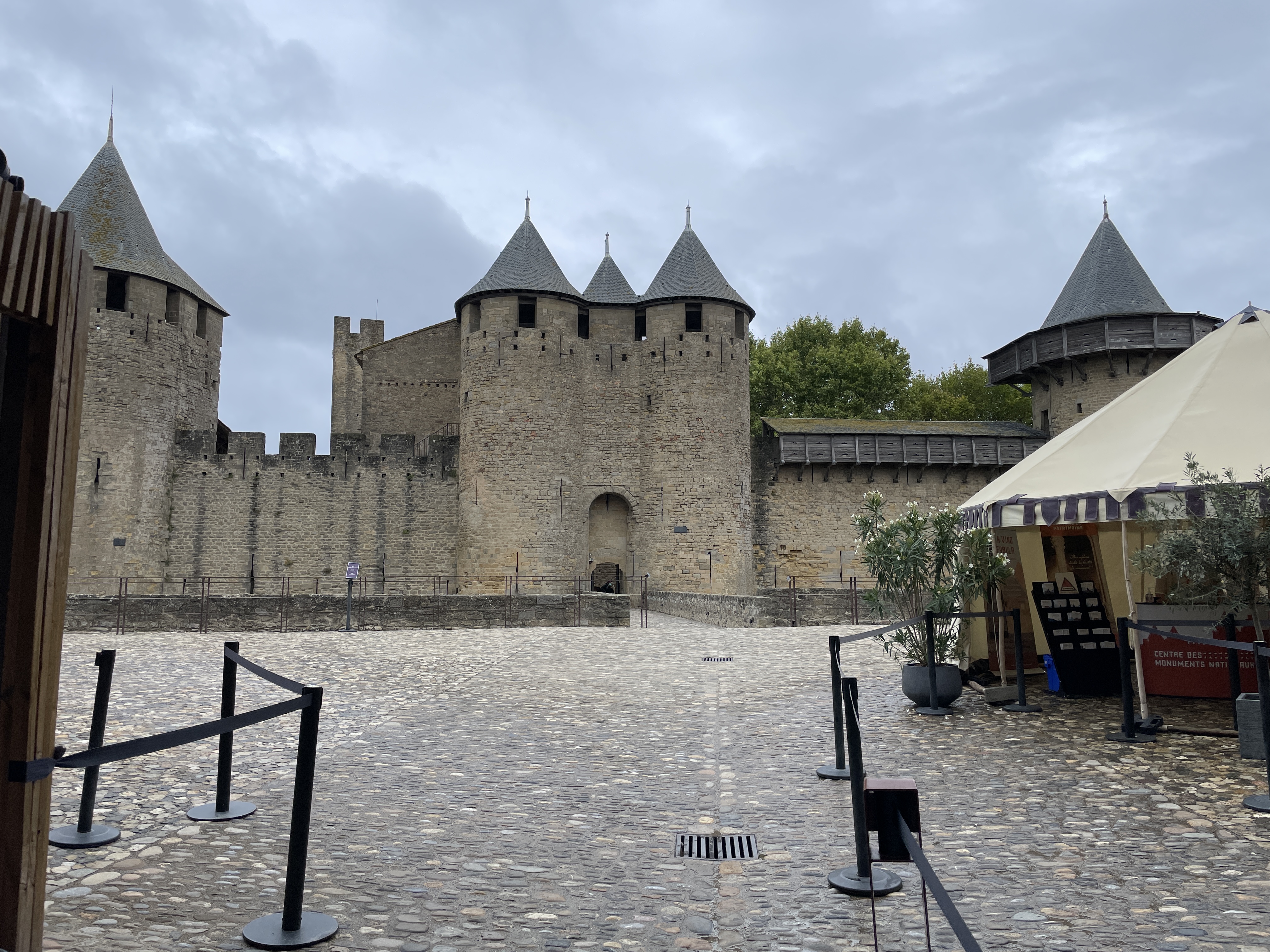

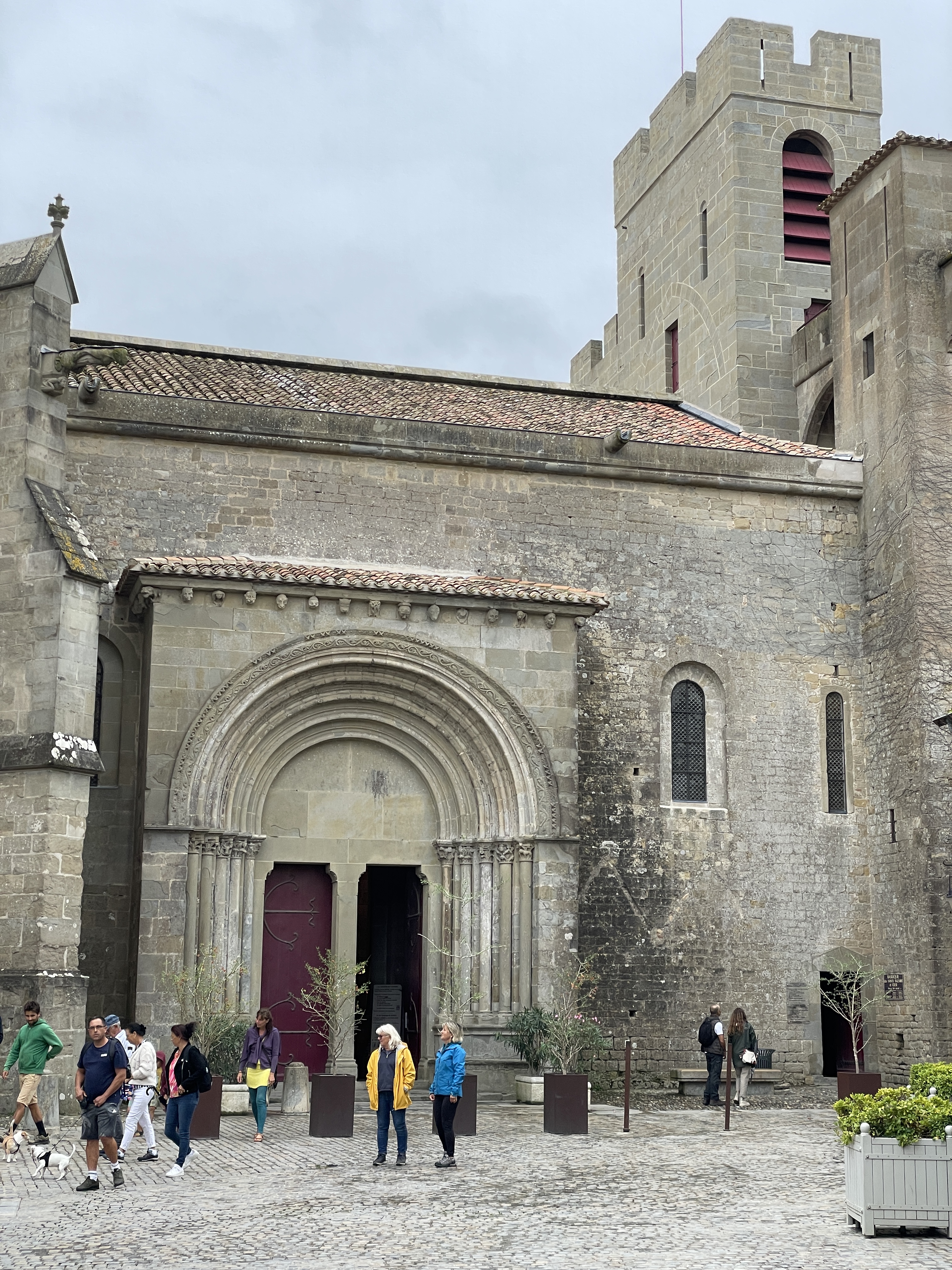
The Crusaders came from all over Northern Europe, including England, as the Pope had promised them the captured Cathar land, as well as salvation. Simon de Montfort, 5th Earl of Leicester (who probably still considered himself French, 143 years after the Battle of Hastings), was one of the leaders. The legendary chivalry of the medieval knights was not in evidence in the crusade. Before arriving at Carcassonne, they had massacred all the inhabitants of Béziers. When the soldiers were told to slay all the townsfolk, they asked how they should differentiate between Cathar and fellow Catholic? It is reported that Amalric the papal representative said, “kill them all! God will know his own.” As David Mitchell says, this seems go against “The whole vague Christian niceness agenda – love thy neighbour as thyself, do as you would be done by, etc” Religion eh.?
Given what happened to Bézier the Carcassonnians got off lightly, they were expelled from the city naked.
Carcassonne today has been heavily restored over the last 100 years or so and is now a maze of tiny streets full of high end tourist tat shops, sweet shops, cafés and bars. They wouldn’t let us walk around the ramparts (No Dogs!)
Most places would be satisfied with one medieval city, especially one as picturesque as Carcassonne’s old town, but Carcassonne has another! The Bastide St Louis. Following the destruction of the city, King Louis (the French king, not the orang-utan in the Jungle Book) built another town across the river in 1260. Bastide towns were fortified towns with a grid iron pattern of streets around a central square and nowadays they are reliably quaint and attractive! In the 19th century, the Burghers of Carcassonne had the walls removed and replaced with broad boulevards that keep the hexagonal design of the city.
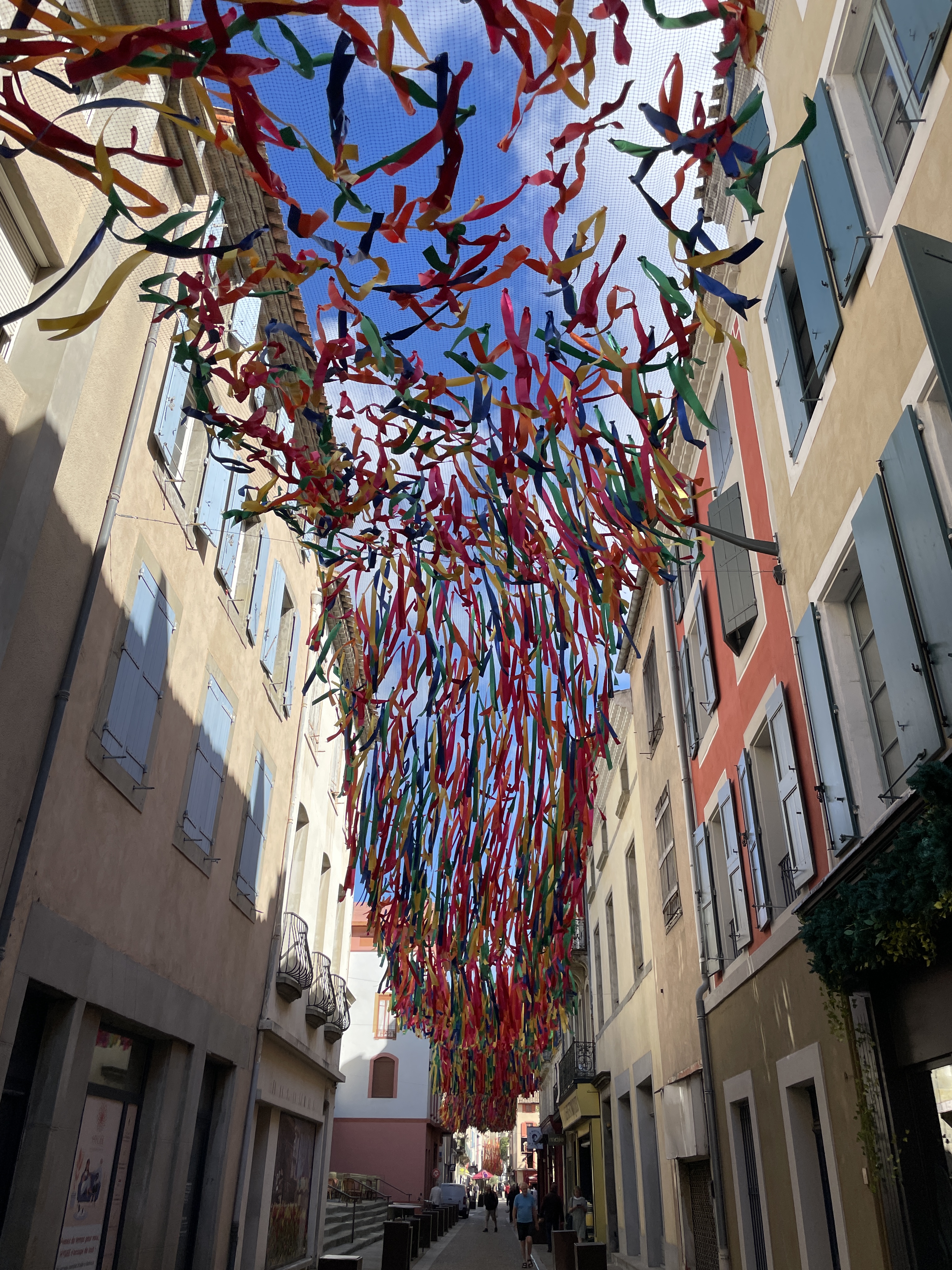

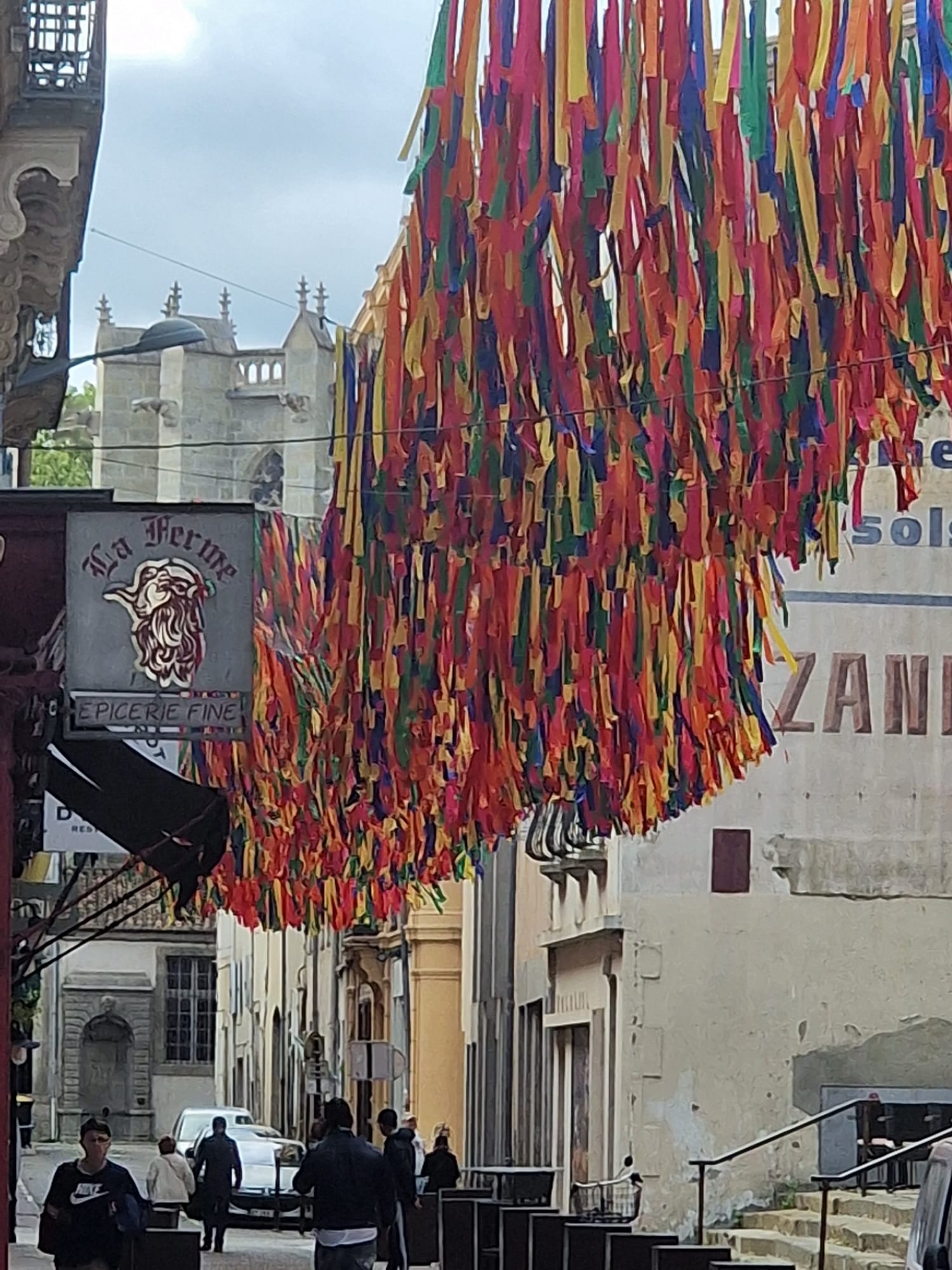
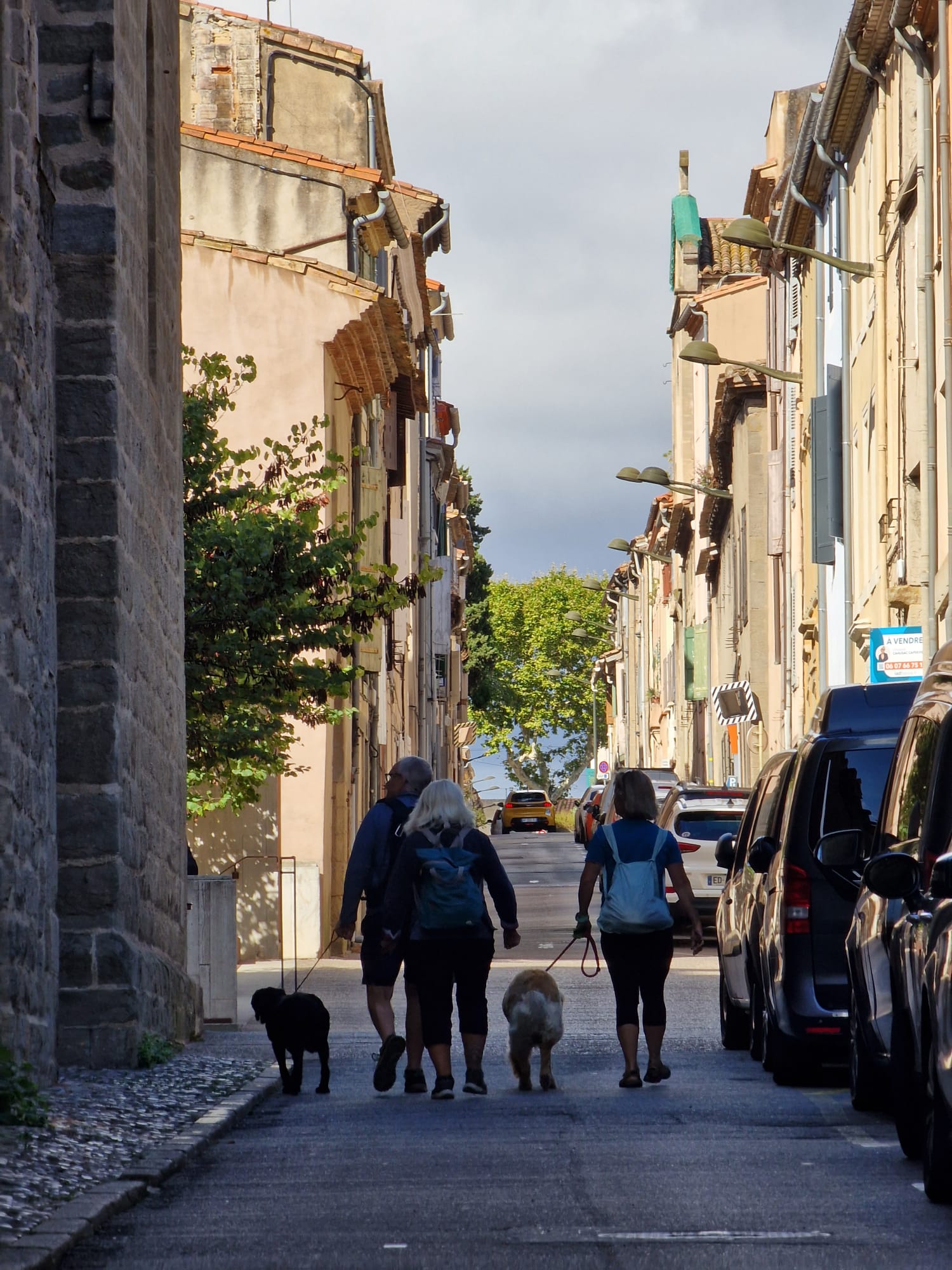
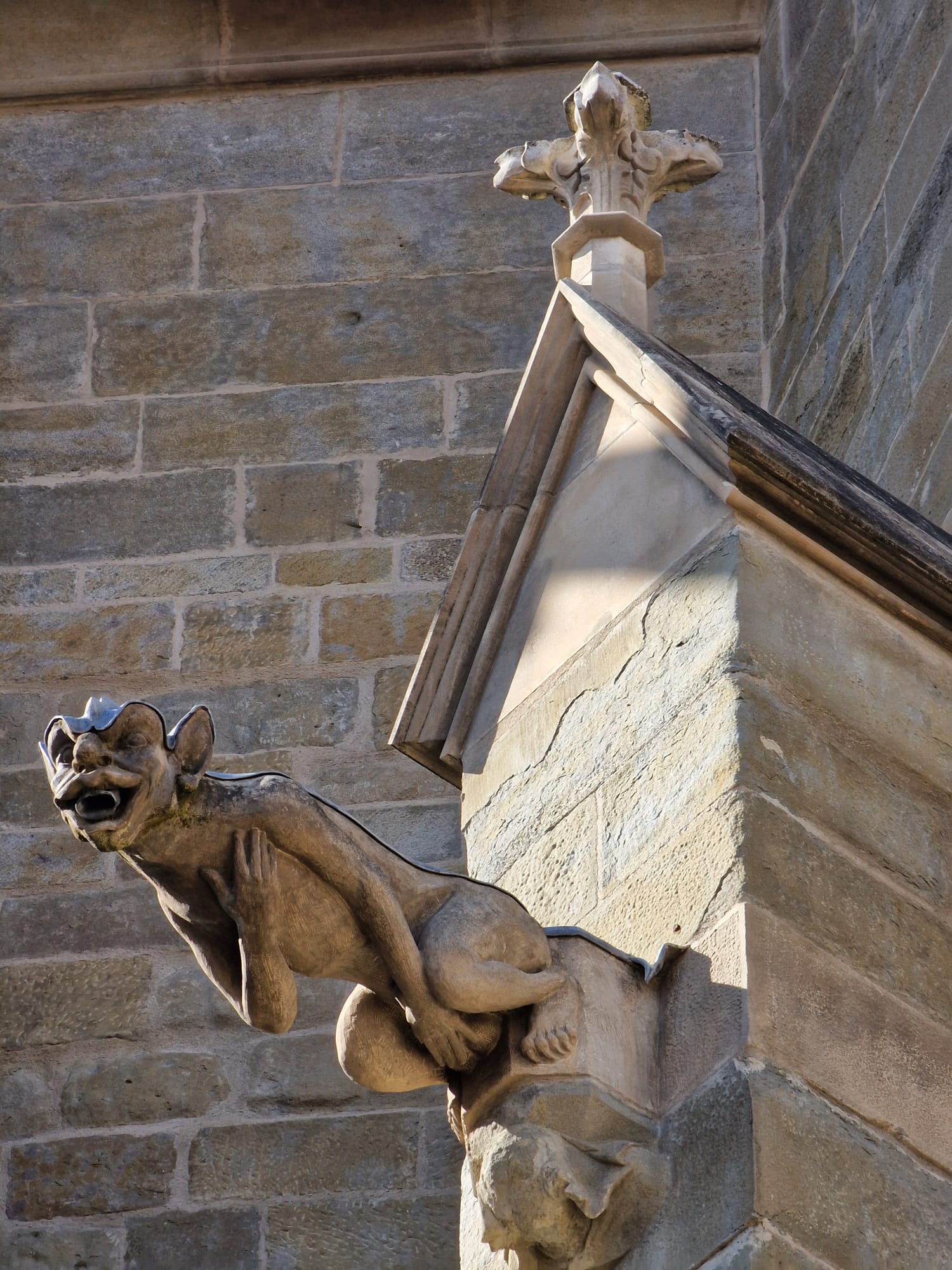
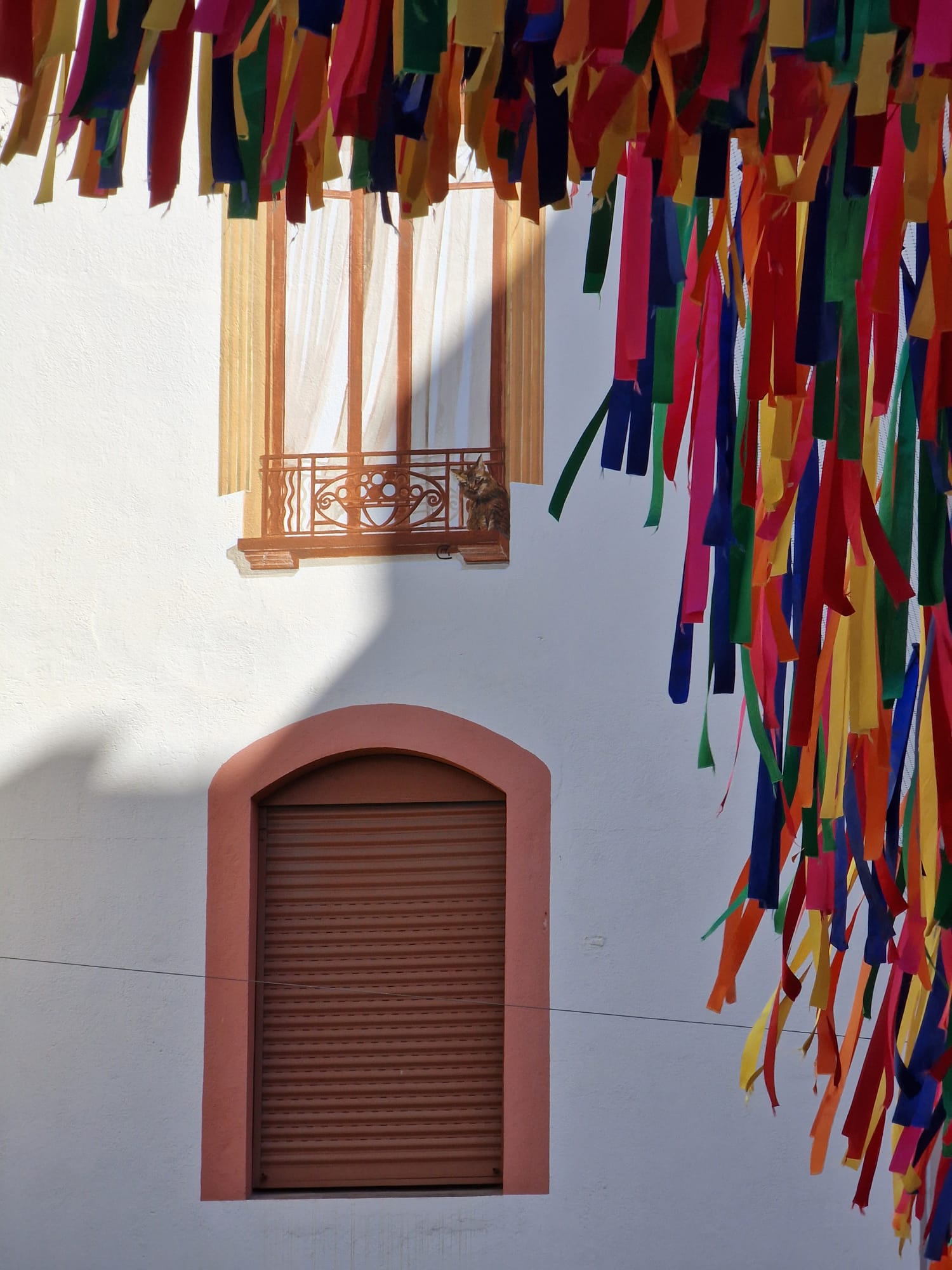
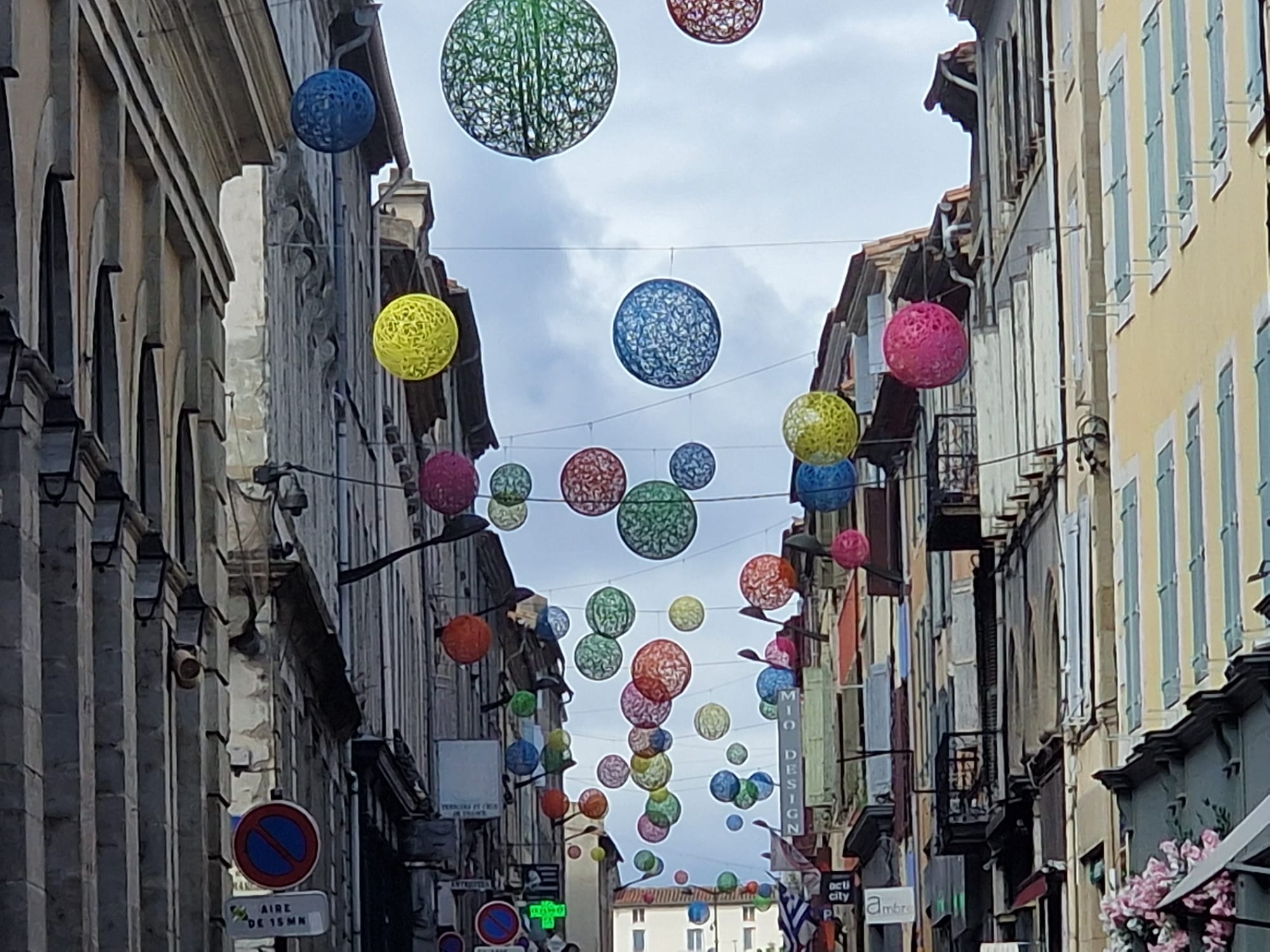
Thursday morning, we we’re promised a market in the Place Carnot, the square in the centre of Bastide St Louis. Wendy and Lesley, love a french market so we were up early and crossed the Aude on the old bridge to explore the new old town. St Louis and the Place Carnot were delightful, but Wendy and Lesley deemed the market disappointing, just a couple of greengrocers stalls. Coffee in the sun was good though.
When Lesley is around there is no peace for the wicked, so after a quick spot of lunch we were off on a bike ride. The Canal du Midi flows just north of the Bastide St Louis and we were off to explore its tow path. The canal, built in the 17th century to connect the Gironde on the west coast of France with the Mediterranean in the East, is an amazing feat of engineering, especially when you consider it was by a chap, Pierre-Paul Riquet, who was a salt tax collector rather than an engineer and he was building his marvel at the same time as Christopher Wren was reconstructing St Paul’s Cathedral after the Great Fire of London.
With the dogs in their chariots. we wove our way through the back streets of Carcassonne, avoiding the traffic as much as possible until we dropped down on to the towpath. 350 years later the canal is still busy, but now with cruisers, so there was plenty to see as well as the other cyclists using the path who were amused to see two dogs travelling in such style.

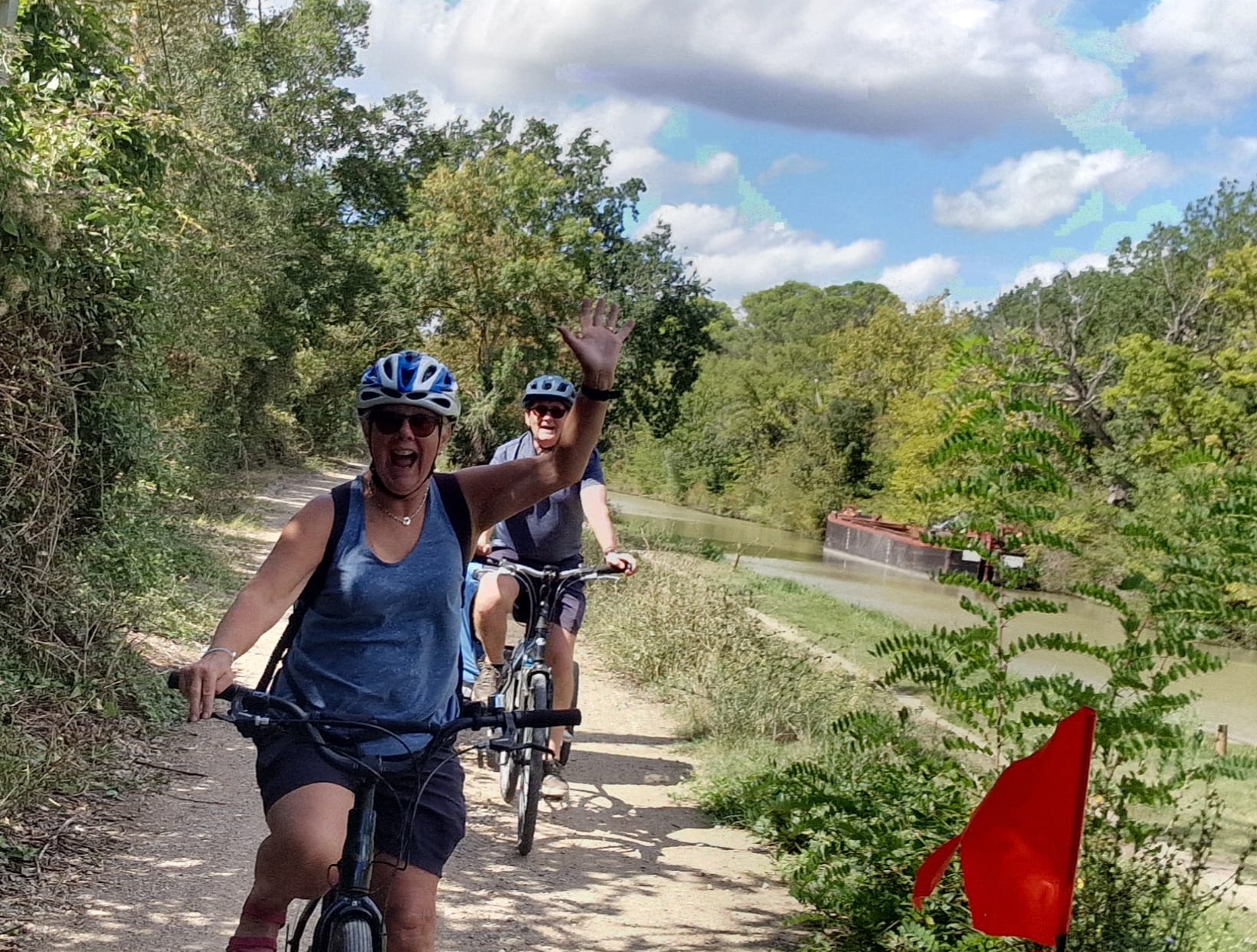
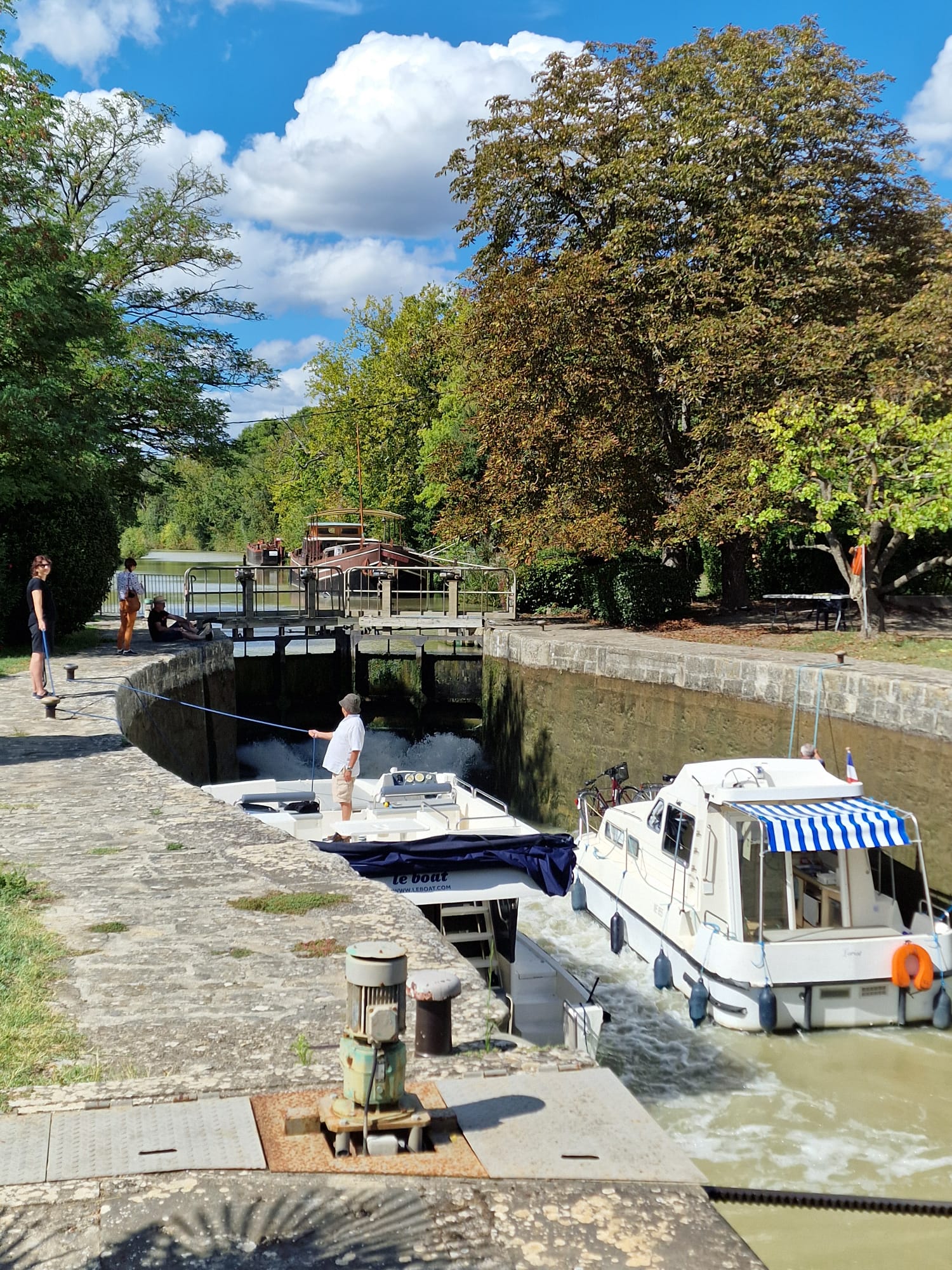
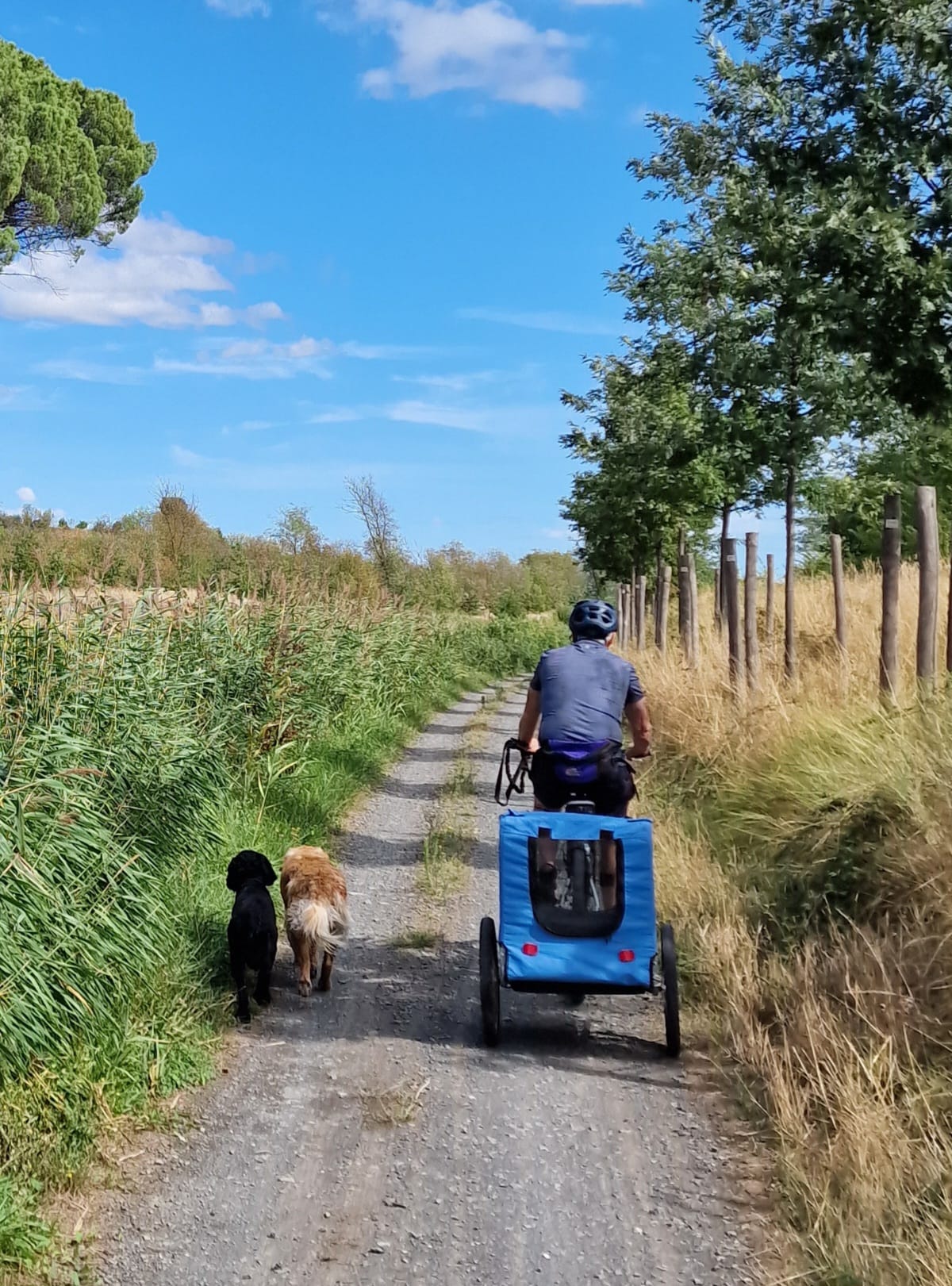
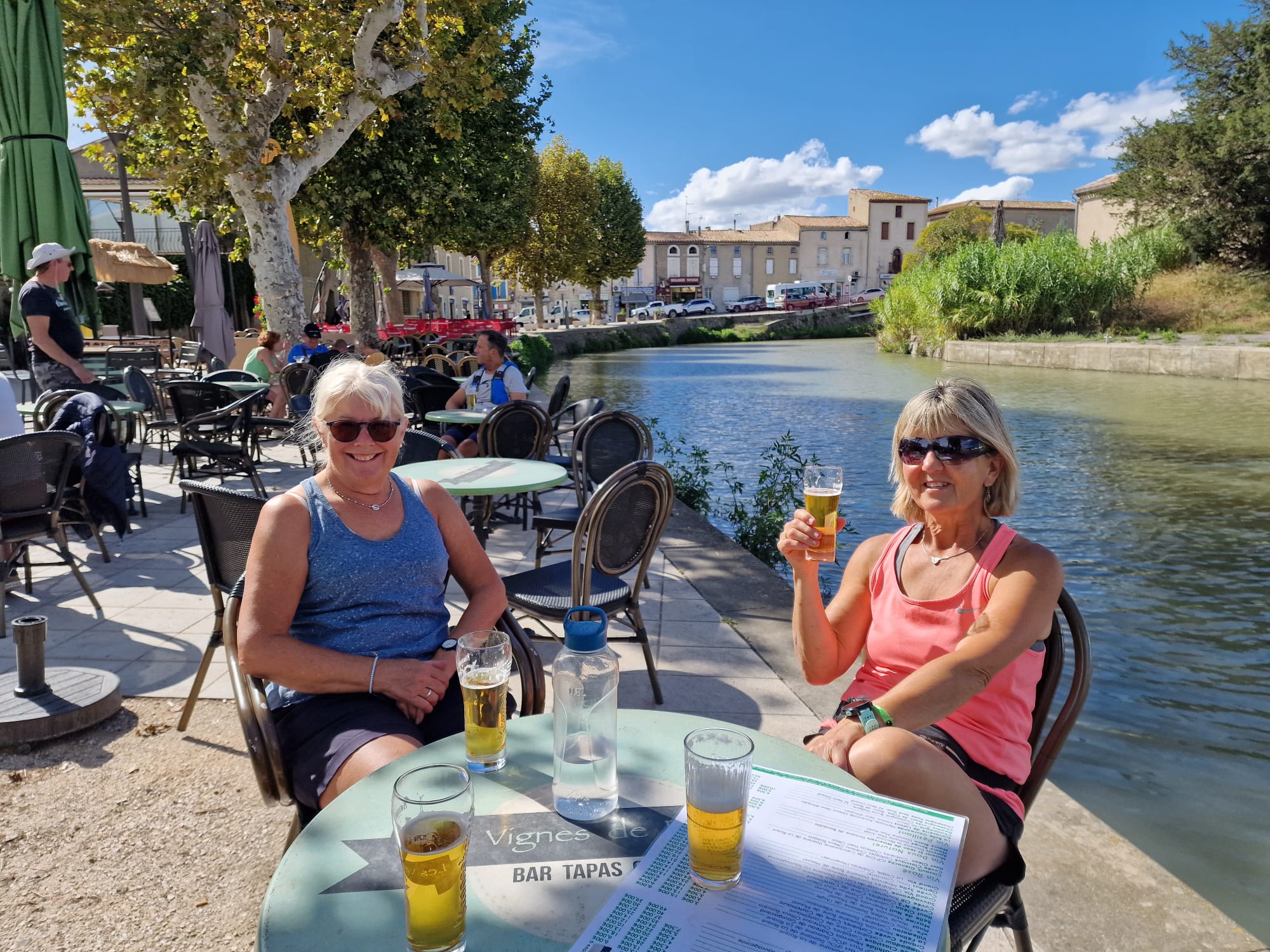
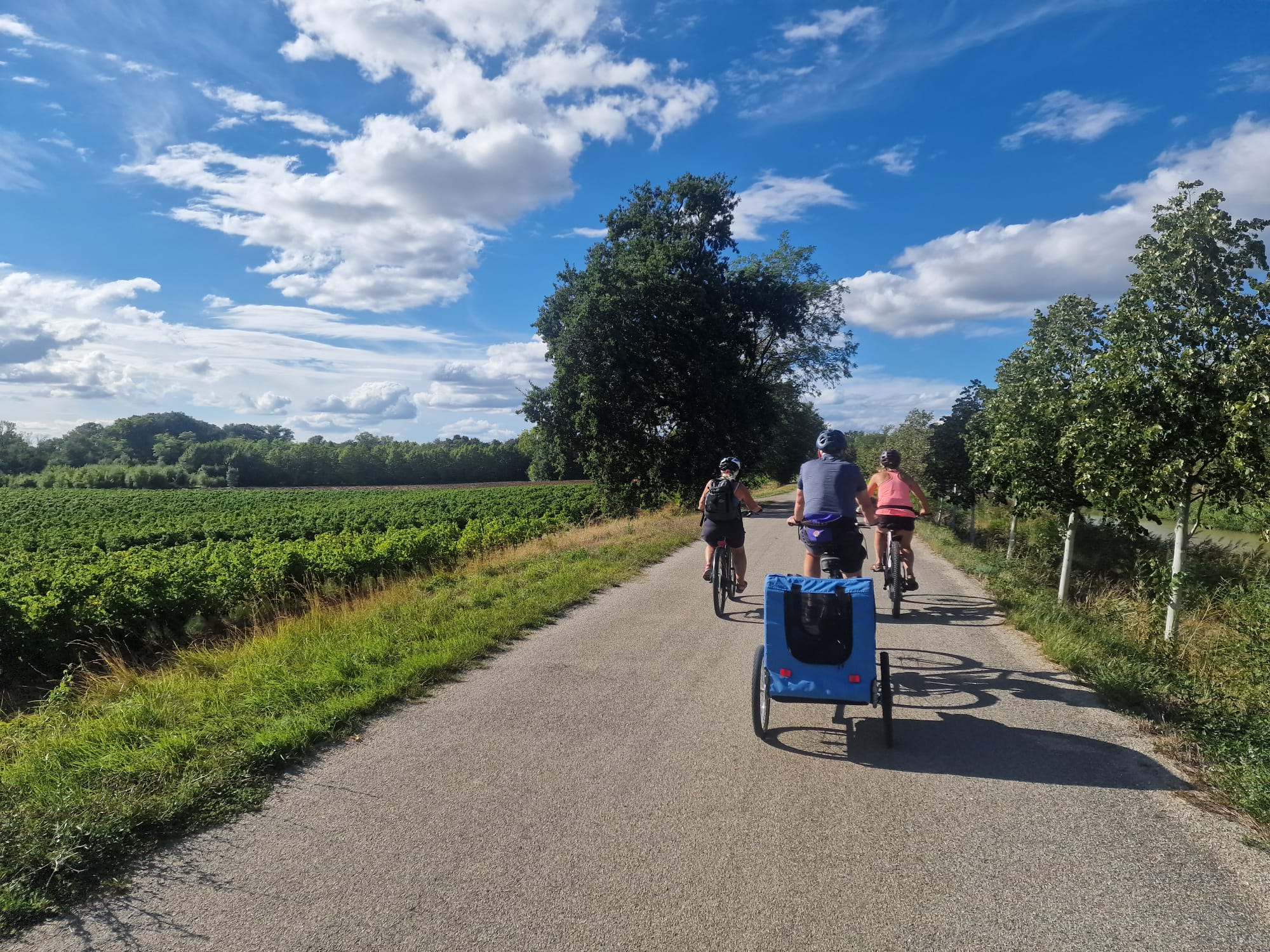
After and hour or so of pedalling, with the canal on the left and field after field of vines on our right, we found an old canal port by the town of Trebés, where the dock side buildings were now cafés and bars. None of them were selling ice creams so we had to have a beer to refuel for the journey back. 32km in all at a leisurely 11.5km/h
 semper deinceps