Saturday 31st August
On the last day of meteorological summer, the first autumnal mists were slowly burning off as we left Pamplona behind and headed west to Jaca, a town described as ‘the pearl of the Pyrenees’. We managed to squeeze into the last two spots in the car park by the citadel.
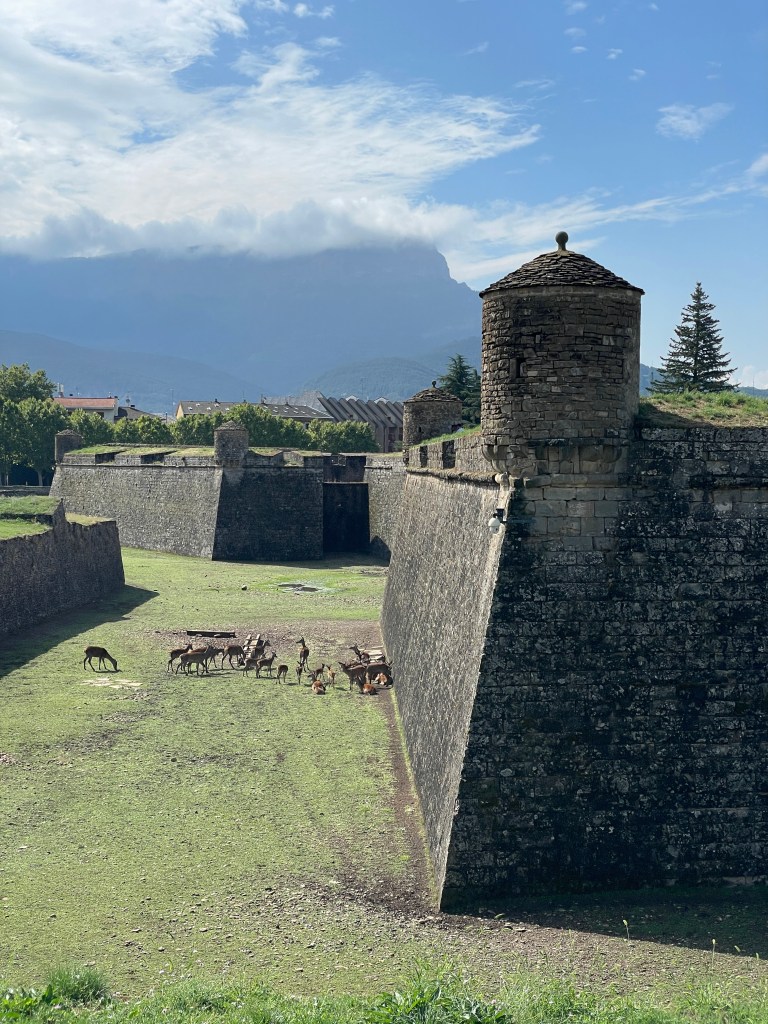
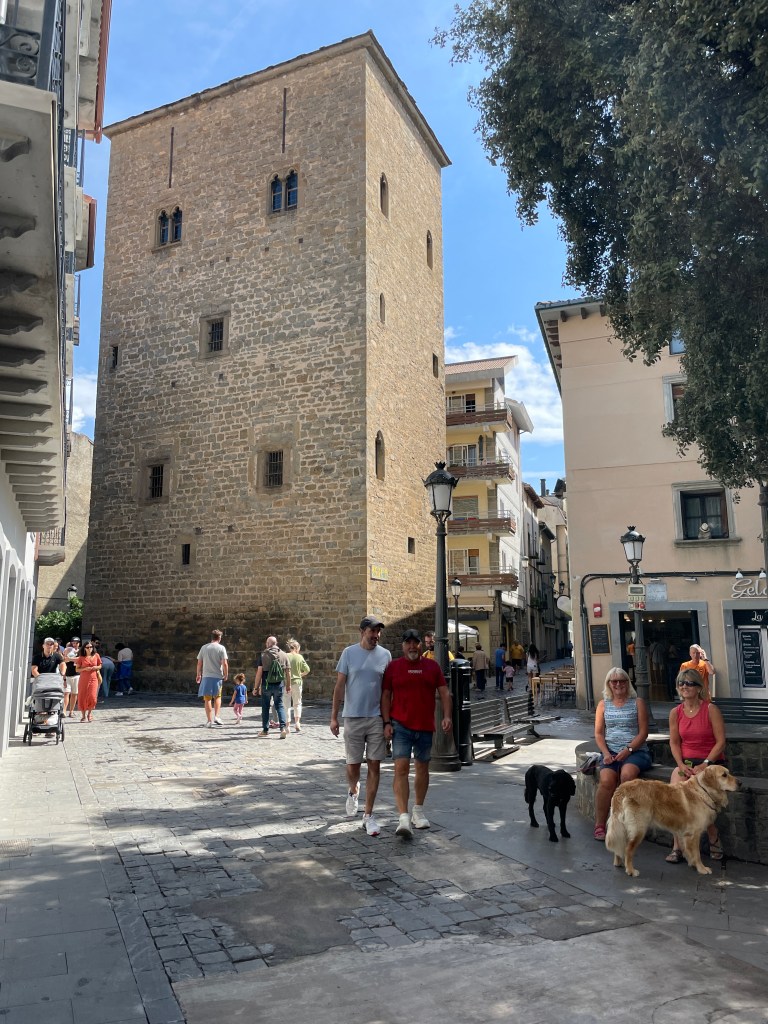
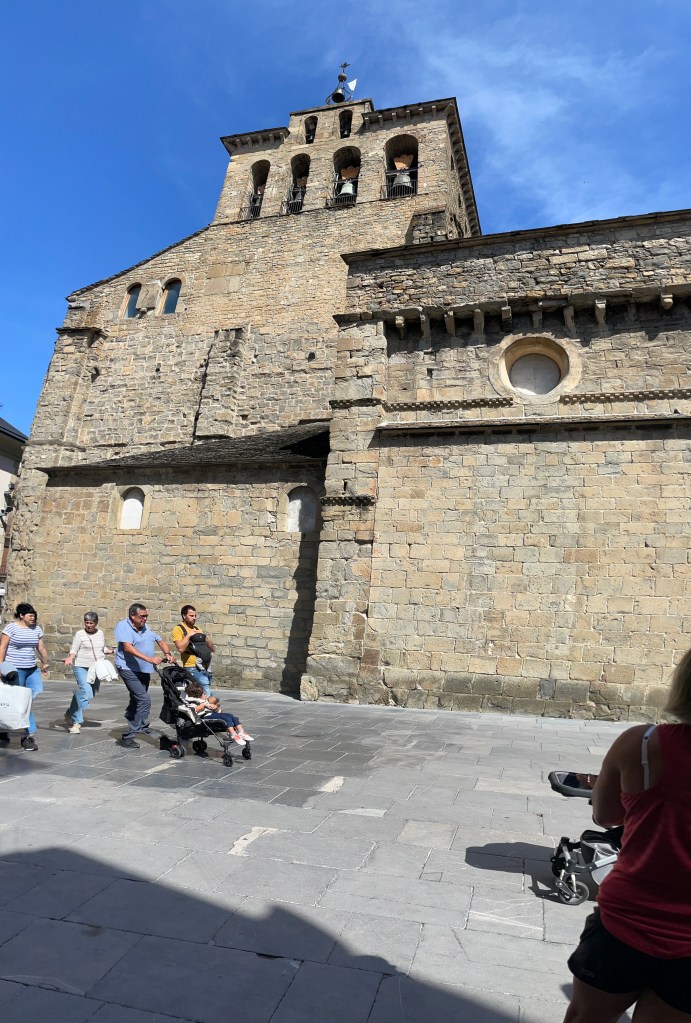
The citadel was built in the 16th century in a pentagonal design and has a herd of deer living in its moat. It stands just outside the medieval heart of the city. The two most popular landmarks are the cathedral and a bell tower. The two are about five minutes walk apart through the old city’s narrow streets. The bell tower was built in 1445 on the ruins of the old palace (Jaca was the capital of the kingdom of Aragon back in the day) as a prison when the cathedral prison burnt down. In 1599 the town and cathedral had a falling out and the city installed a clock above the jail, so they didn’t have to rely on the cathedral’s bells. Outside the tower we met a Spanish couple with a black German Shepherd puppy. The conversation was fascinating as he spoke some English, she spoke some French and they interpreted for each other back into Spanish.
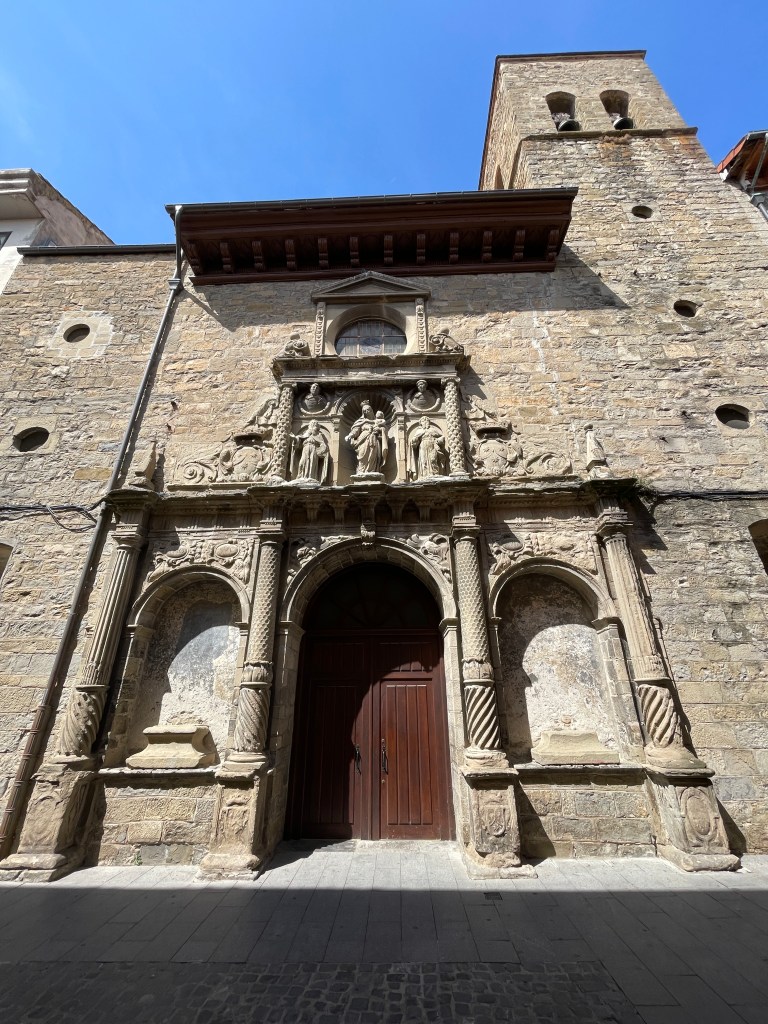
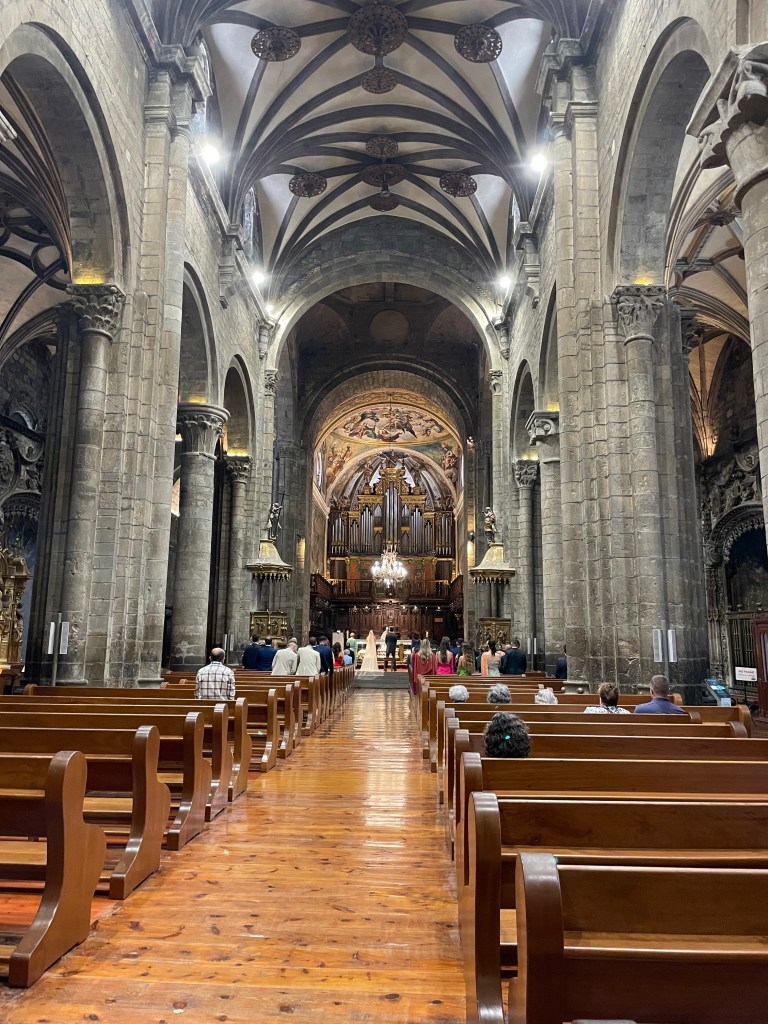
The cathedral was busy. Saturday is wedding day and there was a constant stream of happy couples getting married inside. Their guests were either queueing up at the main door or were spread around the cafés in the square.
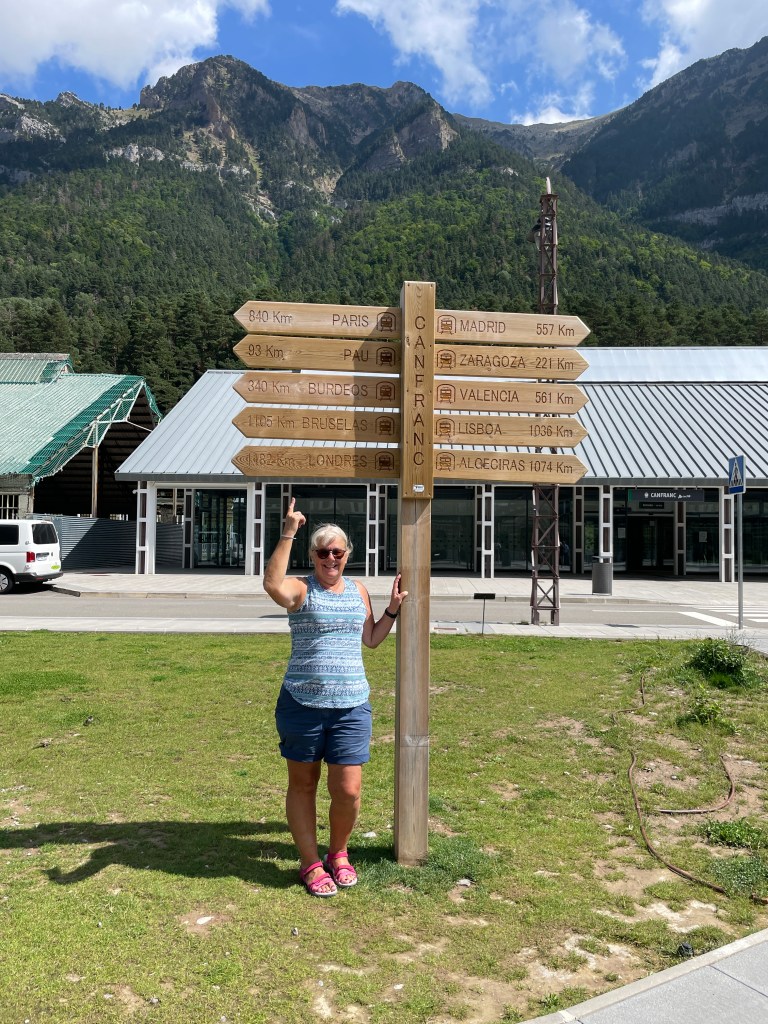
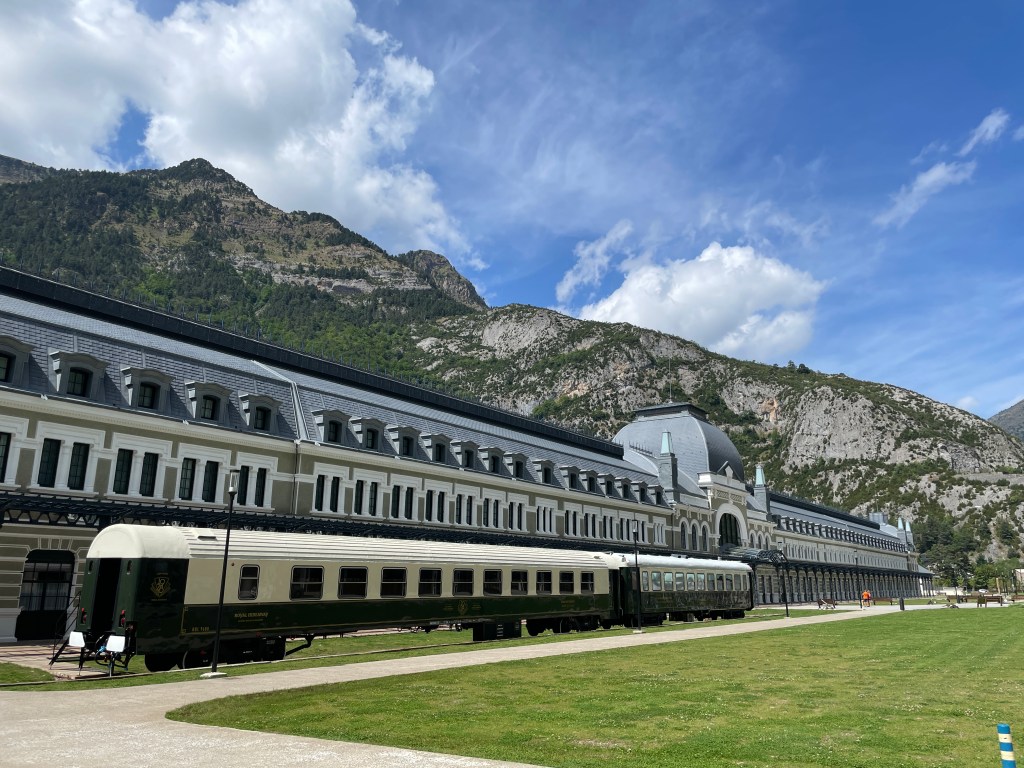
Thirty minutes north of Jaca, high up in the mountains and only three miles from the border with France is the tiny village of Canfranc. Canfranc is an unexceptional place apart from it has an enormous train station that would not be out of place in the centre of a major capital city.
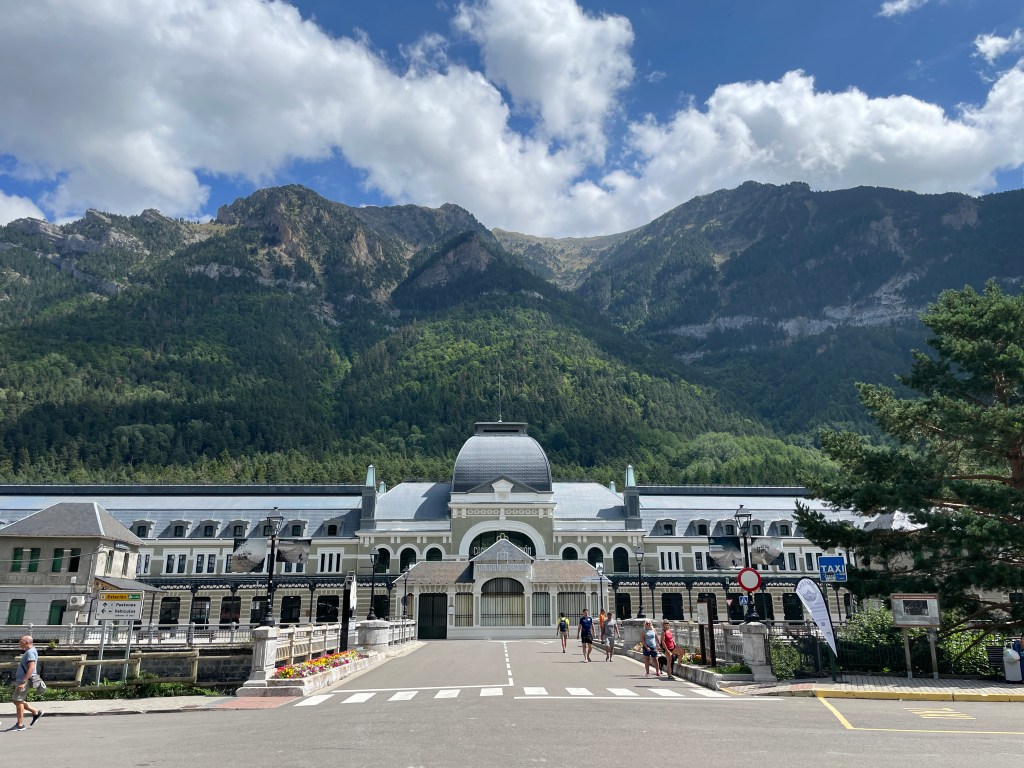
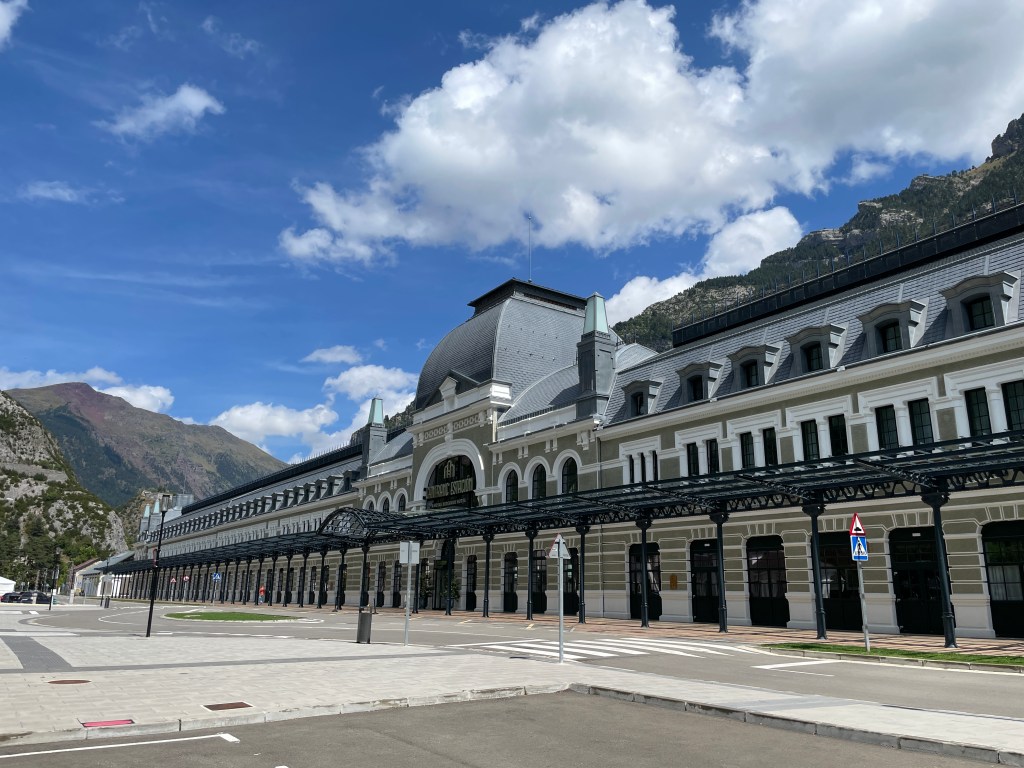
The station stands as a monument to the hubris of the Spanish government in the early 20th century. Desperate to be seen as a major European economic force (at the time much of Spain was a subsistence peasant economy), Spain wanted to improve her trading links with France and so dug a railway tunnel through the mountains and built a station that would demonstrate Spanish engineering prowess in the hamlet of Los Arañones, 1220 metres up in the mountains. The station was built in the flamboyant ‘beaux arts’ style and is 240 metres long with 365 windows and 156 doors. It was opened in 1928 by King Alfonso XIII with due pomp and ceremony.
During the Civil War, General Franco had the tunnel sealed to stop arms and other supplies reaching the republicans. During the Second World War, despite being officially neutral, Spain had an agreement with Hitler that saw tungsten being shipped north in return for french grain. Passenger trains also continued to run, and Canfranc was a base for Nazi spies who were looking to intercept Jews and escaping allied prisoners of war.
In the 50’s and 60’s the line had several accidents due to chronic underfunding, the Pau to Canfranc line was not a priority for the french railways. In 1970 a train derailment demolished a bridge on the french side of the mountains and closed the line for good.
The station fell into disrepair and the site became overgrown until 2018 when the local government began to renovate and refurbish the building and grounds and convert it into a hotel. In 2020 European Union funding reopened the tunnel and a new station built in the old freight sheds. There are now four international trains a day as well as local trains using the station. The hotel is very posh, – no open toed shoes or sleeveless tops – but it does have a hostel for pilgrims as, yes, we are on another branch of the blessed Camino.
Then it was 20 miles east as the vulture flies but 45 miles by road, down one valley and up another to Camping Ria d’Ara in the charming, almost alpine village of Torla.
 semper deinceps
Excellent commentary Howard. Impressive railway station.
Wishing we were there.
LikeLike
have you ever watched a vulture in flight….going round and round and round. 😉
LikeLike